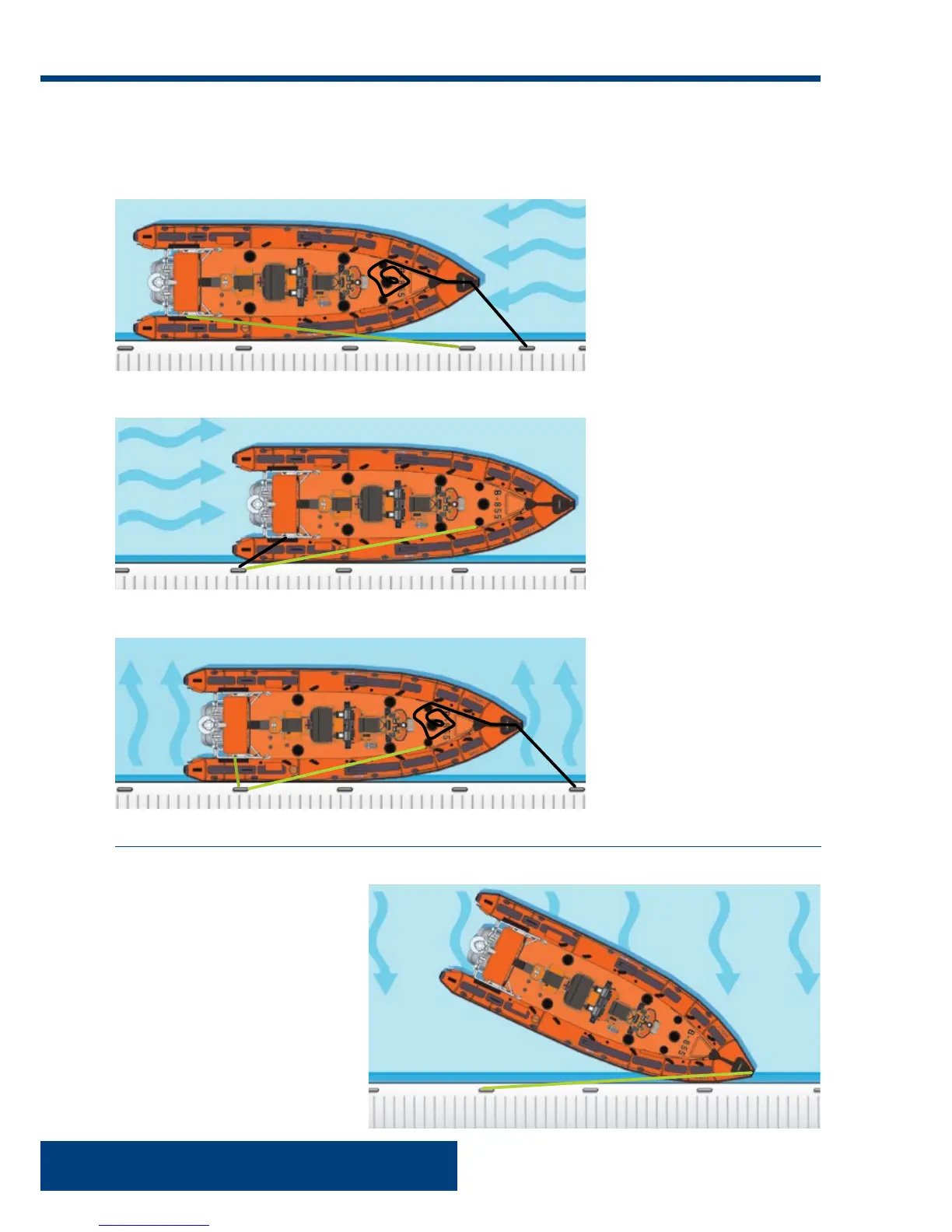
Approaching the berth
The following diagrams indicate the first lines to be
secured depending on the wind and tidal conditions. If
the vessel is to be left for any period of time then she
Wind/tide coming from berth
BOW SPRING first.
Wind/tide coming from astern
STERN LINE and BOW SPRING first.
Wind/tide coming from ahead
BOW LINE and STERN SPRING first.
should be secured with bow, stern and spring lines.
Remove all loose equipment, flares, knives, etc., lift the
engines from the water and ensure that the isolators are
in the off position.
Leaving the berth
Springing off: If the vessel is being held
onto the berth by the wind or tide, it may
become necessary to ‘spring off’;
• Having slipped all unnecessary lines
and made the bow spring into a
slipping line, come ahead gently on
the engine.
• As the strain comes on the bow spring,
the stern will swing out.
• Slip the bow spring and leave the
jetty astern.



 To Next Page