ENGLISH
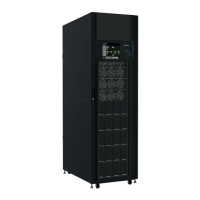
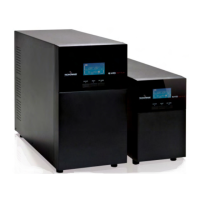
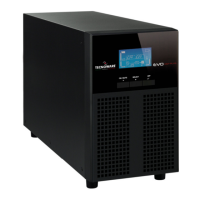
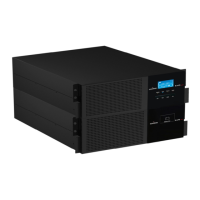
UPS EVO DSP PLUS Modular 5 User’s manual
2 General Characteristics
UPS EVO DSP PLUS Modular has all the advanced features, which guarantee maximum reliability and safety:
• Double-Conversion ON-LINE Transformerless technology
• Fully modular architecture with multiple UPS Modules and Battery Modules in a single Rack Cabinet
• Up to 10 UPS module, Hot Swap connected, working together in a Parallel Redundant Power System
• Output Voltage regulation 1%
• Protection from overload and short circuits
• Automatic Bypass to protect from accidental overload or Inverter fault
• Start-up even under Mains OFF conditions
• Automatic protection when Battery is low
• Automatic restart, following an automatic shut-down due to Low Battery, once AC utility power comes
back on
• Selectable Input Frequency (50/60 Hz)
• Control Panel with Touchscreen LCD Display for monitoring of the Input and Output Voltages
measurements, Batteries Voltage, percentage of Load, Frequency, Alarms, Overload, Fault, Events History
and for setting all the UPS parameters
• Acoustic signals of various kinds indicating alarm situations on each UPS Module.
• SNMP Adapter (optional)
• EPO (Emergency Power OFF)
• Communication with the computer through RS-232 and USB interfaces
• Manual Bypass for maintenance
• ECO functioning Mode (selectable)
• High efficiency
• Maximum reliability
• Smart design and easy to use
3 Receipt and site selection
3.1 Site Selection
We recommend paying attention to the below points in order to choose a correct placement for your UPS:
• The UPS is designed to operate in a protected environment (e.g. offices). We therefore recommend
installing it in a place with very little or no humidity, dust or smoke.
• When the UPS is brought from a cold place to a warmer place, humidity in the air may cause condensation
in the UPS. In this case, allow UPS to stand for two hours in the warmer place before beginning with the
installation.
• In all circumstances, see chapter 12 “Technical Characteristics” for environmental specifications and
check that the selected area meets these criteria.
• During normal operation the UPS discharges a minimal amount of heat. So it is necessary to leave at least
30 cm of unobstructed space all around the UPS in order to keep it properly ventilated.
• Do not obstruct ventilation holes.
• Do not insert objects or pour liquids in the ventilation holes.
• Do not rest any object on top of the UPS.
• Do not keep liquids, flammable gases or corrosive substances near the unit.
• Install the UPS on a properly tiled floor. Avoid the installation on a floor that is not tiled flat.




 To Next Page