Manual Regeneration Procedure
For the majority of the crane operating time, the Cummins Engine Particulate Filter is self-
cleaning with no operator action required. On some occasions, the operator may need to
perform a Stationary Regeneration.
Under some operating conditions, such as low speed, low load, or stop and go duty cycles,
the engine may not have enough opportunity to regenerate the aftertreatment diesel
particulate filter during normal operation.
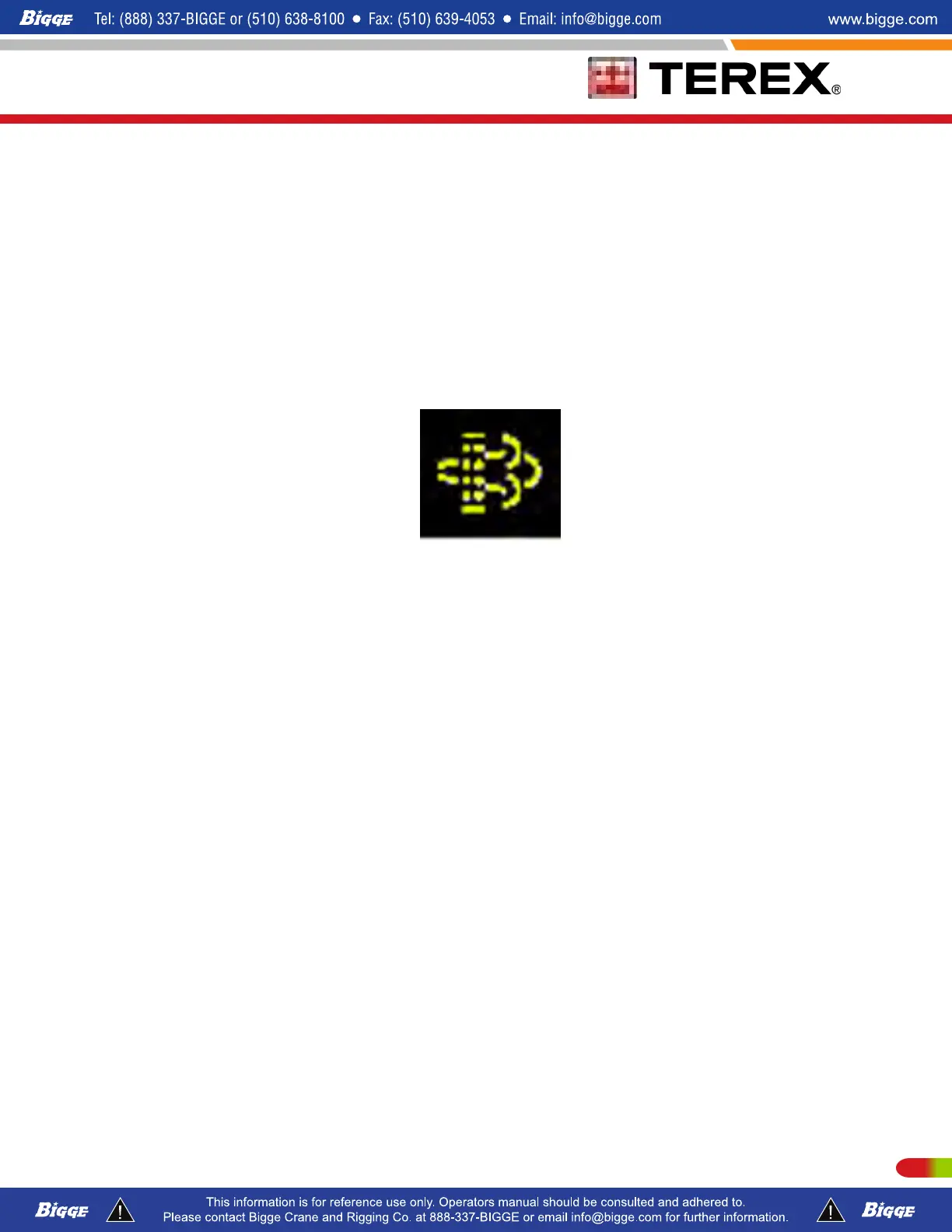
When this occurs, the engine will illuminate the aftertreatment diesel particulate filter lamp
to inform the operator that assistance is required, typically in the form of a Manual (non
mission) regeneration.
Manual regeneration is a form of active regeneration that is initiated by the equipment
operator when not in operation.
Manual regeneration requires an elevated engine speed of approximately 1000 to 1400
RPM. The length of a manual regeneration will vary depending on how full the
aftertreatment diesel particulate filter is, but will typically take anywhere from 45 minutes to
1.5 hours to complete.
A manual regeneration can be initiated with the Regeneration Switch. The manual
regeneration switch will only initiate a regeneration when the Aftertreatment Diesel
Particulate Filter Lamp is illuminated.
To perform a manual (non-mission) regeneration, follow the steps listed:
_Select an appropriate location to park the equipment. (See Note 3.)
_Park the vehicle securely. Place the transmission in neutral. (See Note 4.)
_With a manual transmission the clutch pedal is released.
_The brake pedal is released.
_PTO is OFF (not engaged).
_The vehicle speed is 0 MPH.
_The throttle pedal is released.
_Initiate the manual regeneration by toggling the crane carrier cab manual Regeneration
Switch located in the lower RH corner of the Carrier Cab dash panel. The switch has two (2)
functions:
If the engine RPM is 0, the switch becomes a Diagnostic Switch.
If the engine RPM is greater than 0, the switch becomes a Manual Regeneration Initiate
Switch.
_Once the manual regeneration is initiated, the engine speed may increase, the
turbocharger noise will increase, and the High Exhaust System Temperature lamp will
illuminate.
169P/N 12261-683 REVISED: January 2015



 To Next Page