Drivers Tips-Cummins EPA 2013
Use as a guide for Cummins On-Highway Heavy-Duty Engines with Aftertreatment.
This covers engine, aftertreatment and emissions-related indicator lamps found on the
vehicle's instrument panel and explains what they mean and the actions drivers need to
take when they illuminate. Important information about fuel, oil, Diesel Exhaust Fluid (DEF)
and operating tips is also listed.
General Engine Indicator Lamps
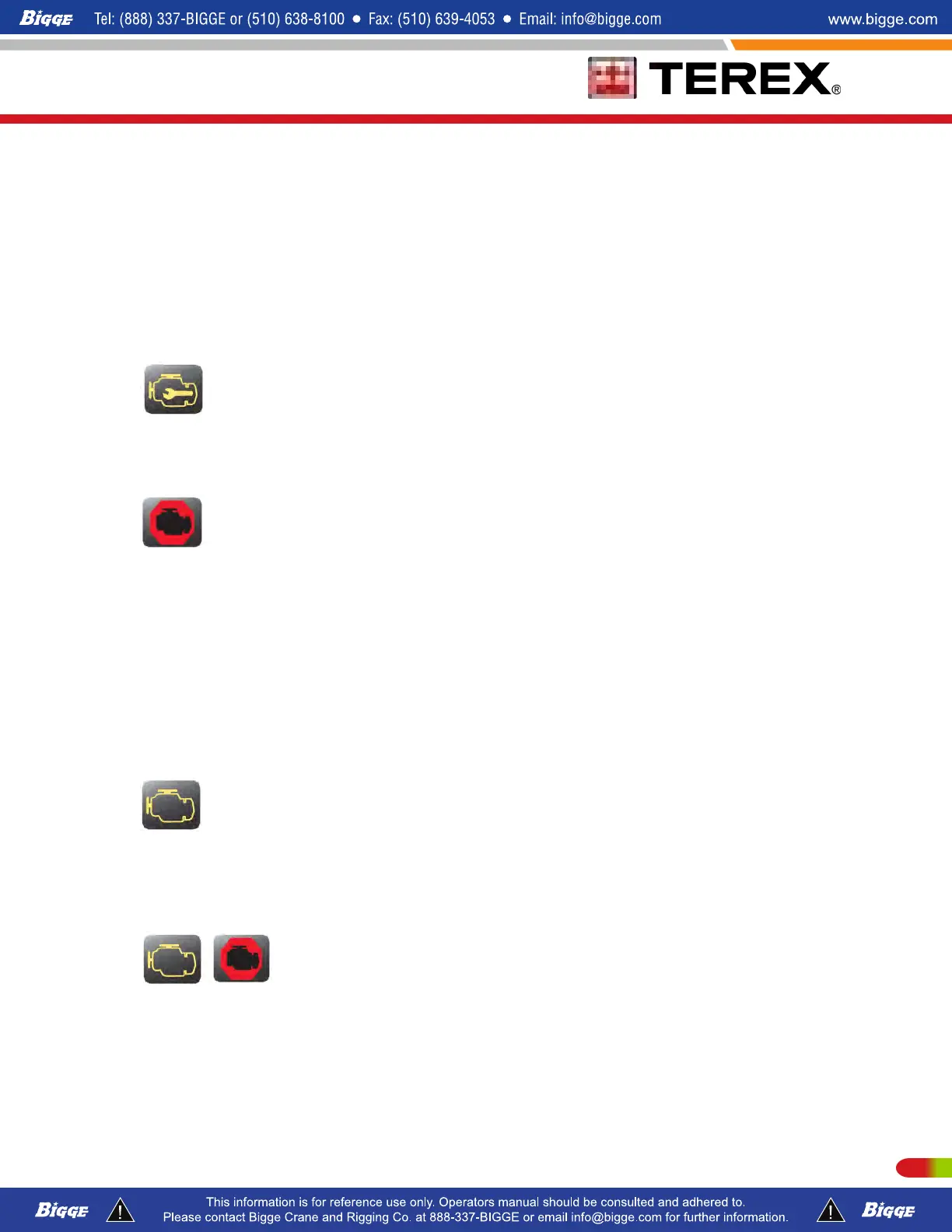
Check Engine Lamp or Amber Warning Lamp
The Check Engine Lamp (which may also be referred to as the Amber Warning Lamp)
illuminates when the engine needs to be serviced at the first available opportunity.
Stop Engine Lamp
The red Stop Engine Lamp indicates, when illuminated, that the vehicle needs to be
stopped as soon as it is safe to do so.
On-Board Diagnostics
In 2013, all on-highway engines will include On-Board Diagnostics as a part of the
emissions regulation requirement. On-Board Diagnostics monitors all emissions-related
engine systems during operation. If the system detects any emissions-related malfunctions,
it will alert the operator to these detected malfunctions through a dash lamp know as the
Malfunction Indicator Lamp (MIL).
Malfunction Indicator Lamp (MIL)
The MIL illuminates when the On-Board Diagnostics system detects a malfunction related
to the emissions control system. The illuminated MIL indicates that the engine and
aftertreatment system should be diagnosed and serviced at your next available opportunity.
The MIL can be illuminated along with any of the engine indicator lamps.
If the MIL is illuminated with the red Stop Engine Lamp, the vehicle should be stopped as
soon as it is safe to do so. It should then be taken to an authorized Cummins location for
repair.
Diesel Exhaust Fluid For Selective Catalytic Reduction (SCR) Aftertreatment
Every 2010 and newer vehicle has an on-frame storage tank for Diesel Exhaust Fluid (DEF)
and a dash lamp that indicates low DEF levels. Refilling this tank with DEF is critical in
213P/N 12261-683 REVISED: January 2015



 To Next Page