©2019 ALL-TEST Pro, LLC All Rights Reserved 42 Rev 06/20/2019
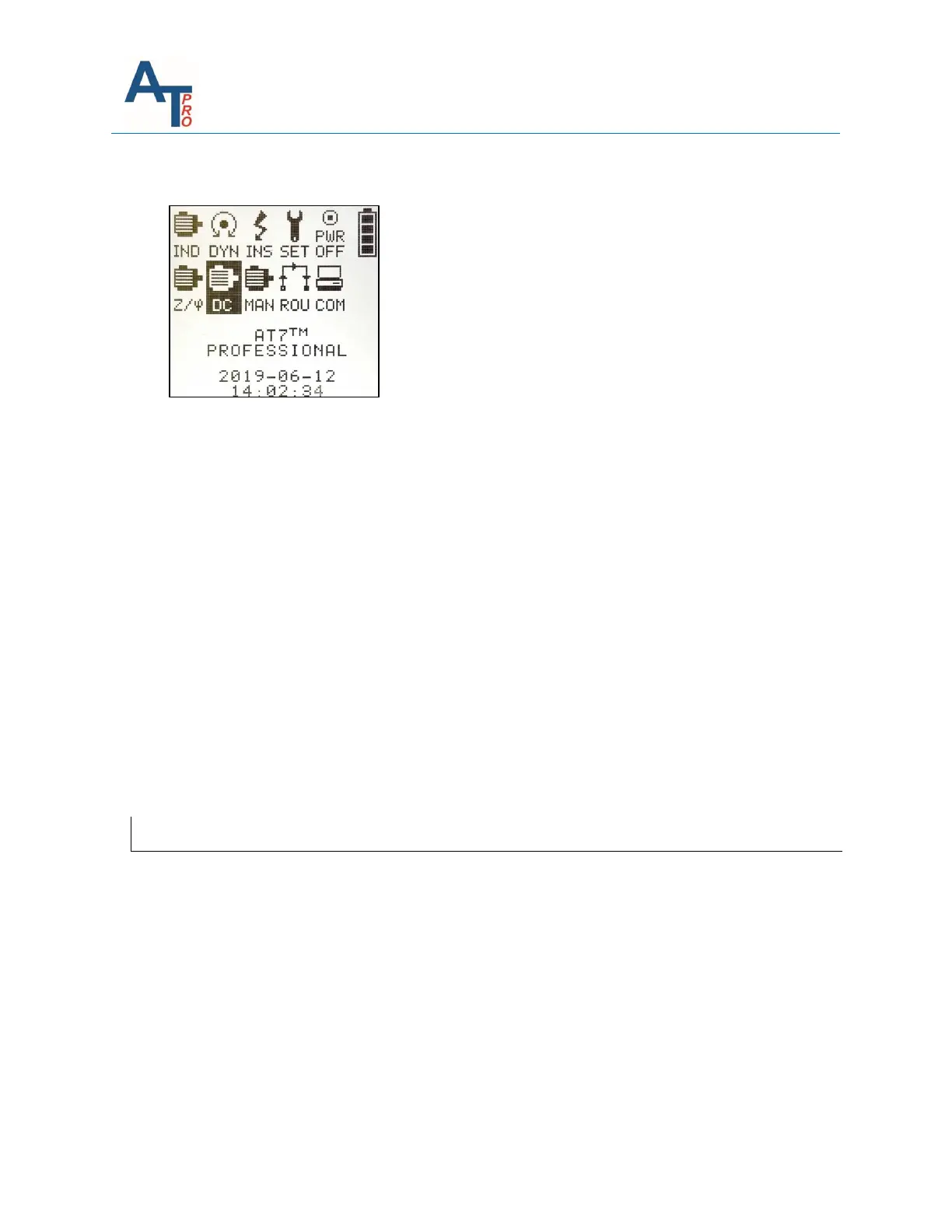
DC MOTOR TEST (*ALL-TEST PRO 7 PROFESSIONAL)
DC motor deenergized testing provides specific challenges since multiple duplicate coils are not
easily accessible for comparative analysis. Additionally, DC motors offer a variety of winding
configurations, depending on the type of DC motor.
The motor tests made with the AT7 PROFESSIONAL are done with all of the motor windings
connected. If a change is identified, then it is necessary to individually test the coils to identify
the faulty coil. More detailed analysis procedures are available in the ALL-TEST Pro MCA
analysis manual.
To identify developing faults in DC motors it is necessary to:
1) Baseline: Develop a baseline Motor data set on a DC motor in good condition as a baseline
for future comparison.
2) Trend: Trend 2 or more motor data sets taken at different times to identify any changes in
the winding condition over time.
3) Comparison: establish an average of several like motors and filed windings and compare
the current measurements with the average for that coil. It is necessary to compare shunt
coils with shunt coils, series coils with series coils, interpole coils with interpole coils.
New or Rebuilt Motors (Baseline Testing)
1) Take a complete set of motor data directly at the motor for a baseline data set following
the guidelines for the specific type of DC Motor
2) Install the motor, take a complete set of motor data from the DC motor drive for a
baseline motor data set, following the guidelines for the specific type of DC motor
3) Periodically monitor the DC motor from the controller, compare current motor data to the
baseline from the drive.
4) If a significant change has occurred, disconnect the motor and test at the motor directly
5) Compare the current motor data taken directly at the motor to the baseline motor data
previously taken directly at the motor.



 To Next Page