EasyManua.ls Logo

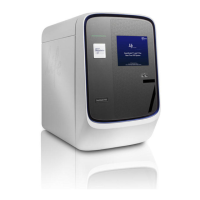
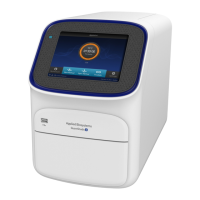
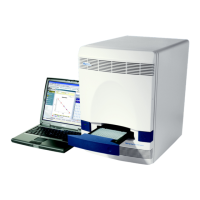
Applied Biosystems QuantStudio 7 Flex - User Manual

Applied Biosystems QuantStudio 7 Flex
194 pages
Print Icon
To Next Page IconTo Next Page
Loading...
For Research Use Only. Not for use in diagnostic procedures.
QuantStudio
6 and 7 Flex Real-Time PCR
Systems
USER GUIDE
Maintenance and Administration
for use with QuantStudio
RealTime PCR Software v1.6
Publication Number MAN0018828
Revision A.0

Table of Contents

Questions and Answers

  • J
    Justin NavarroAug 7, 2025
    How to fix ROI calibration failure on Applied Biosystems Laboratory Equipment?
    • K
      Kevin SmithAug 7, 2025
      If the ROI calibration failed with a blurry or faint image on your Applied Biosystems Laboratory Equipment, it could be due to several reasons. First, ensure the plate or array card has been adequately centrifuged; if not, centrifuge it for a longer duration and repeat the calibration. Another potential cause is old or insufficient reagents in the plate or array card. In this case, discard the consumable and use a new one. Also, check that the sample block and heated cover are correctly seated by powering off, unplugging the instrument, waiting 15 minutes, opening the access door, and firmly pushing the sample block and heated cover toward the back of the instrument.
  • M
    Michael HamptonAug 12, 2025
    What to do if background calibration failed on Applied Biosystems QuantStudio 7 Flex?
    • J
      Joseph GarciaAug 12, 2025
      If the background calibration failed on your Applied Biosystems Laboratory Equipment, it could be due to the plate or array card not being centrifuged sufficiently. Try centrifuging it for a longer time and then repeat the calibration. Another potential cause is old or insufficient reagents in the plate or array card; discard the consumable and run another. Also, the failure could be caused by one or more wells of the background plate or array card producing spectra that exceed the maximum limit for the instrument. In this case, determine the source of the contamination as explained in ‘How to identify contamination’ on page 81.
  • J
    Julie WebsterAug 17, 2025
    Why does uniformity calibration fail on Applied Biosystems QuantStudio 7 Flex?
    • L
      Leslie MclaughlinAug 17, 2025
      If the uniformity calibration failed on your Applied Biosystems Laboratory Equipment, ensure the plate or array card has been adequately centrifuged. If not, centrifuge it for a longer time, then repeat the calibration. Another potential cause is old or insufficient reagents in the plate or array card. In this case, discard the consumable and run another.
  • B
    Brandy SimonAug 22, 2025
    How to troubleshoot dye calibration failure on Applied Biosystems QuantStudio 7 Flex?
    • A
      Antonio ShepardAug 22, 2025
      If the dye calibration failed on your Applied Biosystems Laboratory Equipment because one or more raw spectra are at or below the detectable threshold, it might be because the dye plate or array card was not centrifuged sufficiently. Try centrifuging the plate or array card for a longer time, then repeat the calibration. Alternatively, the dye plate or array card may contain old or insufficient reagents; discard the consumable and run another.
  • J
    Jennifer BennettAug 28, 2025
    What causes RNase P plate verification failure in Applied Biosystems Laboratory Equipment?
    • M
      Melissa SmithAug 28, 2025
      If the RNase P plate or array card verification run failed on your Applied Biosystems Laboratory Equipment, check the heat seal of the wells with lower volumes for signs of damage or evaporation. Also, contamination or inaccurate fluid transfer during plate or array card manufacturing may cause the failure.
  • C
    Cody Carter MDSep 1, 2025
    Why normalization calibration failed on Applied Biosystems QuantStudio 7 Flex?
    • L
      lparkerSep 1, 2025
      If the normalization calibration failed on your Applied Biosystems Laboratory Equipment, it may be due to abnormally low spectra across all wells of the array card.

Summary

CHAPTER 1 Getting started

Instrument hardware

Describes the physical components of the instrument.

Instrument software

Introduces the software suite for instrument operation and analysis.

CHAPTER 2 Calibrate the instrument

Calibration and maintenance schedule

Provides a schedule for weekly, monthly, and semi-annual maintenance tasks.

Calibration workflow

Details the recommended sequence for performing instrument calibrations.

ROI calibration

Maps well positions on the sample block for fluorescence association.

Background calibration

Uses background data to remove fluorescence from experiment data.

Uniformity calibration

Generates data to compensate for instrument filter effects.

Dye calibration

Characterizes and distinguishes contributions of each dye in total fluorescence.

Verify the instrument performance

Performs RNase P test to confirm the instrument's performance.

Troubleshooting

Provides guidance on resolving calibration and verification test failures.

APPENDIX A Manual instrument operation

Operate the instrument from the touchscreen

Details how to perform operations like running experiments via touchscreen.

APPENDIX B Maintenance

Decontaminate the sample block

Provides instructions to eliminate fluorescent contaminants from the sample block.

Replace the halogen lamp

Details the procedure for replacing the instrument's halogen lamp.

Install the QuantStudio Real-Time PCR Software

Guides through the installation process of the instrument's software.

Change the sample block

Details the procedure for changing the instrument's sample block.

APPENDIX C Networking

Connect the QuantStudio 6 or 7 Flex System to the network

Provides instructions for connecting the instrument to a network.

APPENDIX D Power on or off, store, and move

Power on the QuantStudio 6 or 7 Flex Real-Time PCR System

Provides step-by-step instructions for powering on the instrument.

APPENDIX E Security, audit, and electronic signature

Configure the security system

Details how to enable/disable security and set policies for user accounts.

User account management

Covers creating, editing, and managing user accounts and roles.

APPENDIX F Calibration consumable preparation

APPENDIX H Instrument specification and layout

Safety

Instrument safety

Covers general safety precautions for operating the instrument.

Applied Biosystems QuantStudio 7 Flex Specifications

General IconGeneral
PlatformReal-time PCR System
Temperature Range4°C to 100°C
Temperature Uniformity±0.5°C
Excitation SourceLED
Data Analysis SoftwareQuantStudio Software
ConnectivityUSB, Ethernet
Supported Block Types96-well, 384-well
Sample Capacity96-well, 384-well
Thermal Accuracy±0.25°C
Heating RateUp to 4.5°C/second
Detection MethodFluorescence
Dyes SupportedSYBR Green, FAM, VIC, ROX, TAMRA
Multiplexing CapabilityUp to 6 targets
Data CollectionReal-time data collection
WeightApprox. 25 kg
Power Requirements100-240 VAC, 50/60 Hz
Reaction Volume Range10 µL to 100 µL

Related product manuals