68 of 109
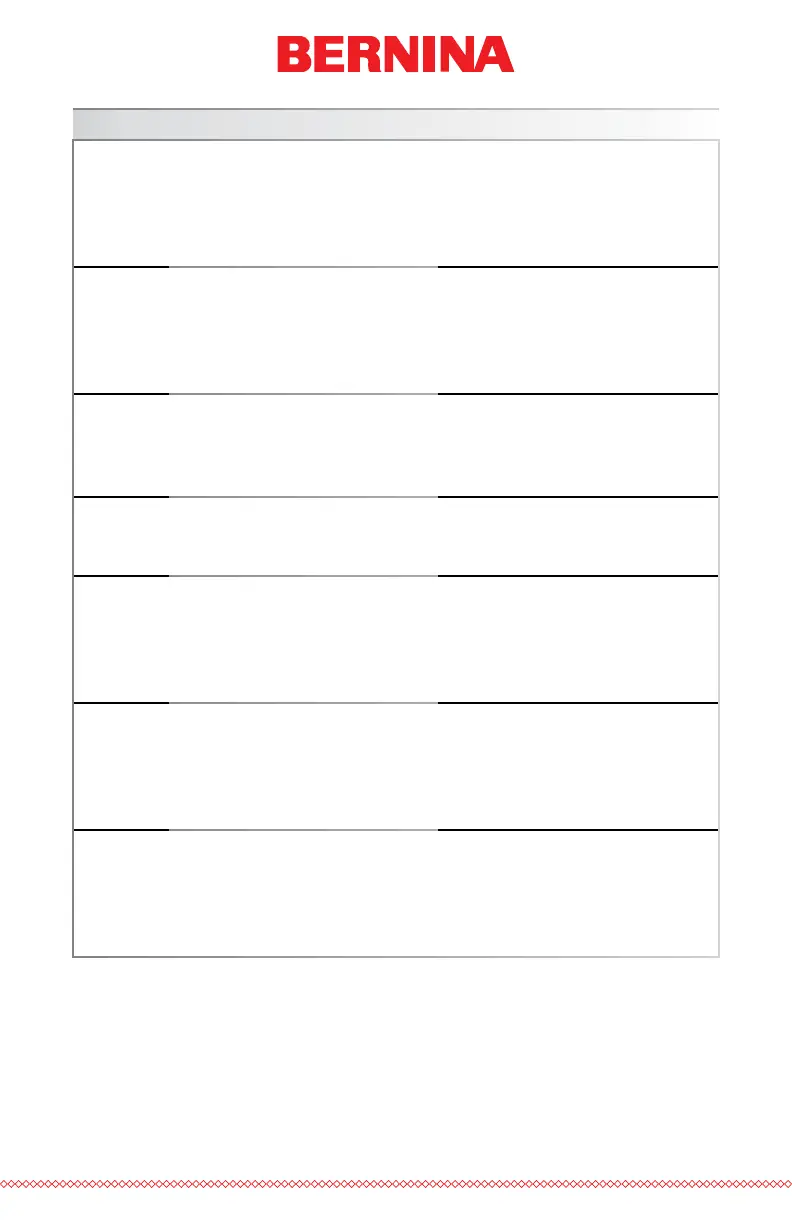
Size Benet Drawback
60/8 Used for the thinnest threads
and nest detail work.
Thinner needle blade is more
prone to needle deection and
breakage. Uncommon needle
size and can be difcult to
source and purchase.
65/9 Smallest of the more com-
mon needles. Used for ne
fabrics, 60-weight thread,
and delicate design details
and tiny lettering.
Thinner needle blade is more
prone to needle deection and
breakage.
70/10 Used for ne fabrics, design
details and small letter. Good
needle size for a larger ma-
jority of embroidery work.
Thinner needle blade is more
prone to needle deection and
breakage.
75/11 Standard needle size and
good for the majority of
embroidery applications.
May be too large for ner
detail work.
80/12 Largest of the more common
needles. Often used caps
with buckram backing or
cotton duct jackets to help
alleviate thread breaks.
Larger holes can damage ner
materials and smaller design
details.
90/14 Used with some specialty and
metallic threads.
Larger holes can damage ner
materials and smaller design
details. Uncommon needle size
and can be difcult to source
and purchase.
100/16 Used with the thicker
12-weight threads like the
wool-acrylic blends.
Larger holes can damage ner
materials and smaller design
details. Uncommon needle size
and can be difcult to source
and purchase.


 To Next Page