SECTION 1 - GENERAL INFORMATION
1-3
TRACTOR ORIENTATION
OVERALL DESCRIPTION
The Models 2290, 2335, 2360, 2375 and 2425
tractors are classified as 4-wheel drive
articulating vehicles. The tractors consist of front
and rear frame assemblies which steer by
pivoting at the center articulation joint.
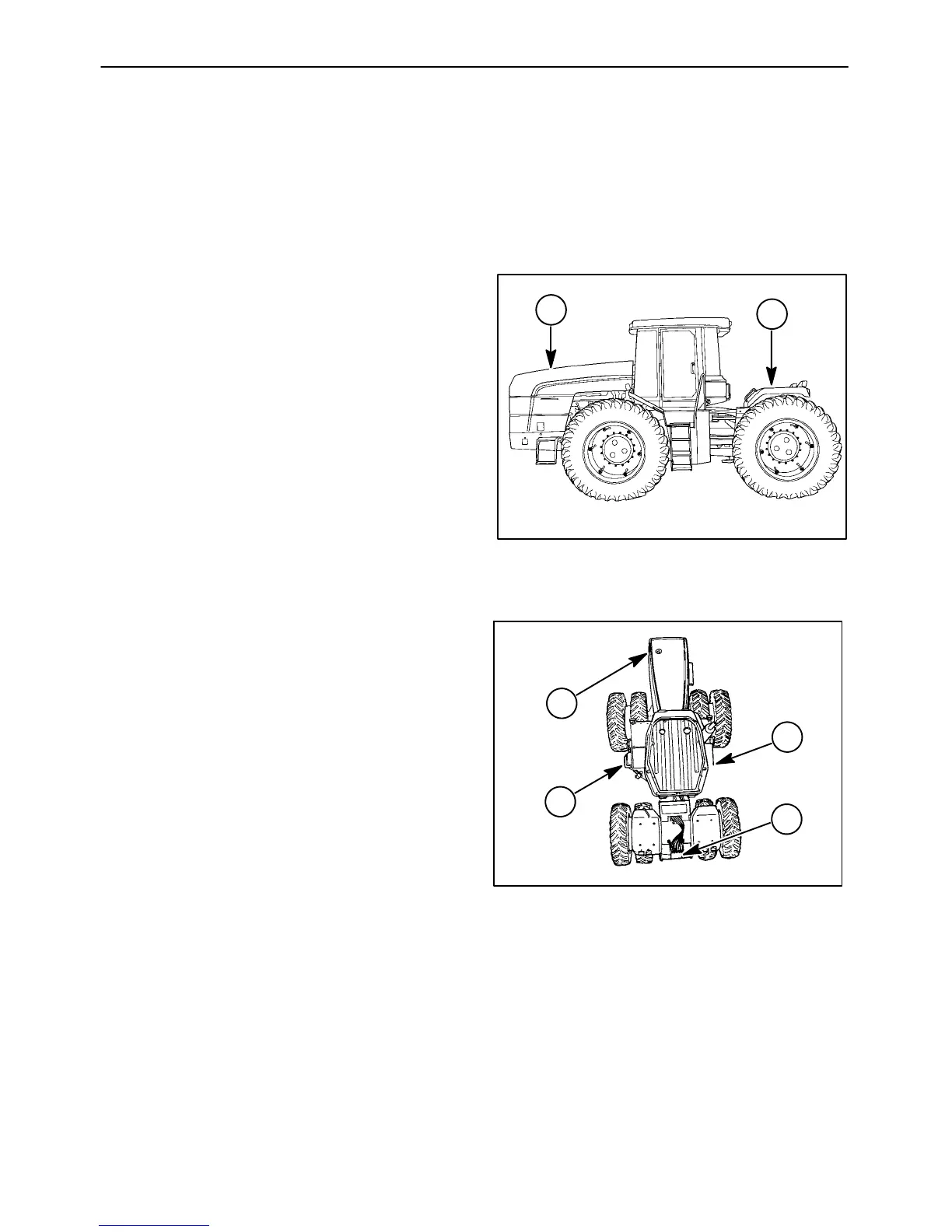
The front frame, 1, incorporates the engine, fuel
tanks, transmission, front drive axle, and cab.
The rear frame, 2, incorporates the rear drive
axle and supports any implements that are
operated by the tractor. This type of design
allows for greater flexibility of weight distribution,
depending upon operating conditions and type of
implement. The operator can ballast the tractor
to best suit the needs of the particular operation.
The construction of the tractor is a modular-type
construction. This means that the major
components are individual units which are
supported within the front and rear frames. This
makes for easier serviceability and longer life
due to reduced structural stress on components.
Figure 1-2
1
2
TRACTOR TERMINOLOGY
This manual uses the following terms to describe
tractor function and directional relationships:
Front, 1 - The engine end of the tractor. This
direction will also be referred to as “Forward
Direction of Travel.”
Right, 2 - The console side of the cab.
Back , 3 - The drawbar end of the tractor, which is
used for pulling implements.
Left, 4 - The doorway side of the cab.
Figure 1-3
1
4
3
2


 To Next Page