13
System description
The position of the actuator is regulated according to the position set-point value. The position set-point value
isspeciedbyanexternalstandardsignal.
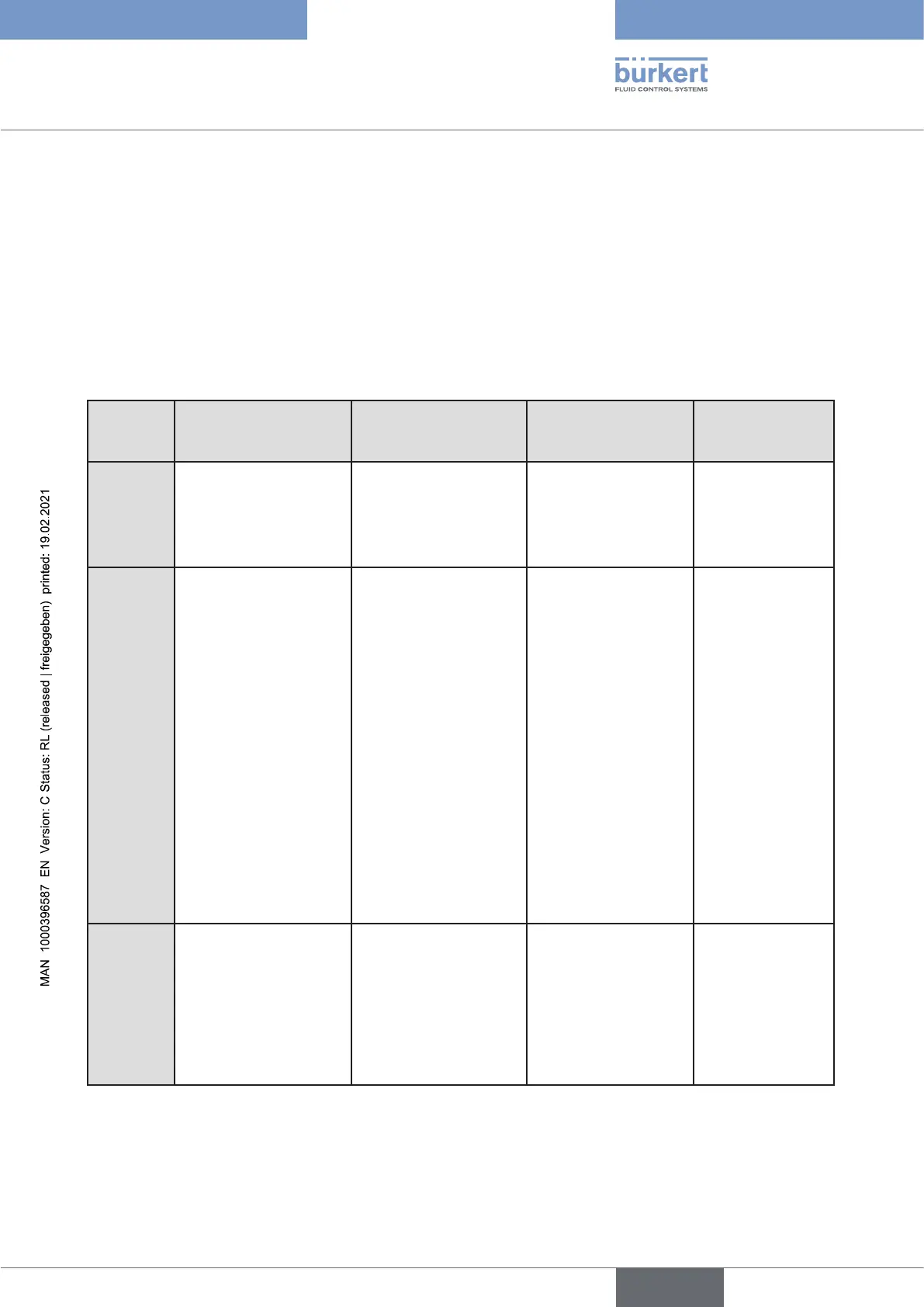
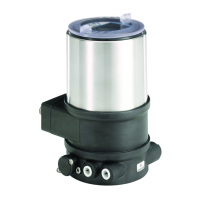
Pneumatically actuated piston actuators and rotary actuators can be used as an actuator. Single-acting
actuatorsareoeredincombinationwiththepositioner.
For single-acting actuators, only one chamber is aerated and deaerated in the actuator. The generated pressure
works against a spring. The piston moves until there is an equilibrium of forces between compressive force
and spring force.
5.3 Features of the valve types
Angleseatcontrol
valves/straightseat
controlvalves
Diaphragmvalves Ballvalves Flapvalves
Types • 2300
• 2301
• 2702
• 2712
• 2103
• 2730
• 2731
• 2652
• 2655
• 2658
• 2672
• 2675
Features
• incomingowunder
seat
• no closing impact
• straightowpathof
the medium
• self-adjusting
stungboxforhigh
leak-tightness
• medium is hermeti-
cally separated from
the actuator and
environment
• cavity-free and self-
draining body design
• anyowdirection
with low-turbulence
ow
• steam-sterilizable
• CIP-compliant
• no closing impact
• actuator and dia-
phragm can be
removed when the
body is installed
• scrapable
• minimum dead
space
• unaectedby
contamination
• little pressure loss
compared to other
valve types
• seat and seal can
be exchanged in
the three-piece ball
valve when installed
Note
can be used as
process controller
only
• unaectedby
contamination
• little pressure
loss compared
to other valve
types
• inexpensive
• low construction
volume
Typical
media
• water, steam and
gases
• alcohols, oils, propel-
lants,hydraulicuids
• salt solutions, lyes
(organic)
• solvents
• neutral gases and
liquids
• contaminated,
abrasive and
aggressive media
• media of higher
viscosity
• neutral gases and
liquids
• clean water
• slightly aggressive
media
• neutral gases
and liquids
• slightly
aggressive
media
Table 1: Features of the valve types
english
Type 8694 REV.2


 To Next Page