MTG200 Trunk Gateway User Manual | Dinstar
67
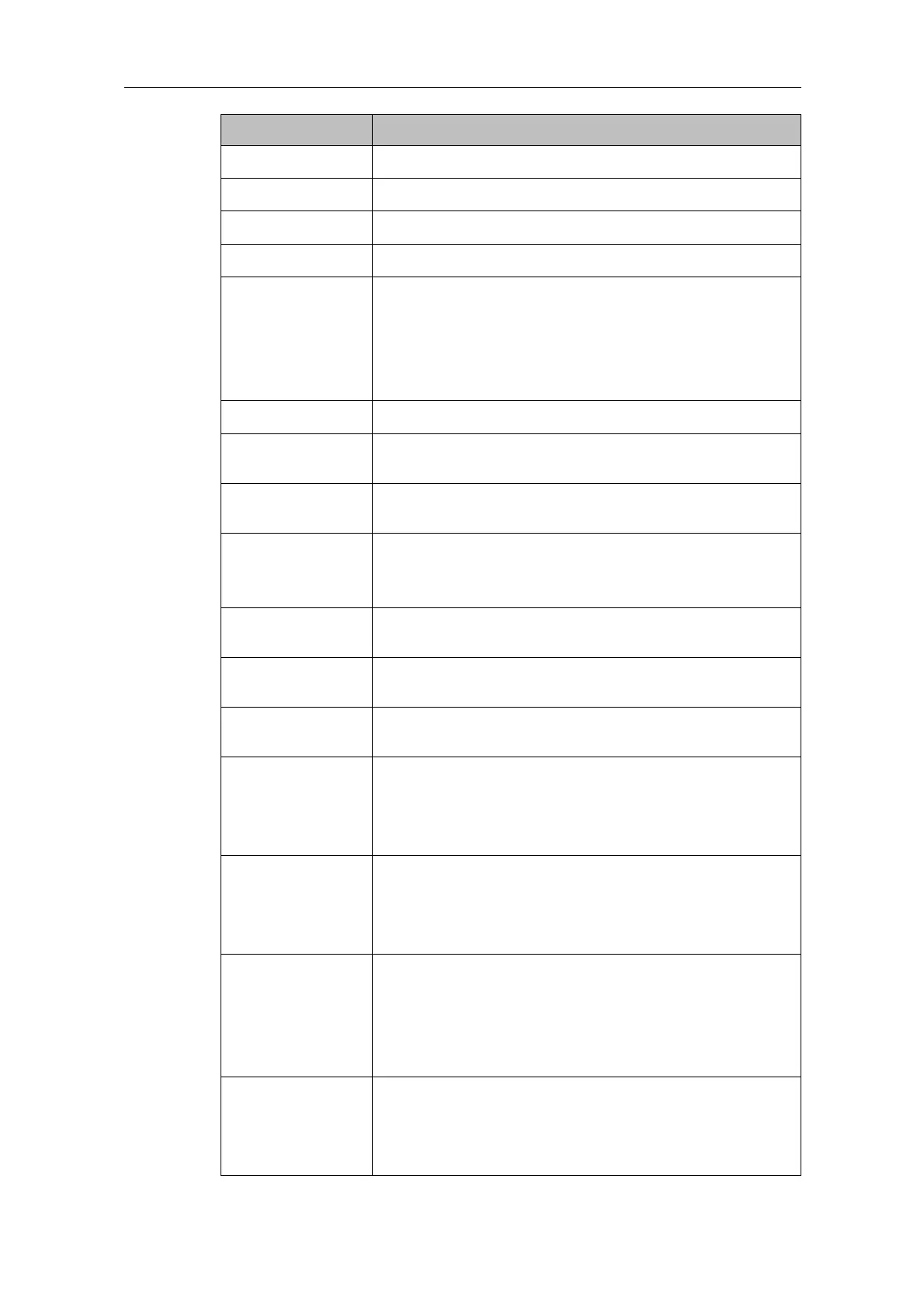
SIP UDP port that the device listens on, 5060 (default)
SIP TCP port that the device listens on, 5060 (default)
SIP TLS port that the device listens on
A local domain whose format is www.xxx.com
PRACK: Provisional Response ACK message
PRACK is a mechanism to ensure reliable transmission of
temporary messages (101-199) in SIP messages. PRACK is
generally a confirmation of receipt of 183 call in progress/180
ringing.
The 200 OK message sent by the device whether with SDP.
When enabled, the invite message sent by the device will come
with the Remote Party ID header field to support caller ID.
The user agent periodically sends re-INVITE or UPDATE
requests to keep the session active.
Policy of overload
Protection
The processing policy when the session request received by
the device exceeds the processing capacity of the device, and
the error code will be returned to reject/discard directly.
Used with overload protection policy to limit the CAPS of
equipment.
When enabled, the device will reply with an 18x immediately
after receiving the invite.
When receiving an invite with the same calling and called
number, the device will reply with 403 to reject.
When enabled, an invite with a Diversion header field
(carrying call forwarding information) will be received, and
the invite forwarded by the device will with a Diversion
header field.
When enabled, it will receive an invite message that does not
match the called number in the to header with the request line,
and the device will extract the called number from the to
header.
When enabled, an invite with a Diversion header or History-
Info header (carrying call forwarding information) will be
received. The invite forwarded by the device with the P-
Preferred-Identity header, and the number in the PPI header is
the number in the Diversion header or the History-Info header.
After enabling, when SIP calls in, if the number in the
received PAI header is inconsistent with the caller number, the
number in the PAI header will replace the caller number; when
SIP calls out, the caller number is encoded in the PAI header




 To Next Page