CONDITION POSSIBLE CAUSES CORRECTION
PEDAL IS SPONGY 1. Air in brake lines. 1. Bleed brakes.
2. Power brake booster runout (vac-
uum assist).
2. Check booster vacuum hose and
engine tune for adequate vacuum sup-
ply. Refer to power brake booster diag-
nosis and testing.
PREMATURE REAR
WHEEL LOCKUP
1. Contaminated brake shoe linings. 1. Inspect and clean, or replace shoes.
Repair source of contamination.
2. ABS EVBP malfunction. 2. Refer to Appropriate Diagnostic
Information.
3. Improper power brake booster
assist.
3. Refer to power brake booster diag-
nosis and testing.
STOP (BRAKE) LAMPS
STAY ON
1. Brake lamp switch out of adjust-
ment.
1. Replace brake lamp switch.
2. Brake pedal binding. 2. Inspect and replace as necessary.
3. Obstruction in pedal linkage. 3. Remove obstruction.
4. Power Brake Booster not allow-
ing pedal to return completely.
4. Replace power brake booster.
VEHICLE PULLS TO
RIGHT OR LEFT ON
BRAKING
1. Frozen brake caliper piston(s). 1. Replace caliper pistons or caliper.
Bleed brakes.
2. Contaminated brake shoe lining. 2. Inspect and clean, or replace shoes.
Repair source of contamination.
3. Pinched brake line. 3. Replace pinched line.
4. Leaking piston seal. 4. Replace piston seal or brake cali-
per.
5. Suspension problem. 5. Refer to Suspension section.
STANDARD PROCEDURE - BASE BRAKE
BLEEDING
CAUTION: This vehicle comes standard with
antilock brakes (ABS). If the ABS Integrated Control
Unit (ICU) has been replaced, the ABS will need to
be bled following the base brake bleeding, then the
base brakes must be bled again to ensure all air is
removed from the system. (Refer to 5 - BRAKES -
ABS - STANDARD PROCEDURE)
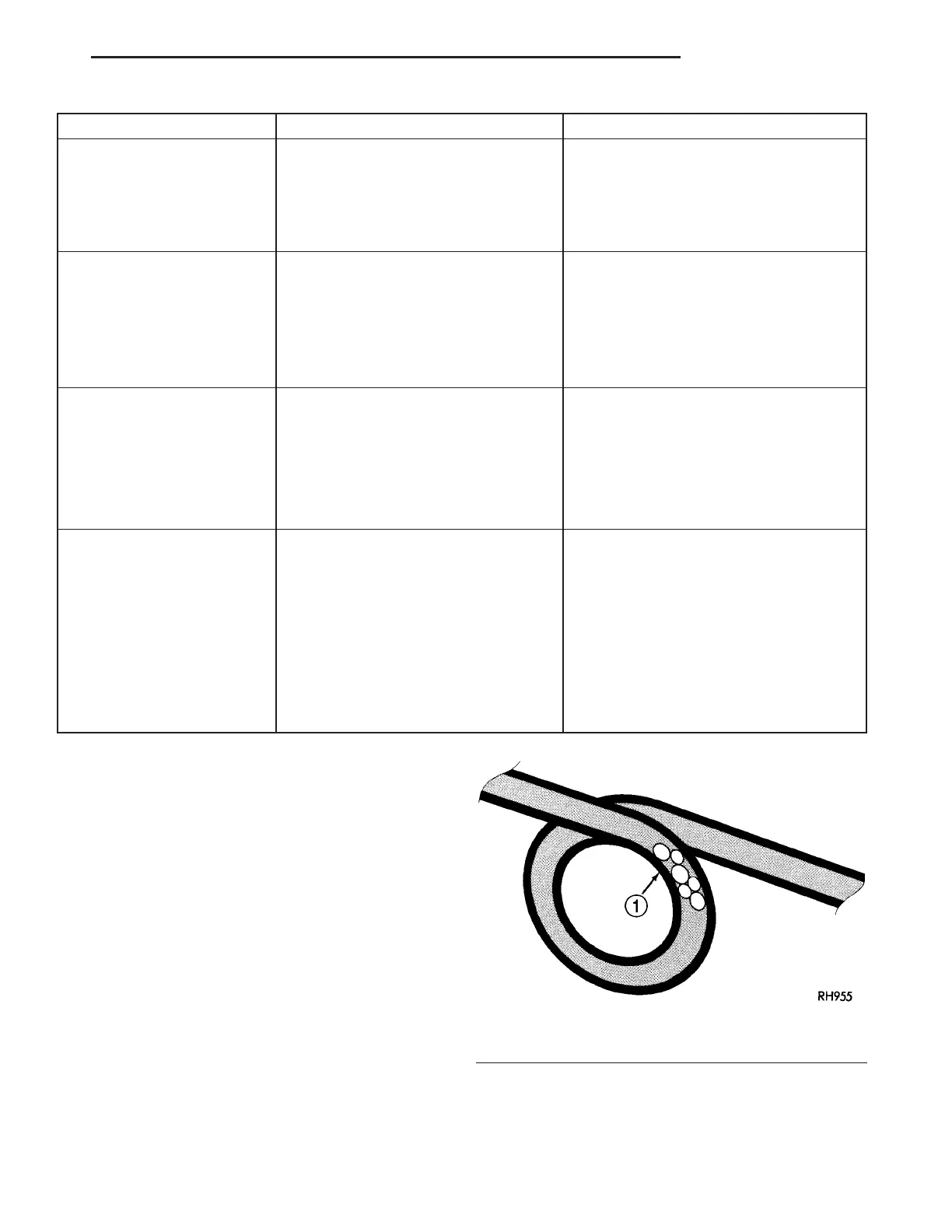
NOTE: When bleeding the brake system, some air
may be trapped in the brake lines or valves far
upstream (Fig. 1), as far as ten feet from the bleeder
screw. Therefore, it is essential to have a large vol-
ume of brake fluid available when bleeding the
brakes to ensure all the air is removed.
The base brake system can be bled with or without
a pressure bleeder. Refer to Pressure Bleeding
Method or Manual Bleeding Method below.
PRESSURE BLEEDING METHOD
Before removing the master cylinder cover, wipe it
clean to prevent dirt and other foreign matter from
dropping into the master cylinder.
Fig. 1 Trapped Air in Brake Line
1 - TRAPPED AIR
ZB BRAKES - BASE 5 - 5
BRAKES - BASE (Continued)






 To Next Page