STANDARD PROCEDURE
STANDARD PROCEDURE - HANDLING
AIRBAGS
DEPLOYED AIRBAG
The vehicle interior may contain a very small
amount of sodium hydroxide powder, a by-product of
airbag deployment. Sodium hydroxide powder can
irritate the skin, eyes, nose and throat. Wear safety
glasses, rubber gloves, and long sleeved clothing
when cleaning any of the powder residue from the
vehicle.
If you find that the cleanup is irritating your skin,
run cool water over the affected area. Also, if you
experience nasal or throat irritation, exit the vehicle
for fresh air until the irritation ceases. If irritation
continues, see a physician.
UNDEPLOYED AIRBAG
The airbags must be stored in its original special
container until used for service. At no time should a
source of electricity be permitted near the inflator on
the back of an airbag module. When carrying or han-
dling an undeployed airbag module, the trim side of
the airbag should be pointing away from the body to
minimize possibility of injury if accidental deploy-
ment occurs. Do not place undeployed airbag face
down on a solid surface, the airbag will propel into
the air if accidental deployment occurs.
STANDARD PROCEDURE - SERVICE AFTER AN
AIRBAG DEPLOYMENT
DRIVER AIRBAG
After a Driver Airbag has been deployed due to a
collision, the following MUST be replaced:
• Driver Airbag
• Clock Spring Assembly
• Steering Wheel
• Complete Steering Column Assembly
All other airbag and vehicle components should be
closely inspected following any airbag deployment,
but are to be replaced only as required by the extent
of the visible damage incurred.
PASSENGER AIRBAG
After a Passenger Airbag has been deployed due to
a collision. the following MUST be replaced:
• Passenger Airbag
All other airbag and vehicle components should be
closely inspected following any airbag deployment,
but are to be replaced only as required by the extent
of the visible damage incurred.
SEAT BELTS AND TENSIONERS
After a frontal impact where an airbag has been
deployed due to a collision. the following MUST be
replaced:
• Front Seat Belt Retractors (driver and passen-
ger) with integral Tensioners.
All other seat belts should be closely inspected for
cuts, tears, fraying, or damage in any way following
any frontal impact or airbag deployment. The other
seat belts are to be replaced when visible damage is
incurred. Inspect the Lower Anchors and Tether for
CHildren (LATCH) child restraint anchors for dam-
age after an impact event and replace as needed.
CLEAN UP PROCEDURE
Roll or fold the airbag towards its mounting point
(i.e. instrument panel, steering wheel, or roof sill).
Then tape the ripped cover over the deployed airbag
if applicable.
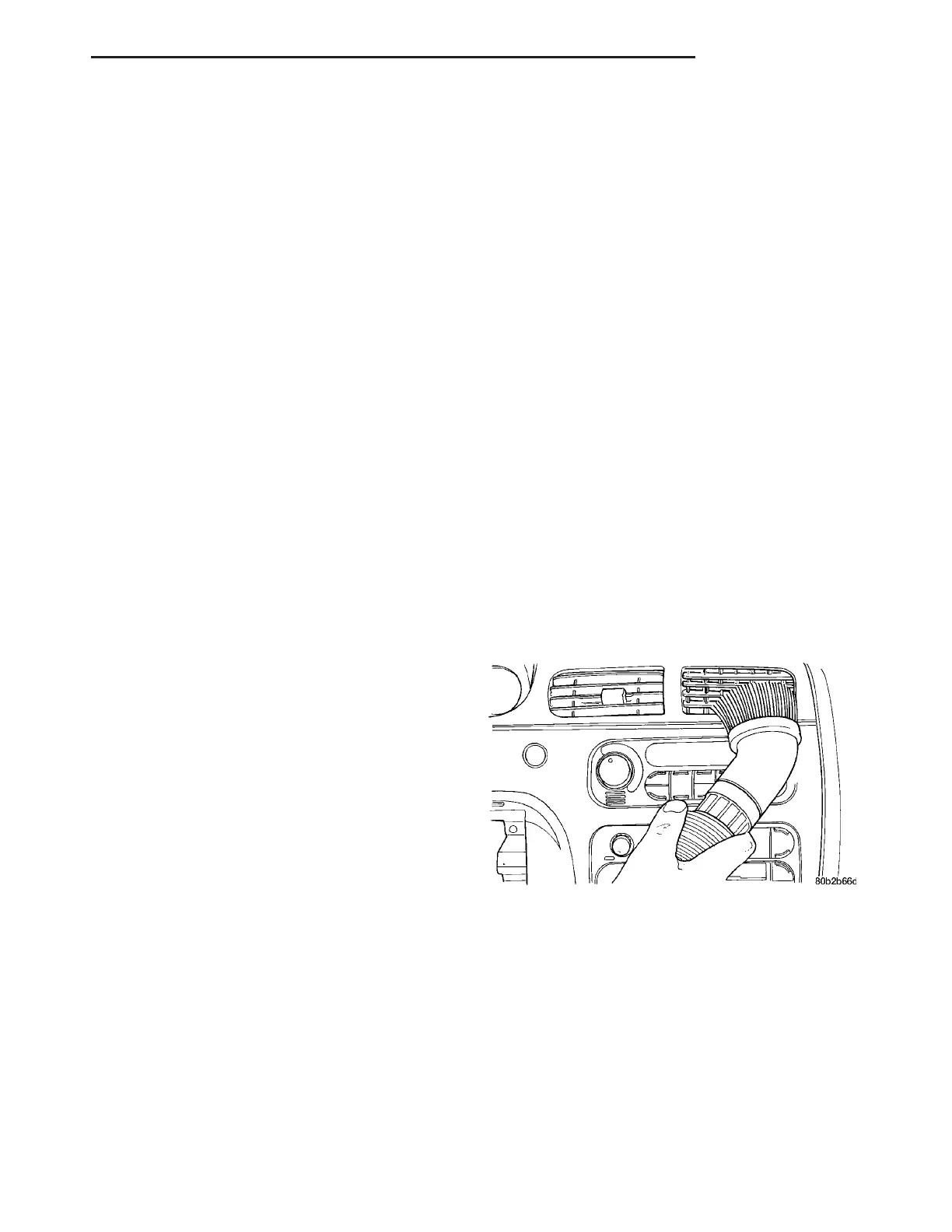
Use a vacuum cleaner to remove any residual pow-
der from the vehicle interior. Work from the outside
in to avoid kneeling or sitting in a contaminated
area. Vacuum the heater and A/C outlets as well (Fig.
1). If the heater or air conditioner was in RECIRC
mode at time of airbag deployment, operate blower
motor on low speed and vacuum powder residue
expelled from the heater and A/C outlets. Multiple
vacuum cleaning may be necessary to decontaminate
the interior of the vehicle.
CHILD TETHER
REMOVAL
(1) Move passenger seat to the forward most posi-
tion.
(2) Using a trim stick (special tool #C-4755) or
equivalent, gently pry off child tether cover just
below the sport bar and radio tweeter.
(3) Remove child tether from rear bulkhead.
(4) Remove child tether from vehicle.
Fig. 1 VACUUM HEATER AND A/C OUTLETS -
TYPICAL
ZB RESTRAINTS 8O - 3
RESTRAINTS (Continued)










 To Next Page