3.3.7 Electronic braking
The pump has a user selectable electronic braking option that is disabled by default.
With this option disabled, the pump will draw power from the electrical supply
connected to the pump via the nEXT pump power supply cable when accelerating and
running.
Whilst decelerating the pump will coast down and no power will be returned to the
electrical supply.
The electronic braking option may be enabled to reduce the pump deceleration time
and to recover some energy from the pump. This is only achieved by returning power
from the pump to the electrical supply through the nEXT pump power supply cable. The
rate at which electrical energy is returned to the supply is regulated to the voltages
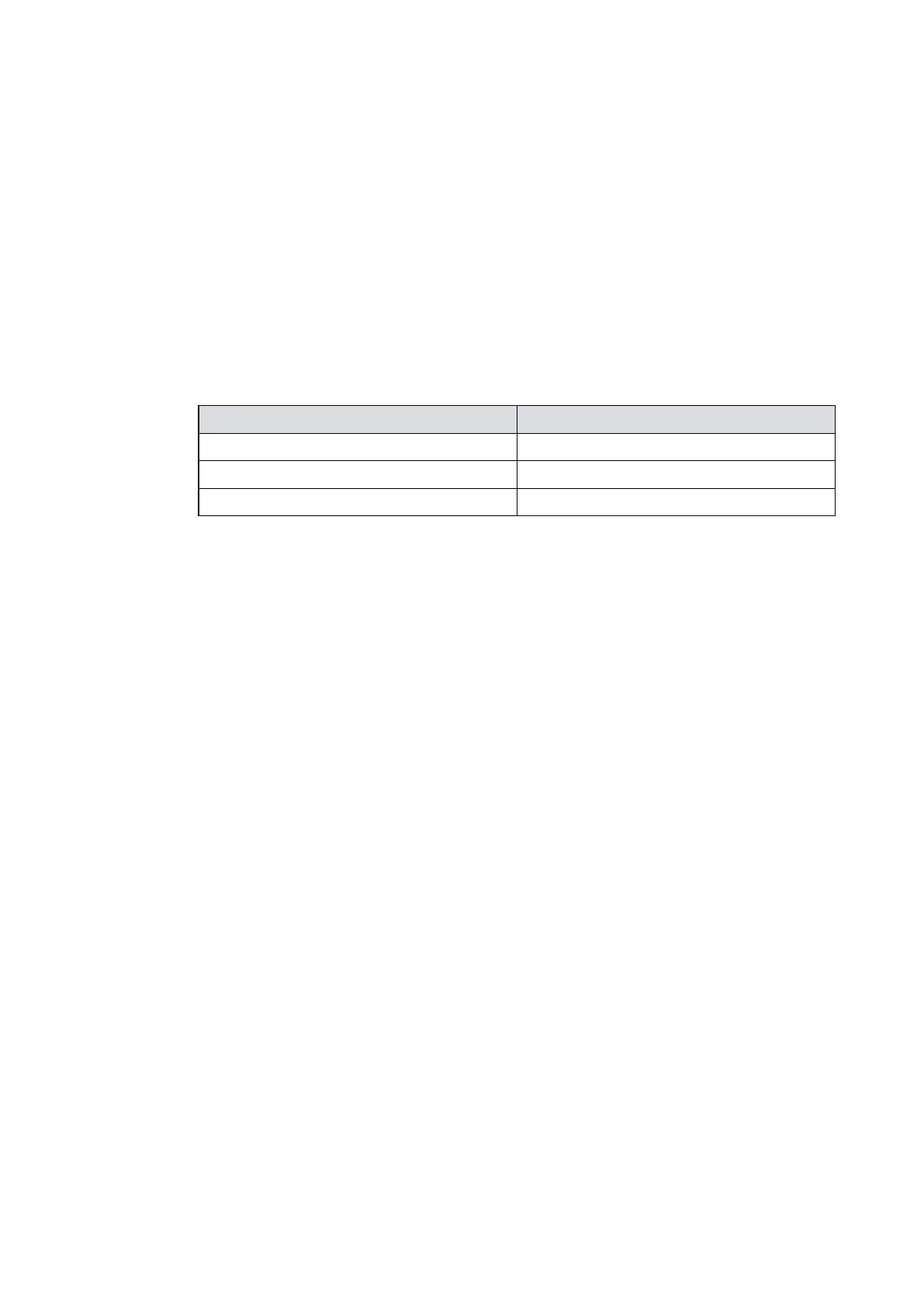
shown:
In order to achieve the fastest electronic braking times there must be somewhere for the
returned power to go, such as:
▪ A supply capable of receiving the returned power
▪ Other devices sharing the same electrical supply bus with the pump
▪ A suitable 3 A load when decelerating the pump
3.3.8 Bearing monitoring
In order to ensure maximum reliability and bearing life the nEXT pumps have an
integrated system to manage the bearing condition, refer to Bearing monitoring and
conditioning system on page 120. The pumps have an integrated battery backed real
time clock that is constantly monitoring pump storage time.
If the pump is stored without being run for more than 12 months "Bearing Run in Mode
on page 121" (BRIM) is triggered the next time the pump is started to condition the
bearing. Bearing run in mode (BRIM) is a start-up sequence for the pump designed to
precondition the bearing to optimise bearing life. The pump goes through a number of
speed steps before reaching full speed.
3.4 Logic interface
The motor controller can only be operated through the logic interface. There are three
types of signals on the logic interface.
▪ Control inputs: these are switch‑type signals that are used to control the pump
▪ Status outputs: these outputs identify the status of the system
▪ Analogue output: this provides a 0 ‑ 10 V output for a number of pump parameters.
The logic interface has been designed to support both serial and parallel control and
monitoring, operating through one connector. For serial control either RS232 (default) or
RS485 can be selected using the RS485/CAN/RS232 slide switch located on the motor
controller (refer to Connection for serial control and monitoring on page 73).



 To Next Page