Appendix B: Transmitter Installation
iConnect Installation Manual
105
bedrooms where fires might occur, for instance, where there is an electrical appliance such as an electric blanket or
heater, or where the occupant is a smoker.
You could also consider putting smoke alarms in any rooms where the occupant is unable to respond very well to a fire
starting in the room, such as an elderly or sick person or a very young child.
Checking that Smoke Alarms Can Be Heard
With the smoke alarms sounding in their intended locations, check you are able to hear it in each bedroom with the
door closed, above the sound of audio/TV systems. The audio/TV systems should be set to a reasonably loud
conversation level. If you can’t hear it over the sound of the radio, the chances are that it wouldn’t wake the occupants.
Positioning the Smoke Alarm
Mounting on a Ceiling
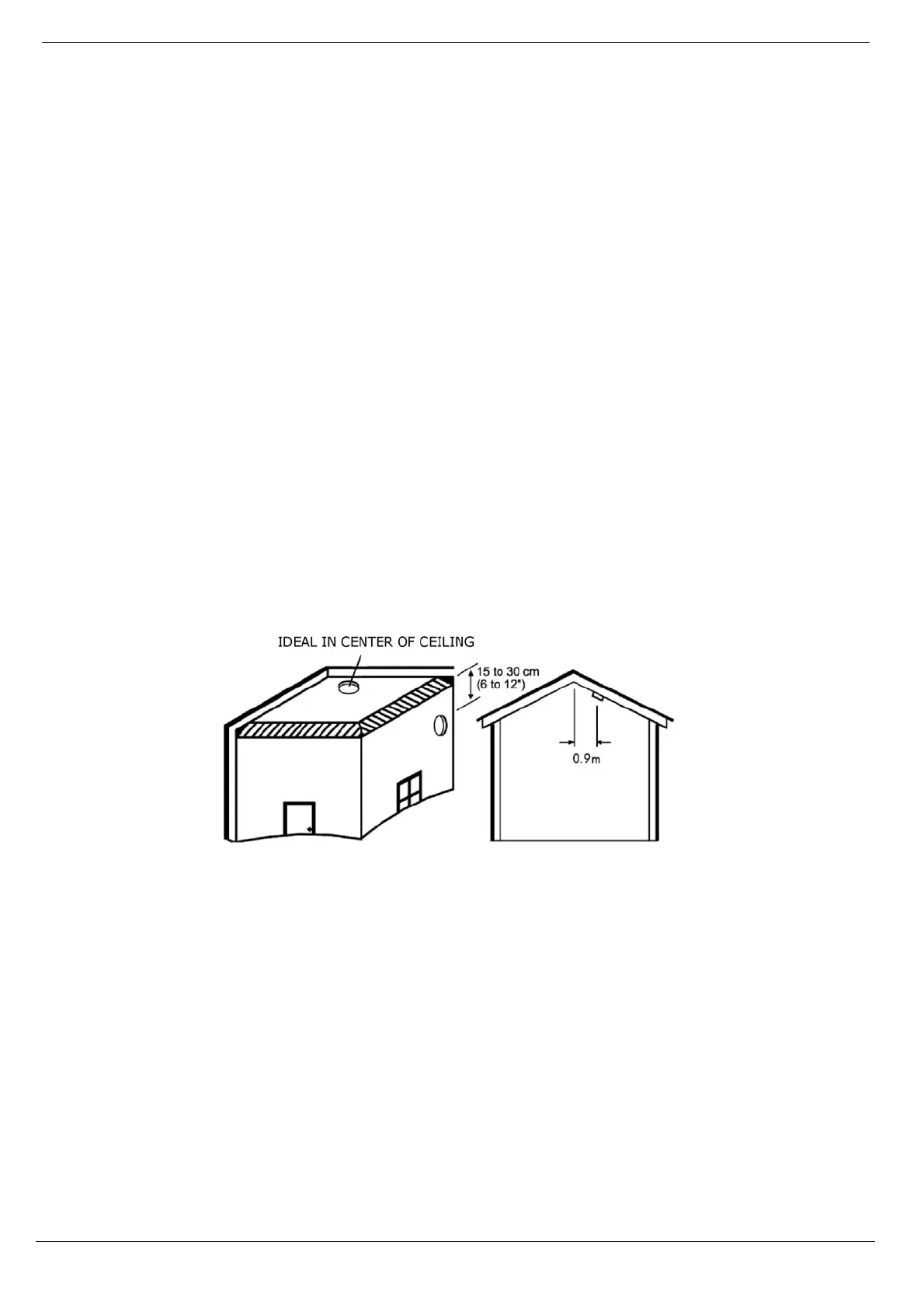
Hot smoke rises and spreads out, so a central ceiling position is the recommended location. The air is “dead” and does
not move in corners, therefore Smoke Alarms must be mounted away from corners. Place the unit at least 0.30m from
any light fitting or decorative object which might obstruct smoke entering the Smoke Alarm. Keep at least 0.30m away
from walls and corners – see Figure B- 17.
Mounting on a Wall
When a ceiling position is not possible (for example on a ceiling having exposed beams or joists, or built-in radiant
heating) put the top edge of the smoke alarm between 0.15m and 0.30m below the ceiling. Keep at least 0.30m from
corners – see Figure B- 17.
Mounting on a Sloping Ceiling
In areas with sloping or peaked ceilings install the Smoke Alarm 0.90m from the highest point measured horizontally,
because “dead air” at the apex may prevent smoke from reaching the unit – see Figure B- 17.
Figure B- 17: Smoke Alarm Positioning on Ceilings or Walls (left) & on Sloping Ceilings (right)
Locations to Avoid
Do not place the smoke alarm in any of the following areas:
Bathrooms, kitchen, shower rooms, garages or other rooms where the smoke alarm may be triggered
by steam, condensation, normal smoke or fumes.
Attics or other places where extremes of temperature may occur (below 4°C or above 40°C).
Near a decorative object, door, light fitting, window molding etc., that may prevent smoke from
entering the smoke alarm.
Surfaces that are normally warmer or colder than the rest of the room (for example attic hatches, non-
insulated exterior walls etc). Temperature differences might stop smoke from reaching the unit.
Next to or directly above heaters or air-conditioning vents, windows, wall vents etc. that can change
the direction of airflow.
In very high or awkward areas where it may be difficult to reach the alarm for testing or battery
replacement.


 To Next Page