IP Server 900 Programming Manual Function 3: Station programming
F.29
Procedure for all department types except ACD
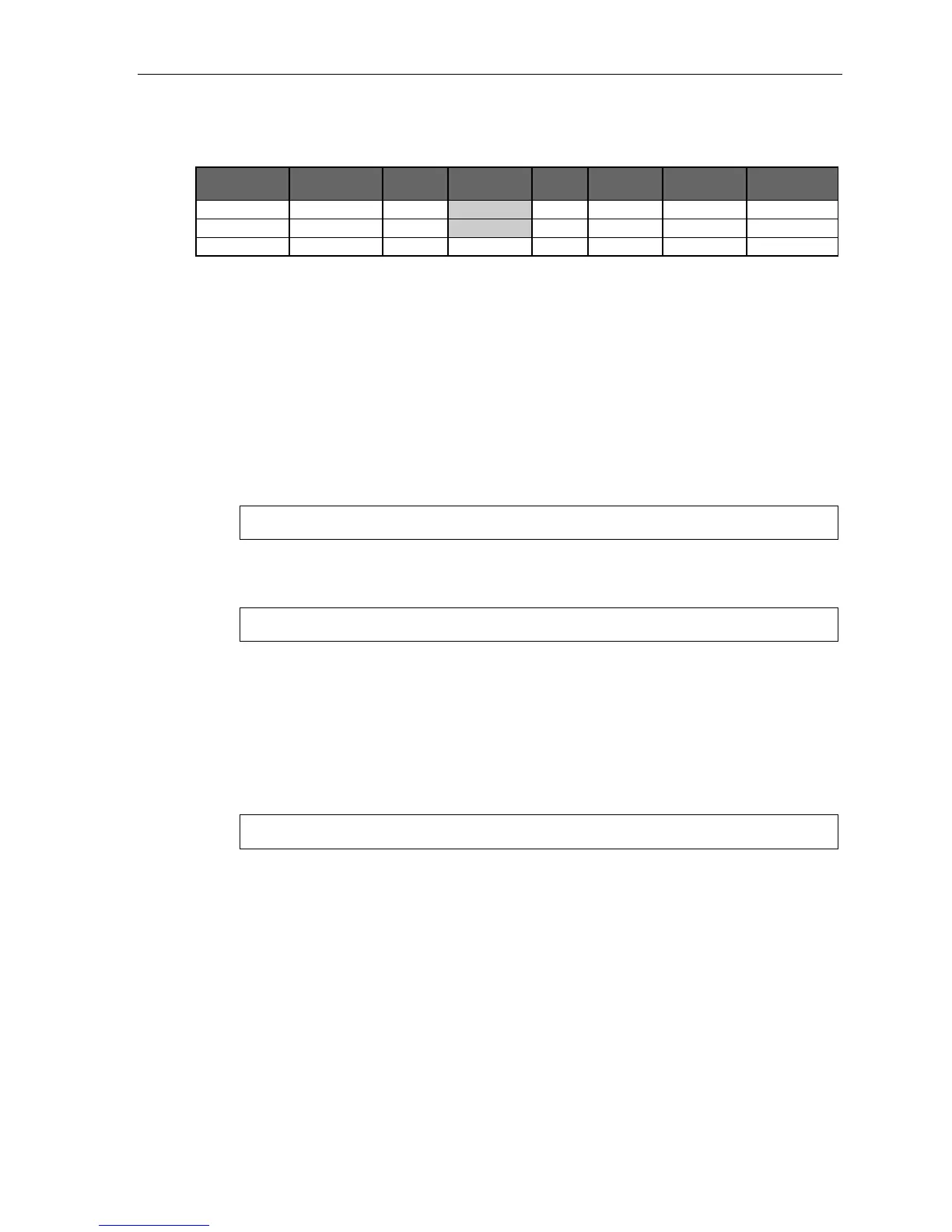
Here’s an example of a completed programming worksheet:
1.
Dept. no.
2.
Name
3.
Type
4.
Call waiting
5.
Tenant
6.
CF day
7.
CF night
8.
List:
290 Sales In order 1 MB300 MB300 104, 112, 115
291 Service UCD 1 X0 MB301 101, 102
292 Support All Y 1 X0 MB302 105, 106, 107
Here are the programming steps for all non-ACD department types.
1. Department number — The range depends on which numbering plan selection is in use (see
“Selectable numbering plan,” page C.2).
2. Name — Used for the display, reports, and as a programming aid. Length can be up to 10
characters (See “Entering alphanumeric characters,” page C.2).
Default: The department number.
3. Type — Selected one of the possible (non-ACD) types — all, VIP Oper, in order, UCD, or pick-up.
Can be changed later without affecting its other programmed values.
Default: In order.
4. Call waiting (applies only to “All” department type) — Y enables call waiting (call waiting tone and
Caller ID display) on busy extensions in the department. N disables call waiting for the department.
Default: Y (enabled).
Note: Y (Yes) overrides call waiting extension programming.
5. Tenant — Assign the department to a tenant. This is used to direct-dial operator (0) calls to the
tenant’s operator destination; it’s also used to play the tenant’s MOH source when the CO call is
placed on hold.
Note: To view and assign tenant, tenant service must be enabled in Function 169.
Default: 1.
6. and 7. Call forward busy/no answer — The department can be set to call forward busy/no answer to an
extension, another department, a mailbox or a branch ID for day mode and differently for night
mode. The department can have its own mailbox for pickup by members knowing the password or
forwarded to any mailbox type including guest, cascade, etc.
Calls routed to an extension via a department will follow the department’s call forwarding. While
calls transferred to the extension will follow the extension’s call forwarding as programmed in
Function 31 (see page F.2). Please note that the order that the extension numbers are entered
will dictate the order called when the department selected is “in order.”
Important: Don’t call-forward a department to itself. This can cause line lock-up problems.
Default: First extension in the system.
(Continued)


 To Next Page