IP Server 900 Programming Manual Function 3: Station programming
F.32
Procedure (ACD)
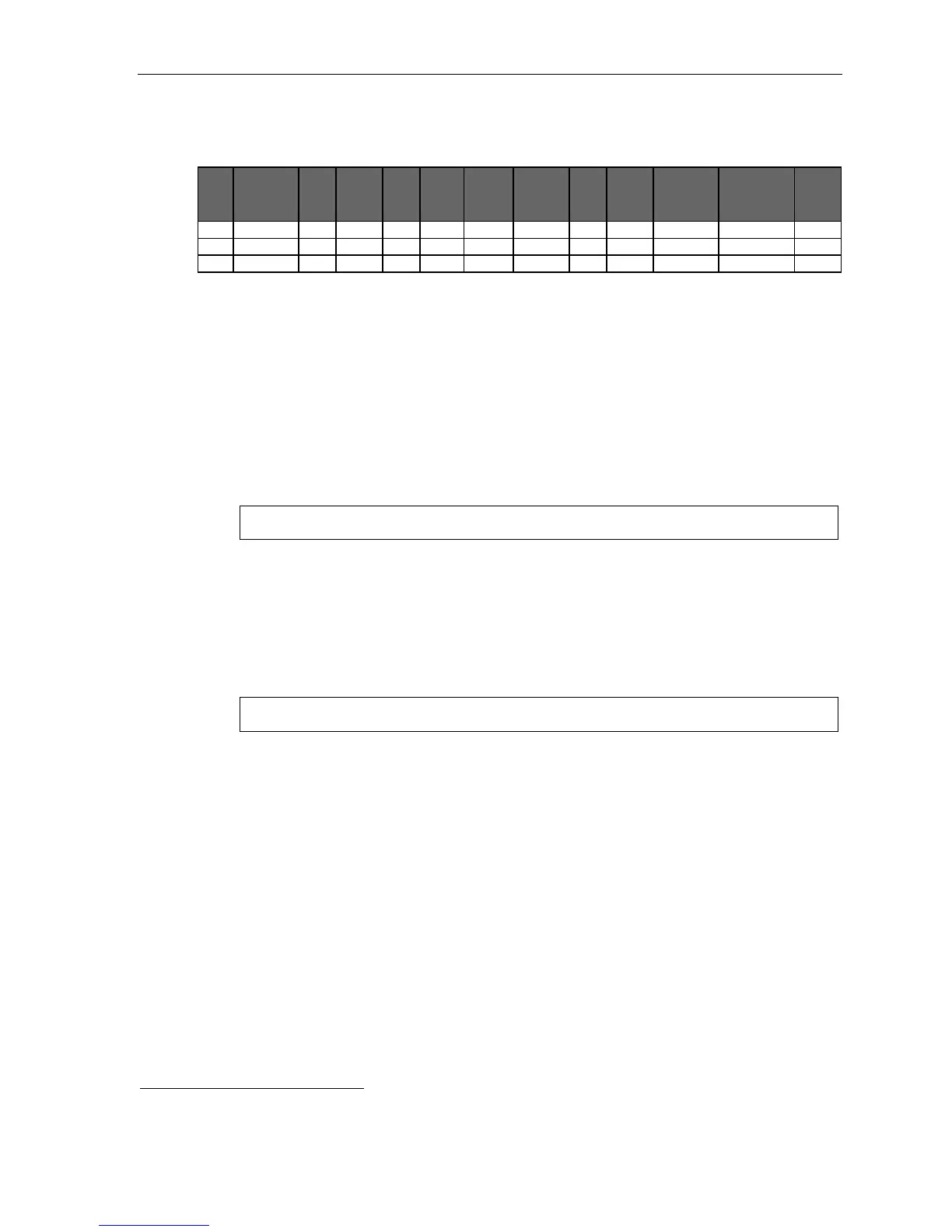
Here’s an example of a completed programming worksheet for an ACD department:
1.
Dept.
no.
2.
Name
3.
Type
4.
Tenant
5.
CF
day
6.
CF
night
7.
ACD
call esc.
timer
8.
Queue
exit
threshold
9.
ACD
exit
timer
10.
ACD
queue
annct.
11.
ACD
queue
2nd annct.
12.
List
13.
Agent
priority
290 Sales ACD 1 MB300
MB300 0 0 0 538 539 104, 112, 115 1
291 Service ACD 1 X0 MB301 0 0 0 548 549 101, 102 1
292 Support ACD 1 X0 MB302 0 0 0 558 559 105, 106, 107 2
Here are the programming steps for ACD departments.
1. Department number — The range depends on which numbering plan selection is in use (see
“Selectable numbering plan,” page C.2).
2. Name — Used for the display, reports, and as a programming aid. Length can be up to 10
characters (See “Entering alphanumeric characters,” page C.2).
Default: The department number.
3. Type — Select ACD, for an ACD department.
Default: In order.
4. Tenant — Assign the department to a tenant. This is used to direct-dial operator (0) calls to the
tenant’s operator destination; it’s also used to play the tenant’s MOH source when the CO call is
placed on hold.
Note: To view and assign a tenant, tenant service must be enabled in Function 169.
Default: 1.
5. and 6. Call forward busy/no answer — The department can be set to call forward busy/no answer
to an extension, another department, a mailbox or a branch ID for day mode and differently for night
mode. The department can have its own mailbox for pickup by members knowing the password or
forwarded to any mailbox type including guest, cascade, etc.
Calls routed to an extension via a department will follow the department’s call forwarding. While
calls transferred to the extension will follow the extension’s call forwarding as programmed in
Function 31 (see page F.2).
Important: Don’t call-forward a department to itself. This can cause line lock-up problems.
Default: X100.
7. ACD call escalation timer — If an ACD call is in queue longer than the setting of the ACD call
escalation timer and has been in queue the longest, it will be sent to the next available agent,
regardless of the ACD agent priority setting of that agent’s station. Setting this value to zero
disables the timer.
Range: 5–900 (seconds). Default: 0 (disabled).
8. Queue exit threshold — If the number of calls in queue to an ACD department matches the ACD
queue exit threshold, a new call to that department will immediately follow the department’s call-
forwarding destination. Setting this value to zero disables this setting.
Range: 5–20 (calls in queue). Default: 0 (no threshold).
9. ACD exit timer — This is a department-specific timer for routing ACD calls that have been in queue
too long. When a call has been held in queue for the duration specified by the ACD exit timer, the
call will follow the department’s call-forwarding destination. Setting this value to zero causes the
department to use the default ACD exit timer setting (Function 154
1
).
Range: 5–900 (seconds). Default: 0 (use system setting in Function 154).
1
Function 154: ACD exit timer — The amount of time (in seconds) that a call will remain in ACD department queues before following the
department re-route.


 To Next Page