Flexball Italiana S.r.l. 65
21. Behaviour of the electronic system in case of failures
21.1. Unforeseen motor switching off
In any case where the motor switches off during navigation, the normal procedure requires to turn off the
ignition key and then to turn it on again. During the turn-on operation, independently on the position of the
command station, the actuator behaves as follows:
Gearbox is moved to a the safety position (neutral)
Motor accelerator is moved to minimum
The command station that had the control of the vessel, has now lost the command. In order to acquire the
command again, you must start again the procedure:
put the lever in neutral
press “Command” and then “Warm-up”.
This procedure is described in section 3
21.2. Faults in the electrical network
In case of system fault (missing power supply, data transmission cables broken, etc) if the vessel is equipped
with mechanical actuators, it can be controlled via emergency levers. See the procedure ‘Emergency levers’ in
section 3.6. of this manual.
21.3. Protection in case of overload or break of the push-pull cables
The actuator has a built-in control that generates a failure alarm, in case the push-pull cables becomes “too
hard” or in case the cable stroke is not set correctly (beyond the maximum stroke allowed by the actuator).
If one of the above mentioned cases occurs:
the systems stops (no movements on the push-pull cables)
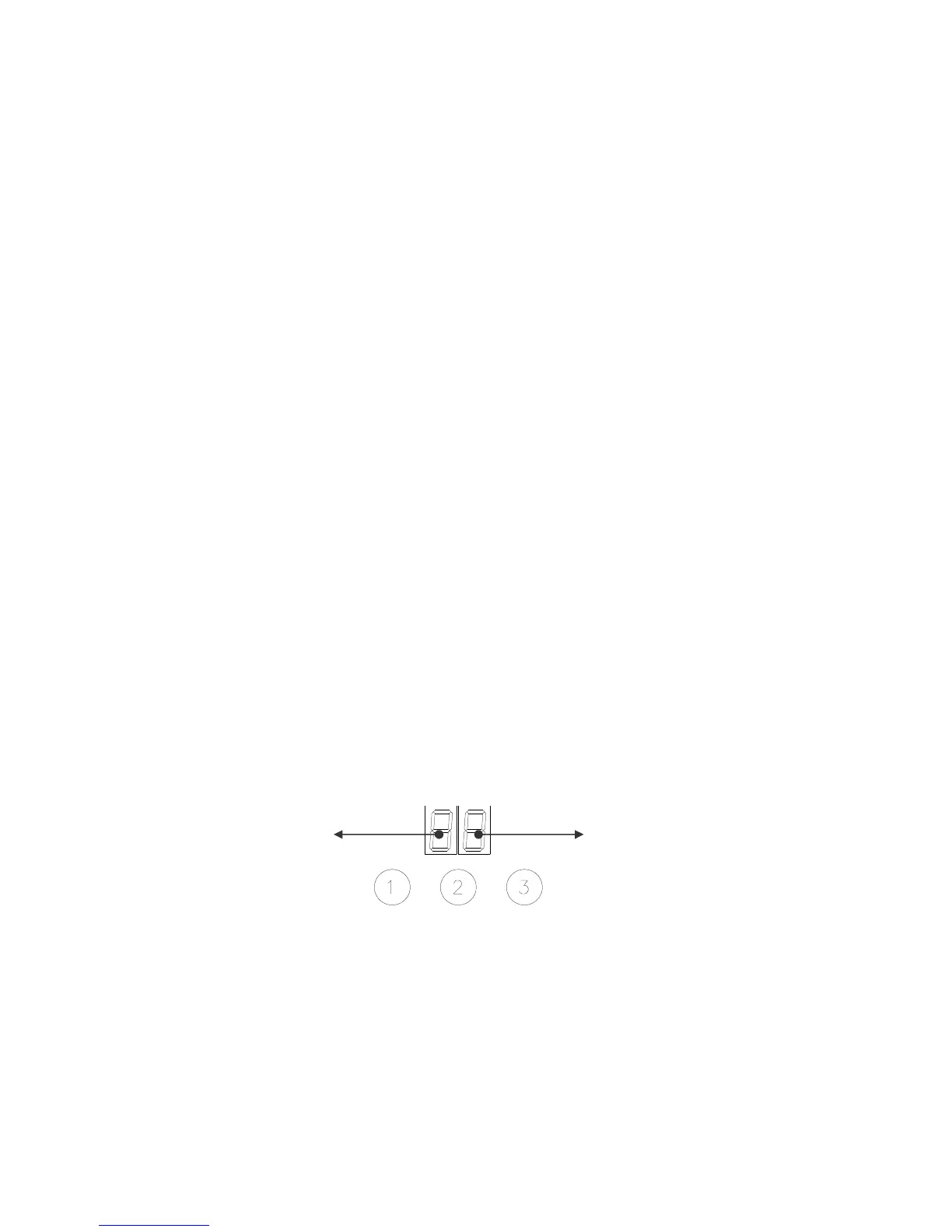
on the display of the actuator appears an “E” on the side of the overloaded cable
all the LEDs of the command stations start to blink.
In case this alarm is activated, turn off the system, verify the causes that have generated the alarm before
turning on again the system.
An “E” will be shown on the
side of the actuator with the
cable overload
An “E” will be shown on
the side of the actuator
with the cable overload



 To Next Page