General
1-31
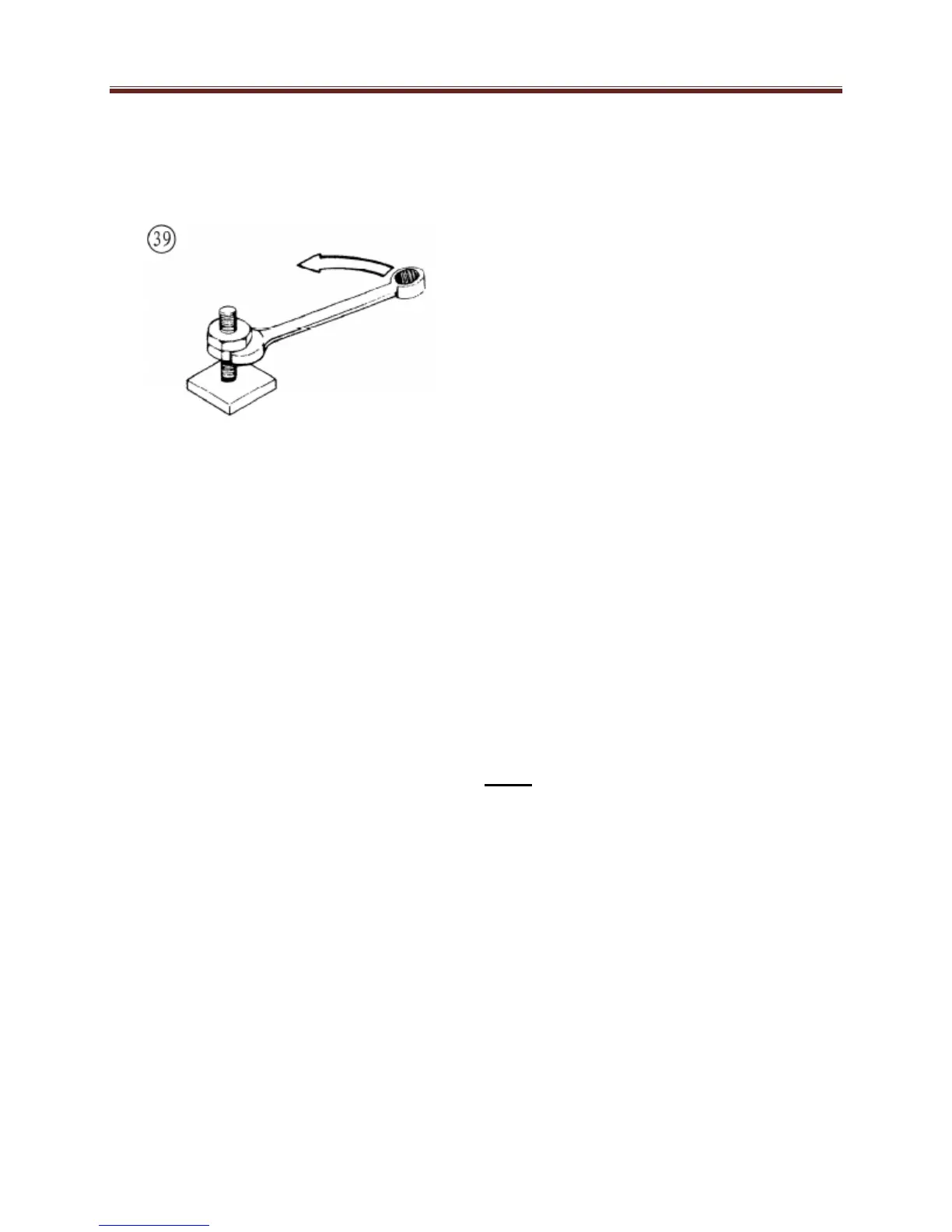
If one is not available, thread two nuts onto
the stud and tighten them against each
other. Remove the stud by turning the
lower nut (Figure 39).
1. Measure the height of the stud
above the surface.
2. Thread the stud removal tool onto
the stud and tighten it, or thread two
nuts onto the stud.
3. Remove the stud by turning the
stud remover or the lower nut.
4. Remove any thread locking
compound from the threaded hole.
Clean the threads with an aerosol
parts cleaner.
5. Install the stud removal tool onto
the new stud or thread two nuts
onto the stud.
6. Apply thread locking compound to
the threads of the stud.
7. Install the stud and tighten with the
stud removal tool or the top nut.
8. Install the stud to the height noted
in Step 1 or its torque specification.
9. Remove the stud removal tool or
the two nuts.
Removing Hoses
When removing stubborn hoses, do not
exert excessive force on the hose or fitting.
Remove the hose, do not exert excessive
force on the hose or fitting. Remove the
hose clamp and carefully insert a small
screwdriver or pick tool between the fitting
and hose. Apply a spray lubricant under
the hose and carefully twist the hose off
the fitting. Clean the fitting of any corrosion
or rubber hose material with a wire brush
Clean the inside of the hose thoroughly.
Do not use any lubricant when installing
the hose (new or old). The lubricant may
allow the hose to come off the fitting, even
with the clamp secure.
Bearings
Bearings are used in the engine and
transmission assembly to reduce power
loss, heat and noise resulting from friction.
Because bearings are precision parts, they
must be maintained with proper lubrication
and maintenance. If a bearing is damaged,
replace it immediately. When installing a
new bearing, take care to prevent
damaging it.
Note:
Unless otherwise specified, install
bearings with the manufacturer’s mark
or number facing outward.
Removal
While bearing are normally removed only
when damaged, there may be times when
it is necessary to remove a bearing that is
in good condition. However, improper
bearing removal will damage the bearing
and possibly the shaft or case.


 To Next Page