Step 3: Flare pipe ends
Proper flaring is essential to achieve
an airtight seal.
1.
After removing burrs from cut
pipe, seal the ends with PVC
tape to prevent foreign
materials from entering the
pipe.
2.
3.
Sheath the pipe with insulating
material.
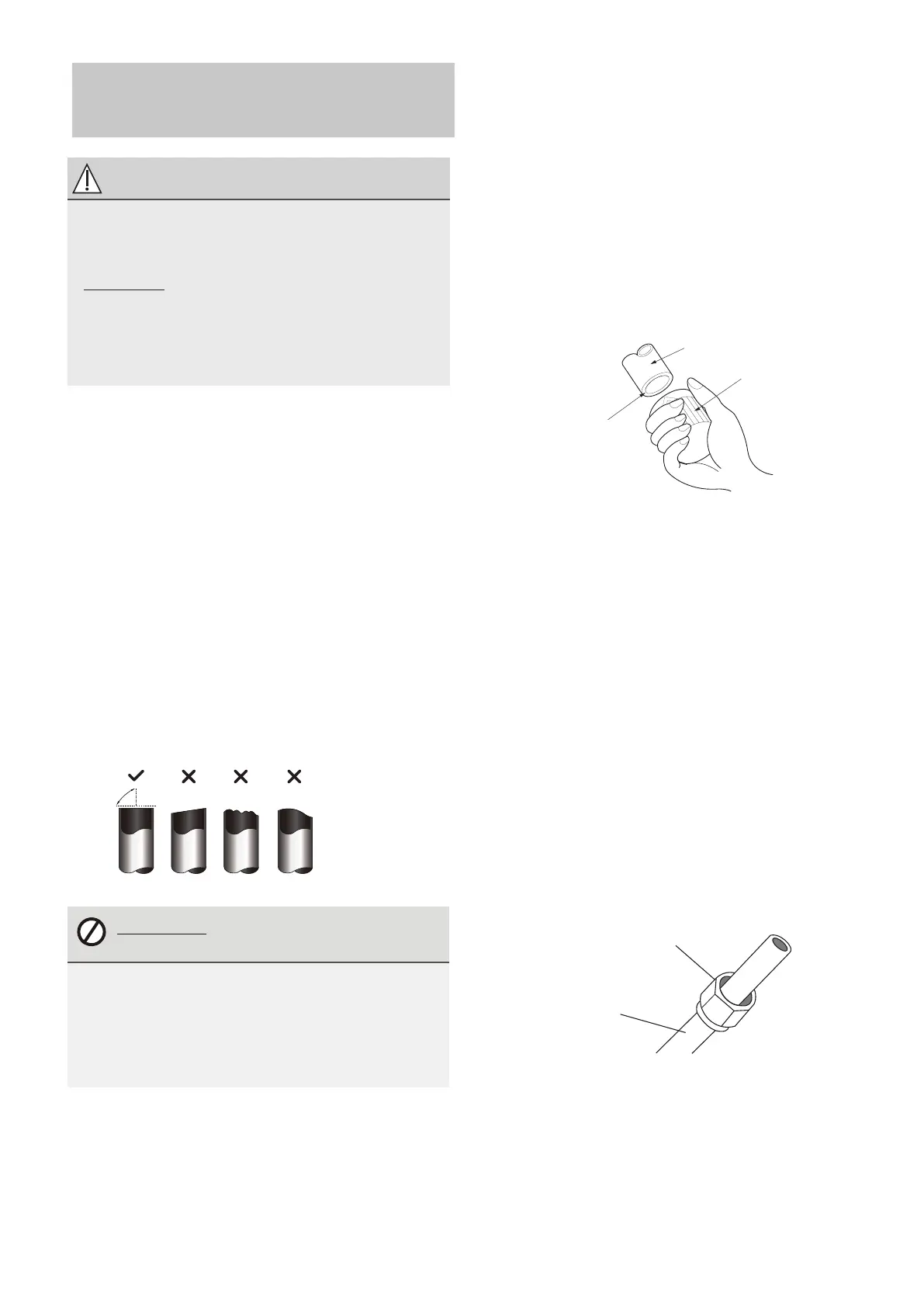
Place flare nuts on both ends of
pipe. Make sure they are facing
in the right direction, because
you can’t put them on or
change their direction after
flaring.
Flare nut
Copper pipe
4. Remove PVC tape from ends of
pipe when ready to perform fla-
ring work.
Pipe
Reamer
Point down
Connection Instructions –
Refrigerant Piping
Step 1: Cut pipes
When preparing refrigerant pipes,
take extra care to cut and flare them
properly. This will ensure efficient
operation and minimize the need for
future maintenance.
1.
Measure the distance between
the indoor and outdoor units.
2.
Using a pipe cutter, cut the pipe a
little longer than the measured
distance.
3.
Make sure that the pipe is cut at a
perfect 90°angle.
Oblique Rough Warped
90°
DO NOT DEFORM PIPE
WHILE CUTTING
Be extra careful not to damage,
dent, or deform the pipe while
cutting. This will drastically reduce
the heating efficiency of the unit.
CAUTION
The branching pipe must be installed
horizontally. An angle of more than
10° may cause malfunction.
DO NOT install the connecting pipe
until both indoor and outdoor units
have been installed.
Insulate both the gas and liquid
piping to prevent water leakage.
Step 2: Remove burrs.
Burrs can affect the air-tight seal of
refrigerant piping connection. They
must be completely removed.
1.
Hold the pipe at a downward
angle to prevent burrs from
falling into the pipe.
2.
Using a reamer or deburring tool,
remove all burrs from the cut
section of the pipe.


 To Next Page