4. The test stand should be serviced by a trained technician only. Power must be disconnected
before the column covers are removed.
After the above safety checks and procedures have been performed, the test stand may be powered on
and is ready for operation.
3 OPERATION BASICS
3.1 Operational safety
The following safety checks and procedures should be performed before and during operation:
1. Always consider the characteristics of the sample being tested before initiating a test. A risk
assessment should be carried out beforehand to ensure that all safety measures have been
addressed and implemented.
2. Wear eye and face protection when testing, especially when testing brittle samples that have the
potential to shatter under force. Be aware of the dangers posed by potential energy that can
accumulate in the sample during testing. Extra bodily protection should be worn if a destructive
failure of a test sample is possible.
3. Keep away from moving parts of the test stand. Loose articles of clothing should not be worn. Long
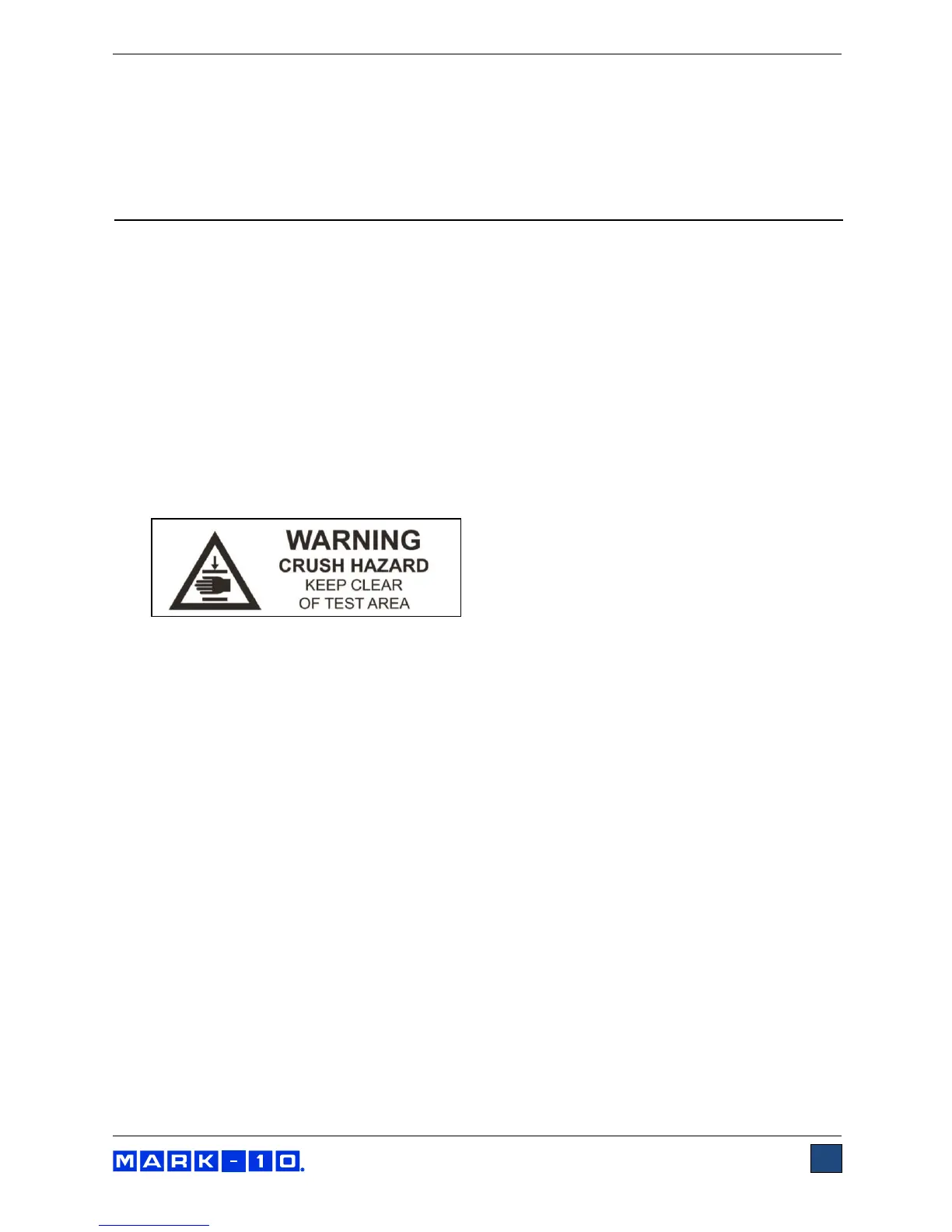
hair should be covered to avoid a hazardous situation. A Crush Hazard warning label is located on
the base of the test stand. It appears as follows:
Definition: Keep any body parts and clothing clear of the area between the base of the test stand and the
moving crosshead.
4. In those applications where samples can shatter, or other applications that could lead to a
hazardous situation, use of a machine guard is strongly recommended.
5. When the test stand is not in use, ensure that the power is turned off to prevent accidental
engagement of any of the controls.


 To Next Page