Monarch SE 2004----------------------------------------------------------------------------------------------------------------------------------------------------------------------------------------------------------------------------- Section 3 Exterior & Interior | 107
Periodic resealing of the joints and seams is necessary to prevent the entrance
of moisture into the motorhome. Enough emphasis cannot be placed on this issue.
Extreme damage from a water leak can occur rapidly. Never leave the motorhome
unattended with the slide room extended. If the motorhome is to be stored outside
throughout the winter months, a full interior inspection for water leaks should be
made bi-monthly.
Extensive sealing has been done at the factory; however, the normal twisting and
flexing that occurs while traveling may have compromised a seal or seam.
INSPECT: All joints and seams should be inspected at least
twice a year and recalked as necessary.
Special attention should be directed toward the roof air conditioning seals, ceiling
and plumbing vents, skylights, roof mounted antennas, windows, door molding,
clearance lights and the beltline molding.
Specific sealant products should be used in the areas for which they were designed.
These items can be obtained from recreational vehicle parts suppliers. Listed below are
some of the more common sealants and the areas in which they are used. Approved
sealants are available at service centers and authorized dealers.
WARNING: Some products may contain hazardous materials
which require special handling. Read labels carefully. Follow all
of the product manufacturer’s safety requirements.
Sealant
Types:
Tar Tape:
The tar tape is used on aluminum roofs seal seams at
the front, rear and down the center. The sealant is available
as a peel and stick waterproof membrane that contains UV
inhibitors and is temperature resistant providing superior
seal protection in all types of weather. Store sealant out of
direct sunlight between 50º F and 90º F.
To Apply:
1. Clean the aluminum surface with Denatured Alcohol.
2. Set the tar tape upon desired area, heat to a warm temperature allowing
tape to form into place.
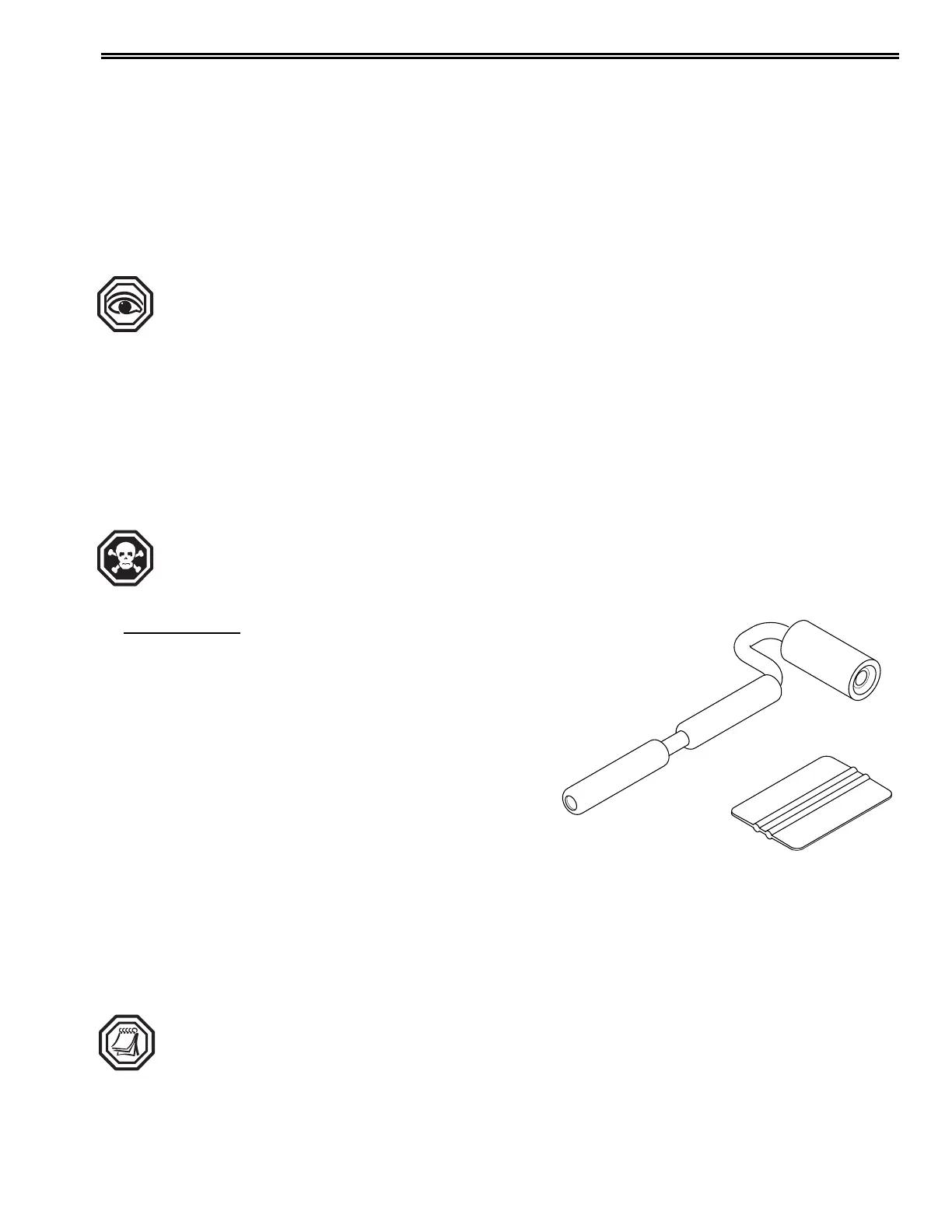
3. Use a squeegee to mold sealant into cracks and seams, followed by a
roller to roll out tape to get a good uniform seal.
NOTE: Check the tar tape at least twice a year for cracks.
Removal of the tar tape is done with a plastic putty stick.
Thoroughly clean the surface using 3M adhesive cleaner before
applying the new tar tape.
Roof Care & Seal
Inspections
Tar Tape Roller
Squeegee
Seams
030985



 To Next Page