CONDUCTING A STRESS TEST
SECTION 4
25
Patient Preparation
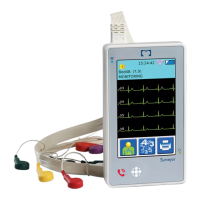
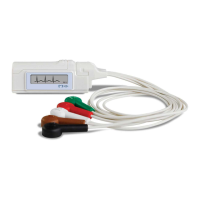
TIP: Leads are attached to the patient cable which connects to the patient module the patient wears
during the stress test. If conducting multiple stress tests and if multiple patient cables are available,
streamline the process by prepping all patients beforehand. For each patient’s test, simply plug the patient
cable into the patient module and begin.
Before attaching the electrodes, assure the patient fully understands the procedure and what to expect.
Privacy is very important in assuring the patient is relaxed.
Reassure the patient that the procedure is painless and that the electrodes on their skin are all that they
will feel.
Make sure the patient is comfortable. Ensure patient’s arms and hands are relaxed.
Once all the electrodes are attached, ask the patient to not talk. Explain this will assist you in acquiring a
good ECG.
Preparing Patient Skin
Thorough skin preparation is very important. There is natural resistance on the skin surface from various sources
such as hair, oil, and dry, dead skin. Skin preparation is intended to minimize these effects.
To prepare the skin:
Shave hair from electrode sites if necessary.
Wash area with warm, soapy water.
Dry skin vigorously with an abrasive pad such as a 2 x 2 or 4 x 4 gauze to remove dead skin cells and oil,
and to increase capillary blood flow.
Patient Hookup
Attach the electrodes to the lead wires on the patient cable before attaching electrodes to the patient. The patented
LeadForm patient cable is lightweight and conforms to the patient’s torso. When the patient cable is properly
draped over the patient’s right shoulder, the order in which to connect the wires to the electrodes is easily apparent.
(See Patient Hookup Summary Table.)
To Attach the Electrodes
1. Firmly attach each lead wire to an electrode.
2. Drape the patient cable over the patient’s right shoulder with the connector on the bottom end, and the RA
and LA leads at the shoulder.
3. Place the gel area of the electrode over the center of the prepared area using the positioning illustrated in
figure 4-1; press the adhesive ring into place. Avoid pressing the center of the gel area.
4. RA and LA leads should be placed close to the shoulder on the clavicle bone away from muscular areas to
avoid muscle interference.
5. The RL lead is typically placed on the sternum midway between the arm leads and V1 and V2 leads but
can be placed anywhere to maximize patient comfort.
6. The LL lead should be placed on the lower left side of body, as close to the hip as possible, on the iliac
crest (original Mason-Likar position), or on the lowest rib on the left side of the chest (modified Mason-
Likar position)*
7. Ensure electrodes are firmly attached to the skin. A good test for firm electrode contact is to slightly tug on
the electrode to check adhesion. If the electrode moves freely, it needs to be changed. If the electrode
does not move easily, a good connection has been obtained.



 To Next Page