Need help?
Do you have a question about the multivac C 500 and is the answer not in the manual?
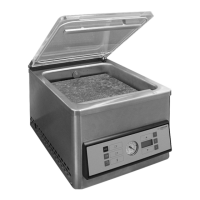
Details the front-facing components and their labels on the machine.
Illustrates the rear-facing components and their labels, with the back wall removed.
Defines the intended and appropriate applications for the vacuum sealing machine.
Lists applications that are not suitable for the machine and voids liability.
Highlights common operational errors and their potential negative consequences.
Explains residual hazards and emphasizes operator responsibility for safety.
Provides crucial safety warnings regarding electrical hazards, burns, and cover movement.
Details safety precautions specifically for maintenance tasks on the sealing unit.
Instructions for unpacking, checking for damage, and preparing the machine for initial use.
Guidance on ensuring correct electrical connection and voltage compatibility.
Instructions for connecting an optional external vacuum source, specifying hose diameter and length.
Details on connecting the optional water cooling system, including requirements and specifications.
Information and instructions for connecting a compressed air supply for enhanced sealing force.
Step-by-step guide for connecting the inert gas supply and setting pressure.
Initial steps for starting the machine and preparing for the packaging process.
Procedure for powering on the machine and verifying readiness via display and LED indicators.
Instructions on how to load and utilize pre-programmed factory settings for common products.
Guidelines for optimal sealing time and pressure for various products, including examples.
Recommended vacuum levels for different product types like cheese, meat, and liquids.
Specific considerations and precautions when vacuum sealing liquids, focusing on preventing bubbling.
Method to determine the correct pressure setting for liquids to prevent foaming and ensure proper sealing.
Advice on selecting the appropriate pouch size and filling it correctly for optimal results.
Correct placement of pouches and filler plates within the vacuum chamber to ensure proper evacuation.
Steps to verify the tightness and integrity of a sealed pouch, identifying common causes of leaks.
How to inspect the quality of the seal seam, excess film separation, and common issues.
Instructions on viewing and adjusting various machine parameters like pressure and time settings.
Understanding the display of external air pressure (lid open) and chamber pressure (lid closed).
How to view and modify the desired pressure level for the evacuation process.
Procedure for adjusting the post-evacuation time, especially for products that may seal air internally.
How to view and modify the duration of the sealing process based on pouch thickness.
Instructions on viewing and adjusting the separation time for effective pouch film trimming.
How to view and modify the inert gas fill level for modified atmosphere packaging.
Guide to storing and retrieving custom machine settings for different products.
Step-by-step instructions for saving current settings into available memory positions.
A schedule of recommended maintenance tasks for normal and aggravated operating conditions.
Detailed instructions and safety precautions for cleaning the machine, including agent types.
Procedures for disinfecting the machine and applying corrosion protection to metal surfaces.
A list of recommended cleaning agents, disinfectants, and corrosion protection products from various manufacturers.
Instructions for replacing the lid seal, including safety warnings and tips for ensuring vacuum integrity.
Identifies causes and solutions for the machine failing to start or operate.
Addresses issues related to the lid not closing or maintaining a seal during operation.
Solutions for poor sealing quality, leaks, or slack pouches due to incorrect settings or unsuitable materials.
Troubleshooting steps when the machine fails to achieve the target pressure, often related to oil or leaks.
Causes and solutions for wrinkles appearing in the sealed pouch, related to pouch size or placement.
Steps to resolve issues with the lid failing to open automatically after a cycle.
Diagnosing and fixing problems related to oil mist, unusual smells, or vacuum pump component issues.
Explains the meaning of error code "Er 4" (pressure sensor/line issue) and its resolution.
Explains the meaning of error code "Er 5" (gas value not reached) and its resolution.
Explains the meaning of error code "Er 6" (gas supply/pressure issues) and its resolution.
Description of the MHP operating mode for products with air pockets, using impulses.
Instructions for setting the MHP evacuation and pause times via the control panel.
 General
| Brand | multivac |
|---|---|
| Model | C 500 |
| Category | Kitchen Appliances |
| Language | English |

 To Next Page