Page 5-2 Vector-LP Radio Beacon Transmitter Technical Instruction Manual
Issue 1.1 Section 5 Maintenance and Troubleshooting
5.3 CORRECTIVE MAINTENANCE
Corrective maintenance procedures consist
of identifying and correcting defects or
deficiencies that arise during operation of
the transmitter. Local/remote alarm signals
are generated when a malfunction occurs.
The nature of the fault and station policy
dictates whether immediate maintenance
response is necessary. Fault analysis and
rectification may be
conducted from three
different levels with a different technical
competence level required for each.
5.3.1 On-Air Troubleshooting
On-air troubleshooting can be performed
from a remote location or locally at the
transmitter site.
5.3.1.1 Remote Troubleshooting
Remote on-air troubleshooting consists of
monitoring the transmitter's RF output
using an on-air monitor and polling the
status of the transmitter using the optional
remote control and monitoring software.
This information enables you to decide if a
response is deferred to a more convenient
time, if immediate corrective action is
taken, and whether a standby transmitter is
enabled (if available). Nautel recommends
you incorporate the significance of remote
indications and the appropriate responses
into the station’s standard operating
procedures. Refer to paragraph 5.5 to
determine the troubleshooting action
required for a given fault.
5.3.1.2 Local Troubleshooting
Local on-air troubleshooting consists of
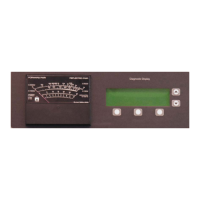
monitoring the transmitter's diagnostic
display and fault alarm indicators. Analysis
of their status normally identifies the type of
fault and in most cases determines what
corrective action must be taken. Refer to
paragraph 5.5 to determine the
troubleshooting action required for a given
fault.
5.3.2 Off-Air and Standby Side
Troubleshooting
Off-air troubleshooting is performed when
proper operation cannot be restored. In
dual side (A and B) transmitters, if an
active side PWB or assembly is defective,
the transmitter automatically changes over
allowing safe replacement of the defective
PWB or assembly. You can remove the RF
power module from the active side, but a
changeover (for dual side applications) or
inhibit (for single side applications) will
occur. Troubleshooting for a majority of
standby side faults can be performed using
the test standby side troubleshooting menu
(paragraph 3.6.13.4).
For off-air troubleshooting procedures,
Nautel recommends you connect the
output to a precision 50 :, resistive
dummy load (rated for twice the
transmitter’s maximum carrier power). If a
suitable dummy load is not available, the
transmitter may remain connected to its
antenna for these procedures. When it is
necessary to troubleshoot faults in the
power amplifier stage, reduce the RF
output level to a minimal value when the
RF output is connected to the antenna.
5.4 ELECTROSTATIC PROTECTION
The transmitter's assemblies contain
semiconductor devices that may be
damaged by electrostatic discharge. Before
removing an assembly from the transmitter,
and while servicing an assembly, observe
the following precautions:
NOTE
Electrostatic energy is produced when two
insulating materials are rubbed together. A
person wearing rubber-soled shoes,
walking across a nylon carpet or a waxed
floor can generate an extremely large
electrostatic charge. This effect is
magnified during periods of low humidity.
This high voltage may damage
components such as integrated circuits,
field-effect transistors, thyristors, and
Schottky diodes unless adequate
precautions are taken.


 To Next Page