Vector-LP Radio Beacon Transmitter Technical Instruction Manual Page 5-3
Section 5 Maintenance and Troubleshooting Issue 1.1
5.4.1 Discharging of Personnel
Maintainers should be electrically
discharged by a suitable grounding
system (anti-static mats, grounding
straps) during removal of an assembly
from the exciter and while handling the
assembly for maintenance procedures.
5.4.2 Handling/Storage
A sub-assembly should be placed in an
anti-static bag when it is not installed in the
exciter or when it is not being subjected to
maintenance procedures. Electronic
components should be stored in anti-static
materials.
5.4.3 Tools/Test Equipment
Testing and maintenance equipment,
including soldering (for example: Irons with
grounded tips) and unsoldering tools,
should be suitable for contact with static
sensitive semiconductor devices.
5.4.4 Stress Current Protection
Protect static sensitive semiconductor
devices from unnecessary stress current
as follows:
x Ensure electrical connections are not
broken while current is flowing in the
circuit.
x Ensure voltages are not present on
external control/monitoring circuits
when they are connected.
5.5 TROUBLESHOOTING FRONT
PANEL ALARMS
Front panel fault analysis can be performed
from the exciter panel. There are several
ways to use the front panel to determine
the occurrence and origin of a fault:
x The system diagram is a flow diagram
that indicates the operational status of
various sections of the transmitter. If a
lamp is on (red), a fault is occurring in
the associated section of the
transmitter.
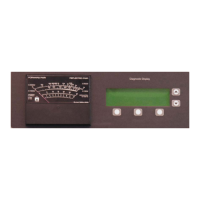
x The diagnostic display’s meter screen
has real-time meter indications (e.g.,
forward power) to assist in fault
analysis.
x The diagnostic display’s main screen
will indicate when a fault is occurring.
Press the Status soft key to display all
active faults.
x The diagnostic display’s Events Log
(see paragraph 3.6.5) provides a
chronological list of faults/events as
well as root cause information to assist
in fault diagnosis.
NOTE
It is important to consider both the real-time
and the logged information when
troubleshooting. Displayed active faults
may or may not be the root cause of the
problem. The Events Log displays the root
cause of an event (i.e., the first fault
detected), which may have been transient,
but resulted in other faults that remain
active. It also displays the status of certain
parameters at the time of the event.
(a) Determine the origin of the fault by
noting which of the system diagram’s
lamps has turned on. If no system
diagram lamp is on, proceed to step (b)
for non-alarm troubleshooting tips.
NOTE
In dual side (A and B) transmitters, some
faults will also initiate a Changeover
alarm. In this case, the transmitter will
continue to operate using the standby side.
This may allow troubleshooting (and
subsequent repair) to be deferred to a
more convenient time.
NOTE
The troubleshooting procedures in this
manual are limited to module level checks
and sub-assembly replacement.


 To Next Page