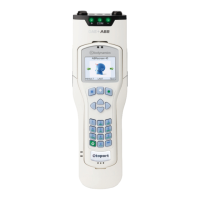
Otoport OAE+ABR
User Manual for Otoport DP+TE model
203
Technical specications
27.1.5 Clock/Calendar
Internal Real Time Clock/Calendar operates to 2099
27.1.6 Power
Li-Polymer Battery
Intelligent multi-level power control for charging/testing/idle/sleep/shutdown:
After 1.5 minutes unit will enter sleep mode
After 20 minutes in sleep mode unit will shut down
Sleep time: 20 hours minimum (with fully charged battery)
Running time: 6 hours minimum (continuous data collection)
Battery voltage
operating range: 3-4.2V
Max consumption
when testing: 720mW
Max consumption
when charging: 2.5W
Source: 1000mAh lithium polymer internal rechargeable cells
Charge time: 3 hours to 90% capacity
Approximately 4 hours to 100%
27.1.7 Hardware Options
Bluetooth wireless printing
27.1.8 Hardware processing and storage
Embedded microcontroller plus dedicated hardware DSP engine
4GB of non-volatile memory for storing programs, conguration, patient details and
test results
27.1.9 Analogue performance
Output channels: 2 x 16bit resolution
Input channels: 1 x 16bit resolution
Sample rate: Variable
Frequency response: Electrical – 160Hz to 12KHz
27.1.10 Accuracy
The Otoport measures the sound delivered to the ear as a stimulus and
automatically adjusts its level to be equal to the nominal value set. This ‘in-the-ear’
calibration process compensates for dierent ear canal sizes. It is most eective
below 3kHz. Above this frequency sound levels may depart slightly from nominal
due to individual ear acoustics. The device complies with the relevant standard
(60645-6:2010 - 5.3.3) which requires that in a standard ear simulator/coupler any
inaccuracy in stimulation level must not exceed ± 3dB for frequencies up to 4kHz or
± 5dB for frequencies above 4kHz.



 To Next Page