Introduction to the Hardware
23
Appendix A: Example Performance Level Evaluation for PF400
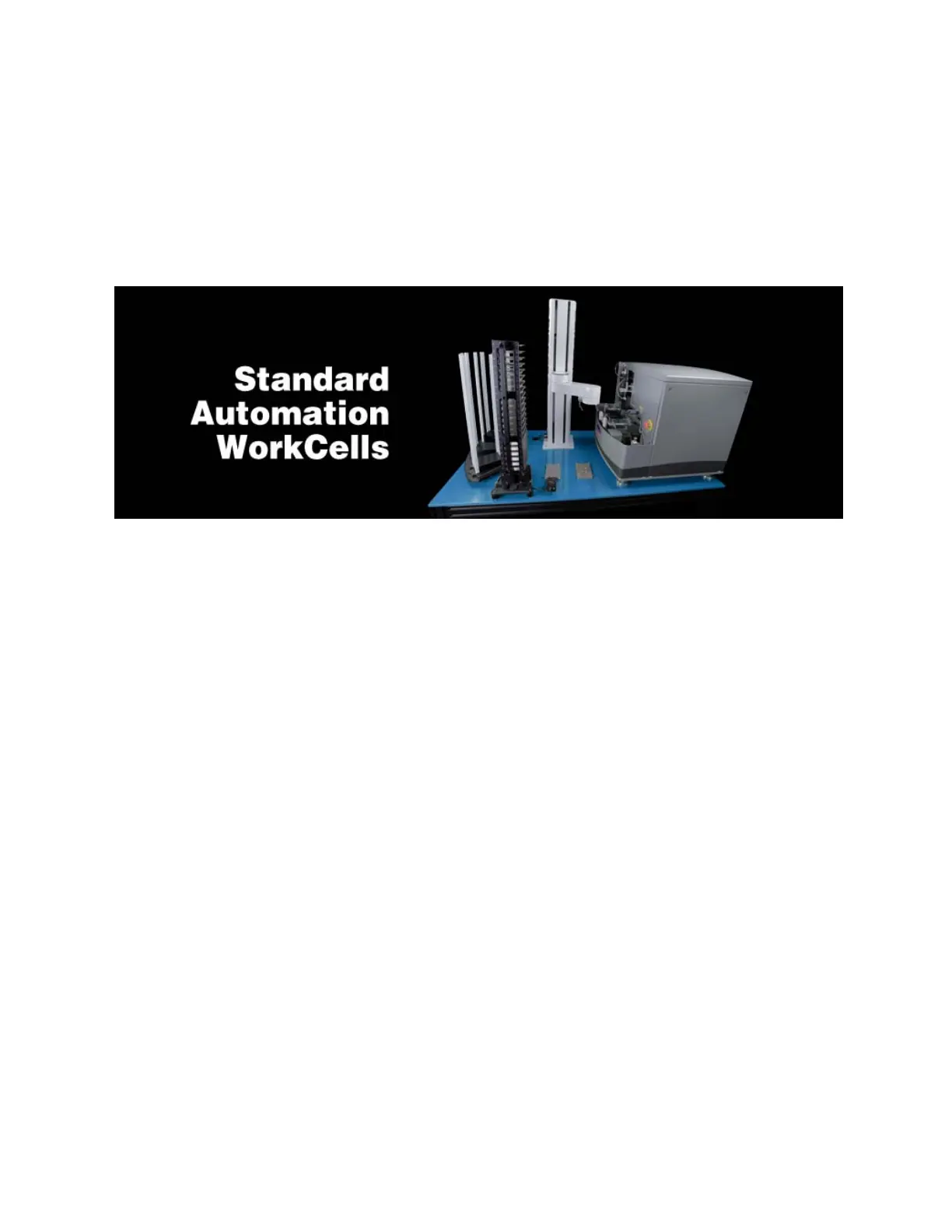
Example Workcell description: A PF400 Plate Handler moves 80 gram plastic trays from storage racks
to an instrument and back to the storage racks. Gripper is an electric parallel jaw gripper with maximum
23N of gripping force for plastic trays and is spring loaded so it will not drop trays if power fails. Robot
motion is programmed with approach point 50mm above the instrument tray and final motion into
instrument is made at 50mm/sec. Lowest storage rack position is 50mm above table surface.
Figure 9: Example PF400 Workcell: Courtesy of Biosero
Normal Operator Interaction with robot:
Teaching locations in workcell by hand guiding or teach pendant. Maximum robot forces under manual
control from PF400 Table 1 are 60N.
Pausing robot and removing racks from workcell with no safety interlocks in workspace. Robot is
stopped.
Possible Low Frequency (rare) Interaction with Robot:
Untrained operator reaches into workcell while robot is moving and robot collides with operator.
Maximum free space collision force from PF400 Table 1 is 80N.
Untrained operator reaches into workcell while robot is moving into instrument tray and hand is trapped
between robot and instrument tray. From PF400 Table 1 max trapping force in downwards Z direction at
50mm/sec (10% of max speed of 500mm/sec) is 80N.
Performance Level: From the above, based on ISO 13849-1:2006:
S is S1, as possible operator collision forces will not injure operators.
F is F1 as normal operation does not involve collisions with robot.
P is P1 as the robot does not make unexpected motions
So PL is “a”, and even a Category B controller is sufficient, given the low speeds and small possible
collisions forces involved which cannot injure an operator. (See 5.2.3 under EN/ISO 10218-1:2011).



 To Next Page