THEORY OF OPERATION
6-1
6. THEORY OF OPERATION
The MiniRAE 2000 monitor uses a newly developed
electrodeless discharge UV lamp as the high-energy
photon source for the PID. As organic vapors pass by the
lamp, they are photo-ionized and the ejected electrons are
detected as a current. The PID sensor with a standard 10.6
eV lamp detects a broad range of organic vapors. A lamp
with high photon energy (e.g. 11.7 eV) will measure the
more kinds of compounds, whereas low photon energies
(e.g. 9.8 eV) are selective for easily ionizable compounds
such as aromatics. In principle, any compound with an
ionization energy lower than that of the lamp photons can
be measured.
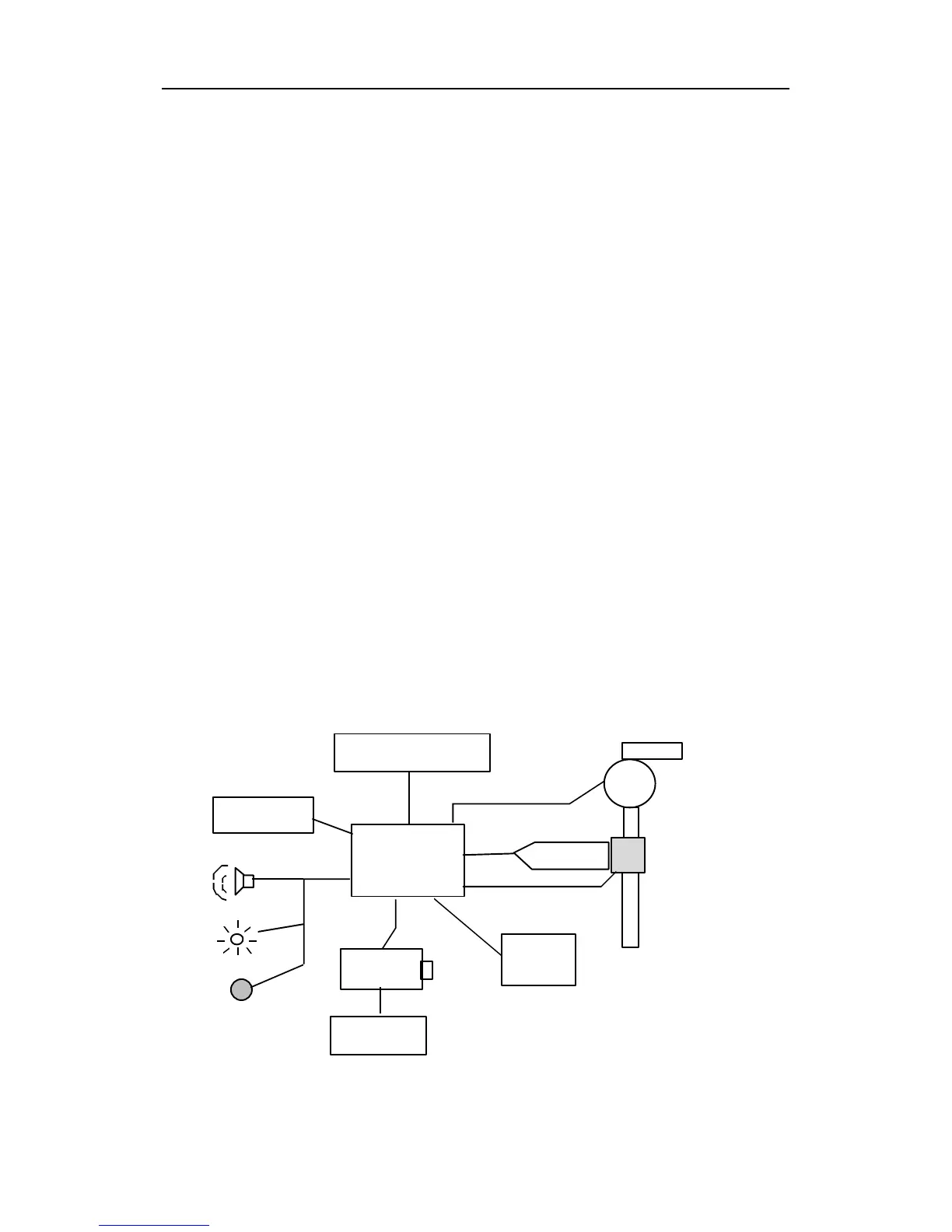
The PID sensor for the MiniRAE 2000 monitor is
constructed as a small cavity in front of the UV lamp. A
diaphragm pump draws the gas sample into the sensor and
then pumps it out through the side of the instrument.


 To Next Page