• The Assistant Driving System is an assistant
function for the driver and cannot handle all
situations. You always have the responsibility to
drive the vehicle safely and comply with current
laws and traffic regulations.
• You are responsible for actively controlling the
vehicle speed based on the current traffic
environment, keeping the driving speed within the
current road's maximum speed limit.
• It is necessary for you to read all sections related
to the Assistant Driving System to understand
functionalities, limitations, and the knowledge you
should have before using these features.
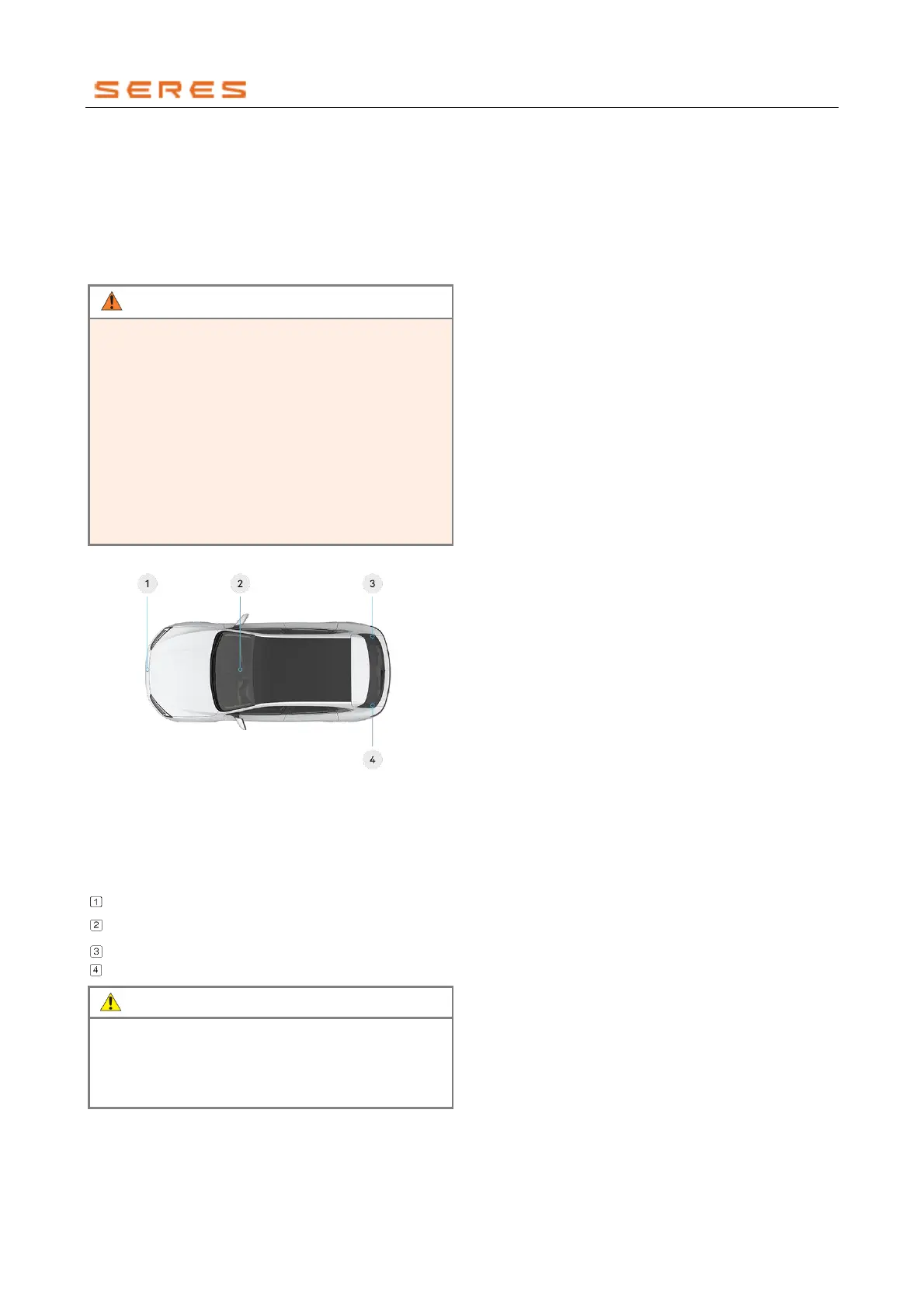
Introduction to Sensor Positions
* The image is for reference only; please refer to the actual
product
The vehicle is equipped with three millimeter-wave radars
and an Assistant Driving Camera. These sensors are used
to detect the distance between the vehicle and the vehicles
in front, identify traffic or road signs, and detect
surrounding vehicles, pedestrians, etc.
Front Millimeter-Wave Radar
Assistant Driving Camera
Rear Corner Millimeter-Wave Radar (Right)
Rear Corner Millimeter-Wave Radar (Left)
Limitations of Sensors
The sensors of the Assistant Driving System have certain
limitations. In daily use, please be aware of the following
situations; otherwise, the performance of the Assistant
Driving System may deteriorate or it may not function
properly:
● Do not add accessories (such as license plate frames,
stickers, etc.) to the Assistant Driving Sensors and
their surrounding areas. Otherwise, it may affect the
working range of the sensors, causing some parts of
the Assistant Driving System to malfunction.
● Adverse weather conditions, such as heavy snow,
heavy rain, dense fog, etc., may weaken the
effectiveness of the Assistant Driving Sensors or
temporarily stop the system from working.
● Intense sunlight, road reflections, icy or snowy road
surfaces, standing water on the road, dirty road
surfaces, or blurred lane markings may significantly
reduce the camera's ability to recognize vehicles,
pedestrians, lane markings, traffic signs, or other
obstacles.
● Millimeter-wave radar may experience interference
from other radio devices or strong radar reflections.
● In the presence of a significant speed difference or
stationary targets, the millimeter-wave radar may not
detect vehicles ahead.
● When driving on winding, narrow, or steep slopes or
entering/exiting tunnels, the millimeter-wave radar
may not detect vehicles or other obstacles in front.
● Do not violently impact the sensors and their
surrounding areas.
● If the temperature inside the passenger compartment
is very high, the Assistant Driving Camera may
temporarily disable. After cooling to a sufficiently low
temperature, the Assistant Driving Camera will
automatically resume operation.
● Irregularly shaped vehicles, including but not limited to
fire trucks, garbage trucks, tanker trucks, long trailers,
large trucks, water trucks, and vehicles carrying trees,
may be recognized late or not detected.
● Vehicle modifications or adding colored films to the
bumper may affect the detection distance of the rear
corner millimeter-wave radar, thereby affecting the
performance of the rearward warning system. It may
also cause a malfunction in the rearward warning
system due to obstruction.
● When there is dirt or other debris on the sensor cover,
it may affect the performance of the rearward warning
system. Prompt cleaning is necessary.
● The rear corner millimeter-wave radar may not
recognize targets and pedestrians when they are
moving at low speeds.
● Assistant Driving Sensors can only recognize vehicle
and pedestrian targets and cannot identify objects
such as traffic cones and trees.



 To Next Page