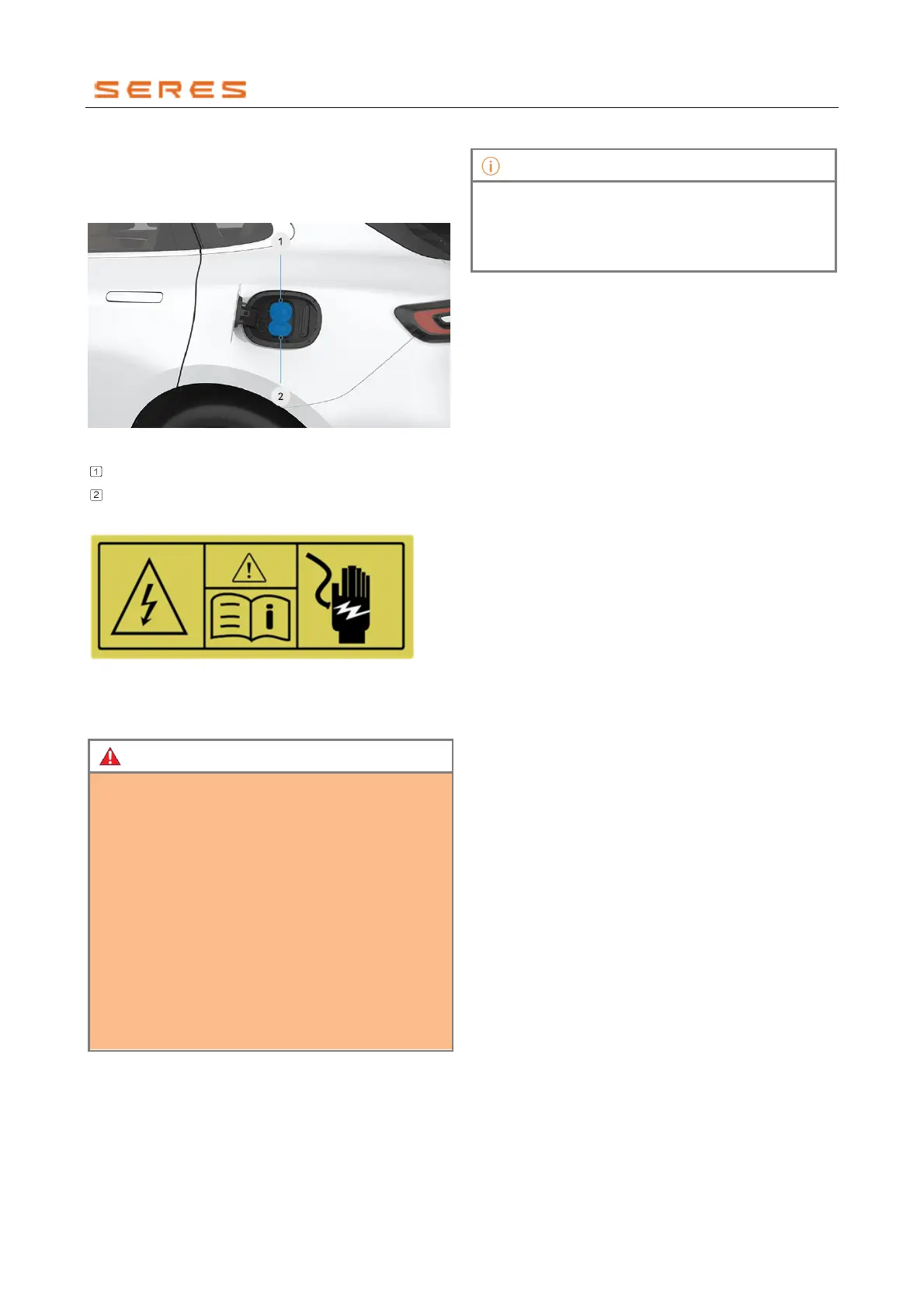
• During the vehicle usage process, the high-voltage
system may be in a high-voltage and high-
temperature state. Please follow the sign
instructions to avoid high-voltage and high-
temperature injuries.
• Strictly avoid physical contact between yourself or
rescue personnel and high-voltage components.
Rescue personnel should take all precautions
(including wearing insulated clothing, insulated
shoes, insulated gloves, etc.).
• Do not dismantle, remove, or replace high-voltage
components, high-voltage cables, or connectors
without authorization. High-voltage cables are
marked in orange for easy identification.
• In the event of a fire, immediately contact the local
fire rescue department.
Charging Safety Warning
● Before charging, check the charging cable. Do not use
charging cables with damaged insulation or casing.
● Before charging, ensure that there is no water or
foreign objects in the charging ports of the vehicle,
power supply equipment, and charging connectors,
and that the metal terminals are not rusted or
corroded.
● Please charge in a relatively safe environment,
avoiding exposure to rain, water immersion, and
staying away from open flames.
● Do not modify or dismantle the charging gun, electrical
socket, and charging equipment, as it may result in
charging failure or even cause a fire.
● Choose a dry and well-ventilated charging
environment. Do not use charging equipment in
environments with fuel, paint, or flammable and
explosive materials.
● Prohibit the use of charging cables in dark and damp
locations.
● Children should not be involved in charging
operations.
● Do not touch the charging port.
● In rainy conditions, if there is no rain shelter, do not
perform charging operations.
● During the charging process, if there are sudden
weather changes (strong winds, rain or snow,
thunderstorms), promptly check if the charging gun is
secure and in a dry state. When thunder and lightning
occur, do not touch the charging cable and the vehicle
body.
● If the area around the charging port gets wet during
the charging process, first disconnect the power
supply under safe conditions. Then unplug the power
supply plug (do not touch the metal pieces of the
charging plug with hands or other body parts to avoid
accidents), and remove the charging gun. If
necessary, use insulating gloves and promptly contact
the dealer for testing and confirmation.
● If you notice an unusual odor emanating from the
vehicle during charging, please stop charging
immediately.
● Do not squeeze the charging cable during charging.
● After charging is complete, do not disconnect the
charging connector with wet hands or while standing
in waterlogged areas.
● Before driving, ensure that the charging connector has
been removed from the vehicle's charging port.



 To Next Page