SOLO BETA User Manual
- In case of using USB, for a PC, it will be taken as a “Virtual COM Port”, the baud-rate in this
case can be selected on any value below or equal to the mentioned value in the table
above, but it’s recommended to keep the settings as suggested similar to UART
communication.
Packets formation _ Commanding and Feedbacks:
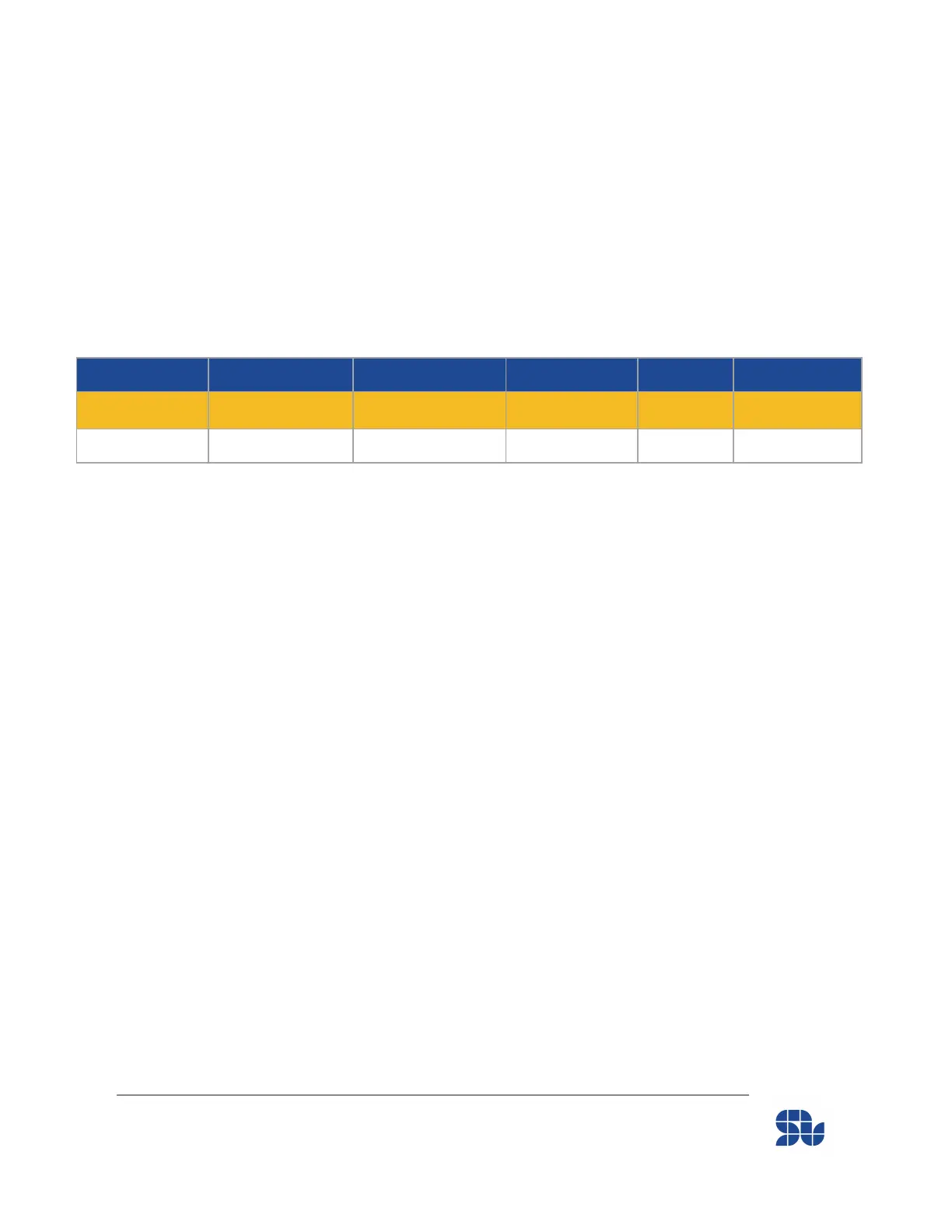
To send or receive a command To/From SOLO using UART or USB, you need to form a data packet
combined out of 10 bytes, based on the following format:
A data packet to be sent/received to/from SOLO is divided into 6 different sections and each of
these sections are as below:
● INITIATOR: This is a constant two bytes code which indicates the start of a packet, the
value is fixed at “0xFFFF '' in Hex format or “65535” in decimal format.
● DEVICE ADDRESS: This is a single byte which stands for the address of the device, each
SOLO can have an address from 0 to 254 and this address will reside in non-volatile
memory and will be remembered after power recycle, this device addressing is useful
when you want to put lots of SOLO’s in a network, so each of them can be assigned to a
unique address. The default value of the address is set at zero.
● COMMAND: This is a single byte, which is a fixed code that defines the type of the
command/feedback we are sending/receiving To/from SOLO.
● DATA: This is a 4 bytes space, to put the possible data of a command or read the feedback
data of a specific phenomenon from SOLO, like the value of the speed of the motor and etc.
● CRC: This is the CRC byte to control the integrity of the data sent through UART, this
functionality is inactive in BETA models ( just put 0 instead of it)
● ENDING: Similar to the packet initiator, this is again a constant single byte valued at
“0xFE” in HEX format, which stands for the end of a packet sent or received.
www.solomotorcontrollers.com
January 2021 - Revision V_1.0.5 Copyright © 2020, All right Reversed. SOLO motor controllers.
41



 To Next Page