K80v / K120v BOWL CUTTERS
EN-26
7.1 General Recommendations for Manual Cleaning
Remove large pieces of residue, dismantling smaller parts if
necessary.
Let the product work approximately 15 minutes
Warm water 40/50ºC (100/120º F).
Visually examine all accessible parts, especially vital components and
those subject to stress and wear.
Perform after completing all other cleaning operations.
ALWAYS rinse the machine thoroughly after using any kind of
detergent or disinfectant.
Be sure to thoroughly dry all cleaned components.
7.2 Recommended Intervals for Manual Cleaning
Bowl, safety guard, knife shaft,
underside of knives lid, plastic bowl
cover, knives and cutting head.
Mild
detergent,
warm water
IMPORTANT: Remove the cutting head to
facilitate cleaning. Clean lid hinge completely
and, if necessary, clean lid holding screws with
a brush
Bowl support and surrounding area
Mild
detergent,
warm water
7.3 Stainless Steel Care
Important:
Never use aggressive cleaners with stainless steel such as bleach or similar chlorine derivatives products. If
you have used it, never leave acting, rinse immediately with plenty of water and dry thoroughly.
It is uncommon, but possible, that small traces of rust or oxidation points may be observed on the machine. This may be due to:
■ Welding impurities.
■ Food fragments adhering to the surface.
■ Pits resulting from use of aggressive cleaners such as bleach or similar chlorine derivatives products.
■ Moisture that remains after cleaning with water. ALWAYS wipe dry all components that have been cleaned.
To remove these rust spots simply use a liquid stripper with a cloth, or clean with Scotch Brite.
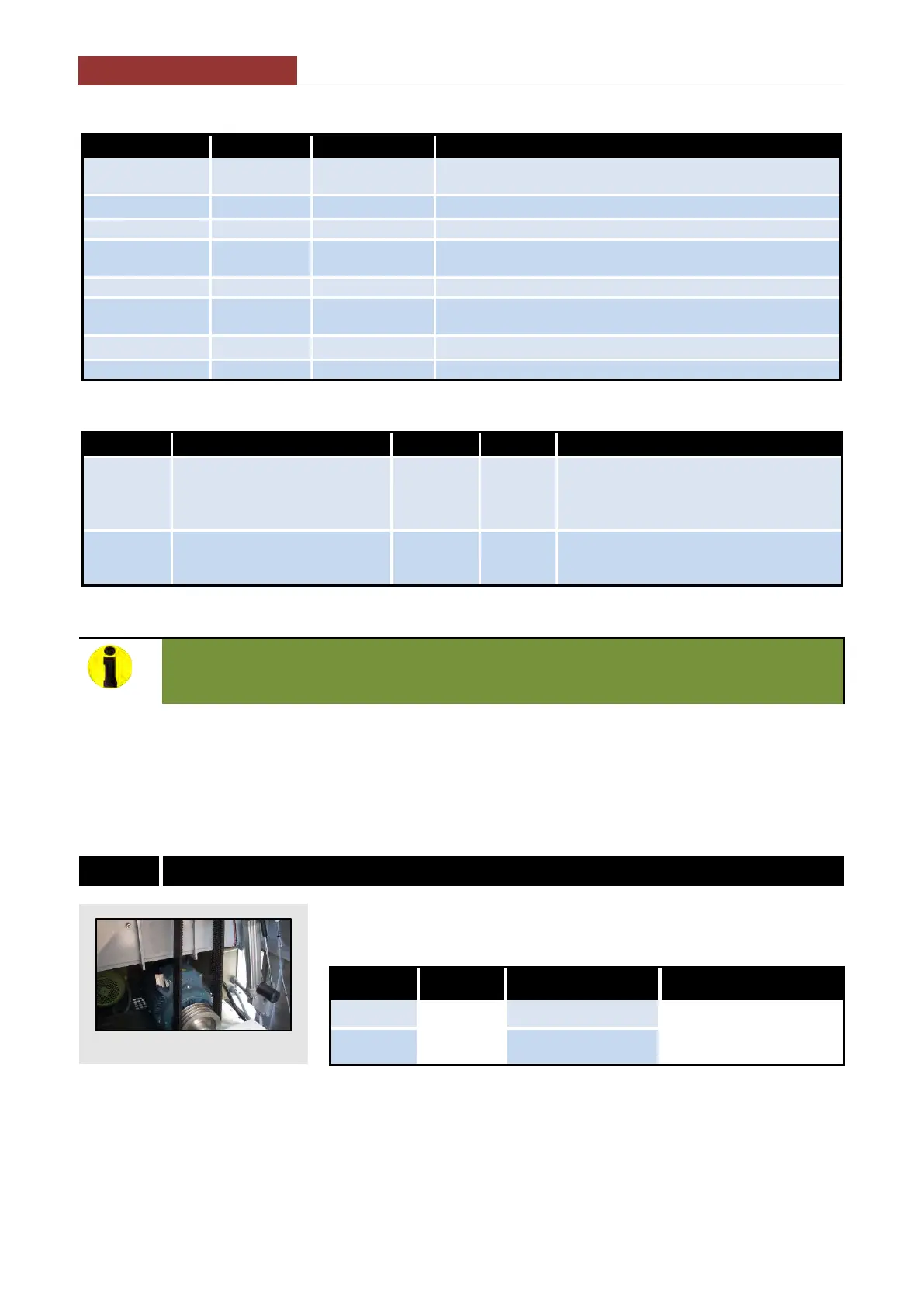
IMG. 10: Transmission belts
Apart from daily cleaning, the only maintenance the K80v/K120v cutters require is
the changing of the transmission belts (IMG. 10) as follows:
every 2,500 hours of
operation
If the electric cord becomes damaged, have it replaced immediately with a cord of identical specifications; your local distributor can
supply you with one.
All electrical and mechanical repairs must be carried out by a qualified specialist with proper training for the work required. Before the
qualified technician begins any maintenance or repair work in the machine’s interior, be sure to have the technician open the knife lid
to release the pressure on the pneumatic springs.
It is very important to monitor the blades for proper sharpness. Worn or damaged blades should be sharpened or replaced per the
instructions in section 10, SHARPENING THE KNIVES.



 To Next Page