<Transporting>
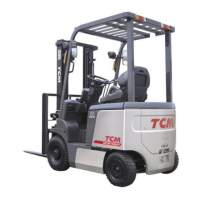
(1) When a group is carrying a heavy load, make sure everyone
understands the meaning of any hand signals and the communication
methods that will be used. (Refer to “1.1.9. When working in a
group”.)
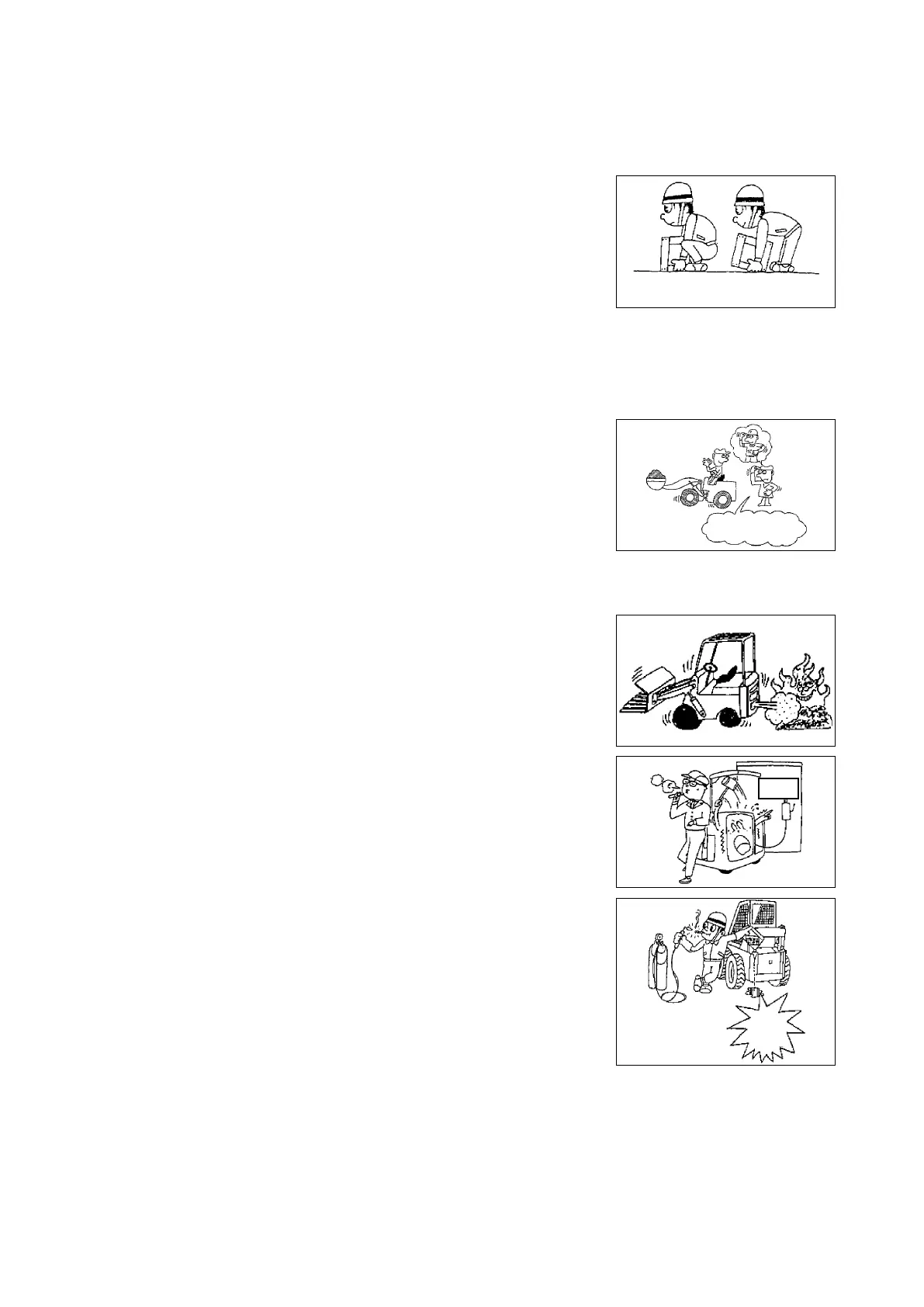
(2) Prevent back injuries. Use a diagonal foot position and get as close to
the load as possible. Lift the load, keeping it as close to the body as
possible while standing.
(3) Do not reduce the load suddenly or inadvertently.
(4) When loading or unloading the truck from a trailer, observe the
following precautions:
· Wear gloves when handling a heavy load such as loading ramps.
· Check that the brake, tires and steering wheel are in good operating
condition before loading or unloading from a trailer.
· Check the loading ramps for corrosion or cracks before starting.
· Put supports below the loading ramps when loading or unloading a
heavy truck.
· When loading a forklift truck, drive it up backwards onto the trailer.
·
When loading or unloading a forklift truck on a trailer by driving the
forklift truck yourself, use a guide to keep an eye out for problems.
(5) When towing a truck, pay attention to the traveling speed and keep
a safe distance from the truck being towed. It is necessary to have a
driver’s license even if the truck is towed.
(6) Make sure there is no one around the truck when you are starting up or
operating the load handling equipment.
<Fire hazards>
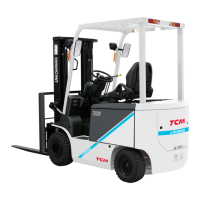
(1) Do not park the truck where the exhaust or hot parts on the truck can
contact ammable debris (leaves, paper, etc.).
(2) Do not carry loads which could cause a re or explosion when they
come in contact with each other.
(3) Do not use open ame at places other than specied.
(4) Do not smoke at places other than specied.
(5) Keep a re extinguisher nearby when welding or grinding. After work,
make sure the equipment is completely turned off.
(6) Before using an open flame, get permission to do so from your
supervisor.
(7) Observe the following precautions when handling flammable or
explosive materials :
· Put oily wastes in a non-combustible container and cover it.
· Do not heat an enclosed container containing flammable or
explosive materials.
· Handle hazardous materials carefully and store them in a specied
place.
· Do not use a heater or stove in a work area without prior permission.
· Handle solvents or chemicals carefully and make sure there is good
ventilation when using them.
· Do not use an electric device that can cause sparks, near ammable
or explosive materials.
(8) Shut off the engine and turn off the electrical system when fueling or
near fueling operations.
(9) Do not use an open ame (match, lighter, etc.) to check an item in a
dark place, or to check the fuel level or battery electrolyte level.
(10) Know where the fire extinguisher and fire hydrant are located. The
re extinguisher or re hydrant must not be blocked by equipment,
clothing or other objects that could interfere with access in an
emergency.
Good Bad
Look forward!
Danger!
Do not
smoke!


 To Next Page