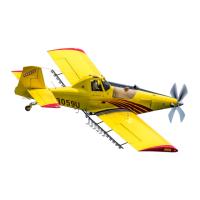
THRUSH AIRCRAFT, INC – MODEL S2R-G10
AIRCRAFT MAINTENANCE MANUAL
weight C.G. is the total moment divided by
the total weight.
For example:
Left MLG scale reading = 2,127#
Right MLG scale reading = 2,105#
Tailwheel scale reading = 472#
Tare weight (ie. tail stand and shims if
placed on top of the scale) = 65#
New empty weight: 2127 + 2105 + 472
– 65 = 4,639#
New moment: (4232 x 3.1) + (407 x
232.9) = 107,910 in.#
New C.G.: 107910 ÷ 4639 = 23.26”
COLD WEATHER
OPERATION
Aircraft operation in cold weather creates a
need for additional maintenance practices
and operating procedures that are not
required in moderate temperatures.
Whenever possible, shelter the aircraft in a
heated hangar to prevent frost, ice, or
snow accumulation that requires added
maintenance time to remove. These
weather elements, if allowed to
accumulate only a fraction of an inch in
thickness on the critical airfoils and control
surfaces, seriously degrade aircraft lift and
flight control effectiveness. The possibility
of aircraft system failures is increased
when the aircraft is parked where wind
driven snow or freezing rain can be forced
into various openings of the aircraft. If the
aircraft is to be moored outside in extreme
cold, the battery should be kept fully
charged to prevent freezing. Make certain
that all vents, air inlets, and so forth are
covered.
Locating the aircraft inside a heated
hanger is the most effective method of
preheating the aircraft. The use of an
external power unit is recommended to
conserve the battery.
COLD WEATHER
MAINTENANCE HINTS
The information that follows is intended
only for the purpose of supplementing the
existing information in this manual when
operating the aircraft in very cold weather.
Keeping the aircraft in top maintenance
condition during cold weather cannot be
over stressed.
BATTERY: The batteries should be
maintained at full charge during cold
weather to prevent freezing. After adding
water to the battery in freezing
temperatures, charge the battery to mix
the water and electrolyte. A frozen battery
may explode when subjected to a high
charge rate. Corrosive damage to the
area adjacent to an exploded battery will
result if the electrolyte solution is not
removed immediately. Instructions for
removing spilled electrolyte are provided in
this Section. The battery should be
removed and stored in a warm place if the
aircraft is to remain idle for an extended
period of time.
FUEL SYSTEM: In the fuel system,
condensation is more likely to occur in cold
weather due to a more rapid and positive
division of moisture content from other fuel
constituents. If at all possible, use fueling
facilities that filter moisture from the fuel. If
fueling facilities with filters are not
available, filter the fuel through a good
quality chamois. Fill the tanks with correct
grade of fuel as soon as possible after
landing to reduce the possibility of
condensation and ice formation in the
tanks. Fuel extracted from fuel header
tank drain before starting deserves a
closer examination when the aircraft is
being operated in cold weather.
POST FLIGHT MAINTENANCE: Cold
weather operation demands procedures
that are in addition to normal Post Flight
Maintenance Procedures. Fill the fuel
tanks immediately after flight. If shelter is
Page Effective 03/26/2010 2-6


 To Next Page