11-4
After tank has been lled:
1. Check all container and line connections periodi-
cally to be sure they are tight. When testing for
leaks, use soapy water (never a match). LP gas has
a distinct garlic odor.
2. If LP gas fumes are noticed at any time, the cause
should be determined and corrected without
delay. In winter, always have methyl alcohol
added to your LP container for winter operation to
prevent freeze-up.
3. Before opening the control valve at the LP gas
container, check that controls for all gas appli-
ances are in the o position. If this is not done, LP
gas could accumulate inside the vehicle creating a
re or explosion hazard.
4. LP gas is also potentially lethal if inhaled.
11.7 AIR IN THE LP TANK
If your LP appliances burn poorly or do not stay lit
even though you are sure you have plenty of fuel, you
may have air trapped in the tank. The air will eventu-
ally escape along with the LP gas but it may be neces-
sary that you have your tank purged of air by the LP
gas dealer. During the tanks rst ll, ensure that the
tank is purged.
11.8 TRAVELLING LP GAS
In some jurisdictions it is illegal to transport LP gas
on certain roads or through tunnels. Check state or
provincial regulations to make sure your trip will not
be halted or impeded unexpectedly as a result.
11.9 REGULATOR
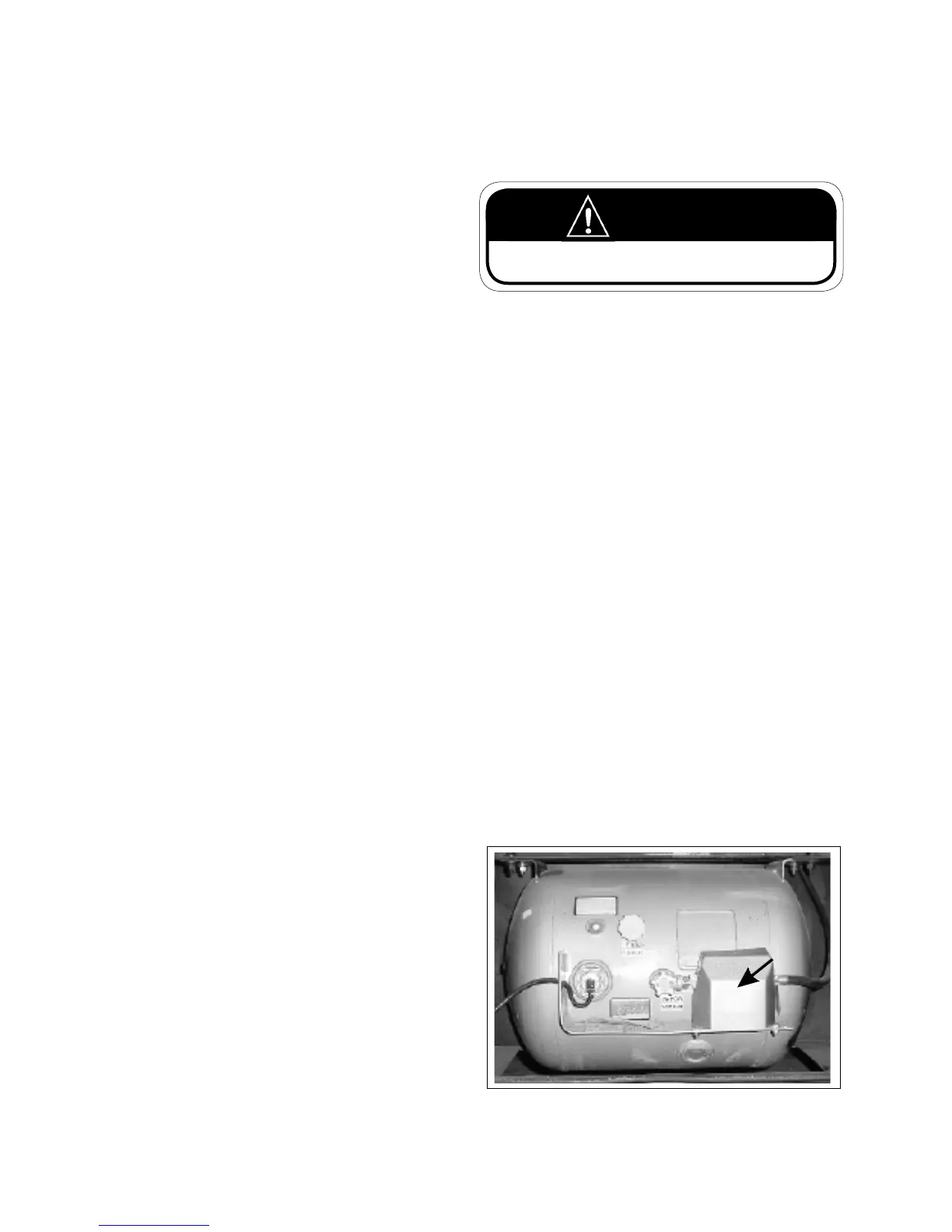
The LP tank regulator has a plastic cover to protect
it from the weather. This should never be removed
except by qualied service personnel.
The pressure regulator has a vent hole on the under
side. The regulator must always be positioned with
the vent facing downward. Make sure this vent hole is
open and not obstructed in any way.
During freezing weather it may happen that a regula-
tor may freeze up. This happens when there is a small
amount of moisture in the fuel (even though every
precaution is taken by gas dealers to prevent this from
happening). To help avoid this situation, keep the
COMMANDER / EMBASSY
Fig. 11-3 REGULATOR
control valve closed when not in use even when the
tank is empty. This helps prevent condensation from
forming. Hold a light bulb near the regulator to thaw
it.
Do not use an open ame or a heat lamp to thaw out
regulator.
WARNING
If moisture in the tank is a recurring problem, you may
ask your LP gas dealer to inject a small amount of me-
thyl alcohol into the tank to absorb the moisture.
Liquid Petroleum vaporizes quickly and easily at
warmer temperatures. Under cold conditions this
process slows down dramatically. When large
amounts of fuel are required when using the furnace,
for example, the fuel may not vaporize rapidly enough
to keep all the appliances going at a high level. In this
case you may have to reduce the consumption of fuel
by lowering the temperature setting on the furnace,
reduce the consumption of hot water, turn up the
temperature setting on your refrigerator or switch
from LP to electric where possible.
The regulator is preset. Do not attempt to adjust it.
This should only be done by an authorized service
outlet. The regulator should not be exposed to the
elements.
If the LP gas components malfunction the possible
cause could be:
1. The LP gas container may be overlled.
2. There may be impurities in the propane.
3. The LP Regulator could be defective.
11-4
After tank has been lled:
1. Check all container and line connections periodi-
cally to be sure they are tight. When testing for
leaks, use soapy water (never a match). LP gas has
a distinct garlic odor.
2. If LP gas fumes are noticed at any time, the cause
should be determined and corrected without
delay. In winter, always have methyl alcohol
added to your LP container for winter operation to
prevent freeze-up.
3. Before opening the control valve at the LP gas
container, check that controls for all gas appli-
ances are in the o position. If this is not done, LP
gas could accumulate inside the vehicle creating a
re or explosion hazard.
4. LP gas is also potentially lethal if inhaled.
11.7 AIR IN THE LP TANK
If your LP appliances burn poorly or do not stay lit
even though you are sure you have plenty of fuel, you
may have air trapped in the tank. The air will eventu-
ally escape along with the LP gas but it may be neces-
sary that you have your tank purged of air by the LP
gas dealer. During the tanks rst ll, ensure that the
tank is purged.
11.8 TRAVELLING LP GAS
In some jurisdictions it is illegal to transport LP gas
on certain roads or through tunnels. Check state or
provincial regulations to make sure your trip will not
be halted or impeded unexpectedly as a result.
11.9 REGULATOR
The LP tank regulator has a plastic cover to protect
it from the weather. This should never be removed
except by qualied service personnel.
The pressure regulator has a vent hole on the under
side. The regulator must always be positioned with
the vent facing downward. Make sure this vent hole is
open and not obstructed in any way.
During freezing weather it may happen that a regula-
tor may freeze up. This happens when there is a small
amount of moisture in the fuel (even though every
precaution is taken by gas dealers to prevent this from
happening). To help avoid this situation, keep the
COMMANDER / EMBASSY
Fig. 11-3 REGULATOR
control valve closed when not in use even when the
tank is empty. This helps prevent condensation from
forming. Hold a light bulb near the regulator to thaw
it.
Do not use an open ame or a heat lamp to thaw out
regulator.
WARNING
If moisture in the tank is a recurring problem, you may
ask your LP gas dealer to inject a small amount of me-
thyl alcohol into the tank to absorb the moisture.
Liquid Petroleum vaporizes quickly and easily at
warmer temperatures. Under cold conditions this
process slows down dramatically. When large
amounts of fuel are required when using the furnace,
for example, the fuel may not vaporize rapidly enough
to keep all the appliances going at a high level. In this
case you may have to reduce the consumption of fuel
by lowering the temperature setting on the furnace,
reduce the consumption of hot water, turn up the
temperature setting on your refrigerator or switch
from LP to electric where possible.
The regulator is preset. Do not attempt to adjust it.
This should only be done by an authorized service
outlet. The regulator should not be exposed to the
elements.
If the LP gas components malfunction the possible
cause could be:
1. The LP gas container may be overlled.
2. There may be impurities in the propane.
3. The LP Regulator could be defective.



 To Next Page