General Maintenance and Troubleshooting
SM 6495, Rev. 7, December 2008 2-17
2.5.3. Vertical Adjustment
2.5.3.1. Vertical Adjustment Using Spring Scales
Raise the gate to the vertical position. Attach the spring scale at the specified distance (x) according to
Table 2-1. This distance is measured from the mechanical output shaft and up the arm to where the
spring scale is to be attached. Once scale is in place, release arm by loosening the gold nut on the
terminal board. To adjust, loosen hardware and slide counterweights back and forth (this would be up
and down if the arm were down).
2.5.3.2. Vertical Adjustment Using Torque Wrench
Apply an appropriate torque wrench (J039000-0115 supplied in optional torque wrench kit X467000-
03) to the motor shaft located in the lower-left corner of inside housing. Release arm by loosening the
gold nut on the terminal board. To adjust, loosen hardware and slide counterweights back and forth
(this would be up and down if the arm were down). Refer to Table 2-1 for appropriate measurements.
2.6. Cam Adjustment
The cams should be rotated so that the appropriate contacts are closed as indicated in Table 2-3. Use a
3/16” T-handle Allen wrench provided with the gate mechanism to loosen one of the two cam screws
to be adjusted.
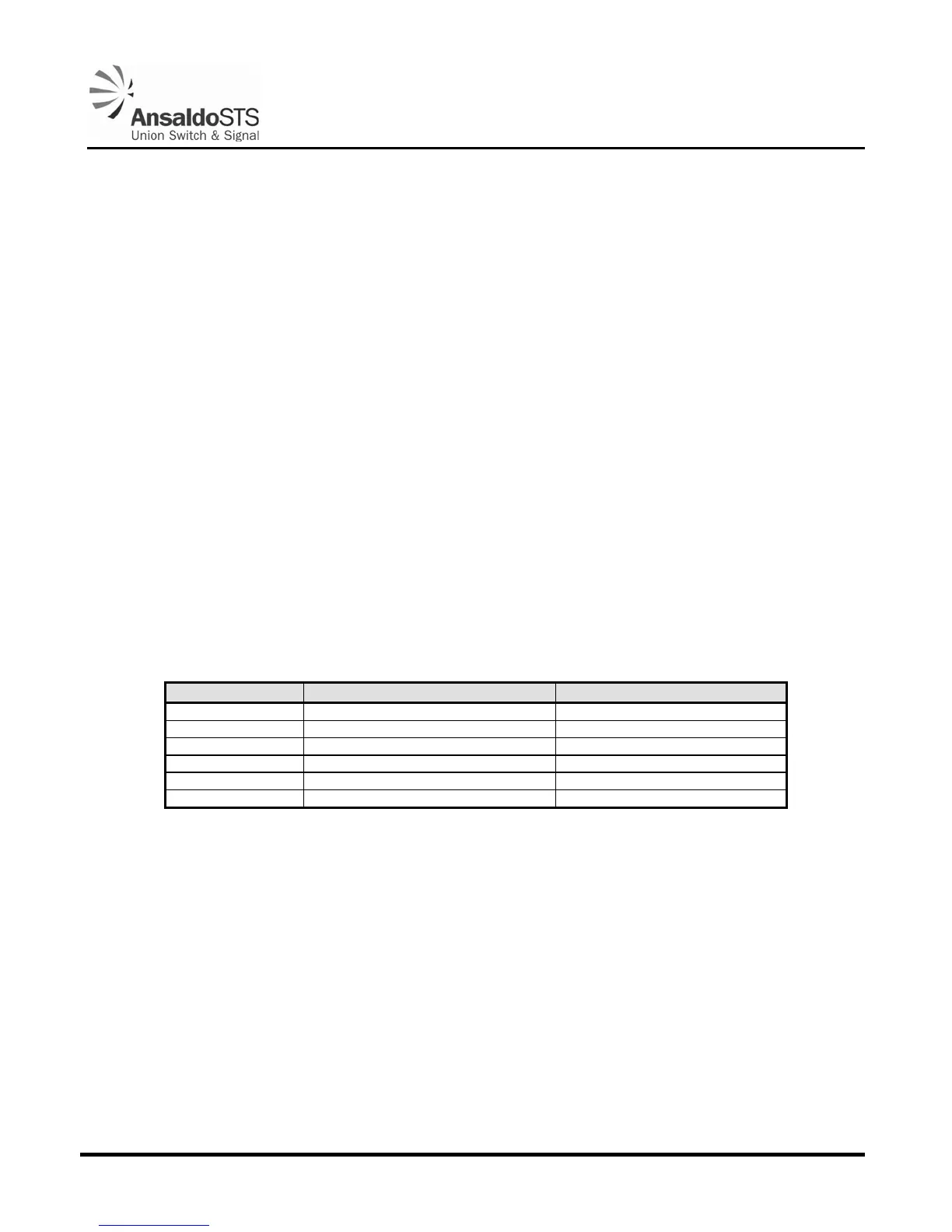
Table 2-3 - Cam Adjustment
Contact No. Closed (Degrees)* Function
1 0-89 Motor Control Relay
2 Not used for contact set.
3** 46-93 Motor Down
4 5-93 Bell
5 0-5 Gate Down Indicator
6 83-90 Flashing light
* Ninety degrees-gate in vertical position.
** When adjusting cams for the Sidewalk Gate Mechanism, it may be necessary to adjust the #3 cam in order
to properly drive the gate arm down.
In a typical installation, the No. 1 cam will have to be rotated to determine precisely where the arm
rests in the vertical position. Ensure that the side-to side cam adjustment is centered with the contact
assembly so that the contact assembly side walls do not touch the cams. Refer to
Figure 2-9.
After the cams are properly positioned, begin tightening the clamping screws until each cam begins to
fit securely to the shaft. Turn the screw approximately 1-1/2 more turns to obtain torque. The Heel
Spring force on the cams is 1-1/2 to 4 pounds on No. 1 spring, and 1/2 to 3 pounds on springs 3-6. Do
not allow gaps between each cam half.



 To Next Page