21
© Copyright by BIFFI Italia. All rights reserved.
“ICON2000”
instruction and operating manual
7. Cable entries
The sealing of cables and conduit entries should be carried out in accordance with National
Standards or the Regulatory Authorities that have certified the actuators. This is particularly
true for units that are certified for use in hazardous areas where the method of sealing must
be to an approved standard, and cable glands, reducers, plugs and adapters must be
approved and separately certified.
Certified cable entries:
• standard Rc ISO7/1 (cable entries 2x1”+1x1
1
/
2
”+ (optional) 1x
3
/
4
”)
• standard ASA/NPT (cable entries 2x1”+1x1
1
/
2
”)
• metric BS 3643 (cable entries 2xM32+1xM40)
• Pg DIN 40430 (cable entries 2xPg21+1xPg29)
Important: • to prevent any water infiltration through the line cable
conduits, make sure the cable glands have the minimum
protection degree required by the plant.
• if rigid conduits are used, we suggest placing a flexible
pipe connection between the conduit and the terminal board.
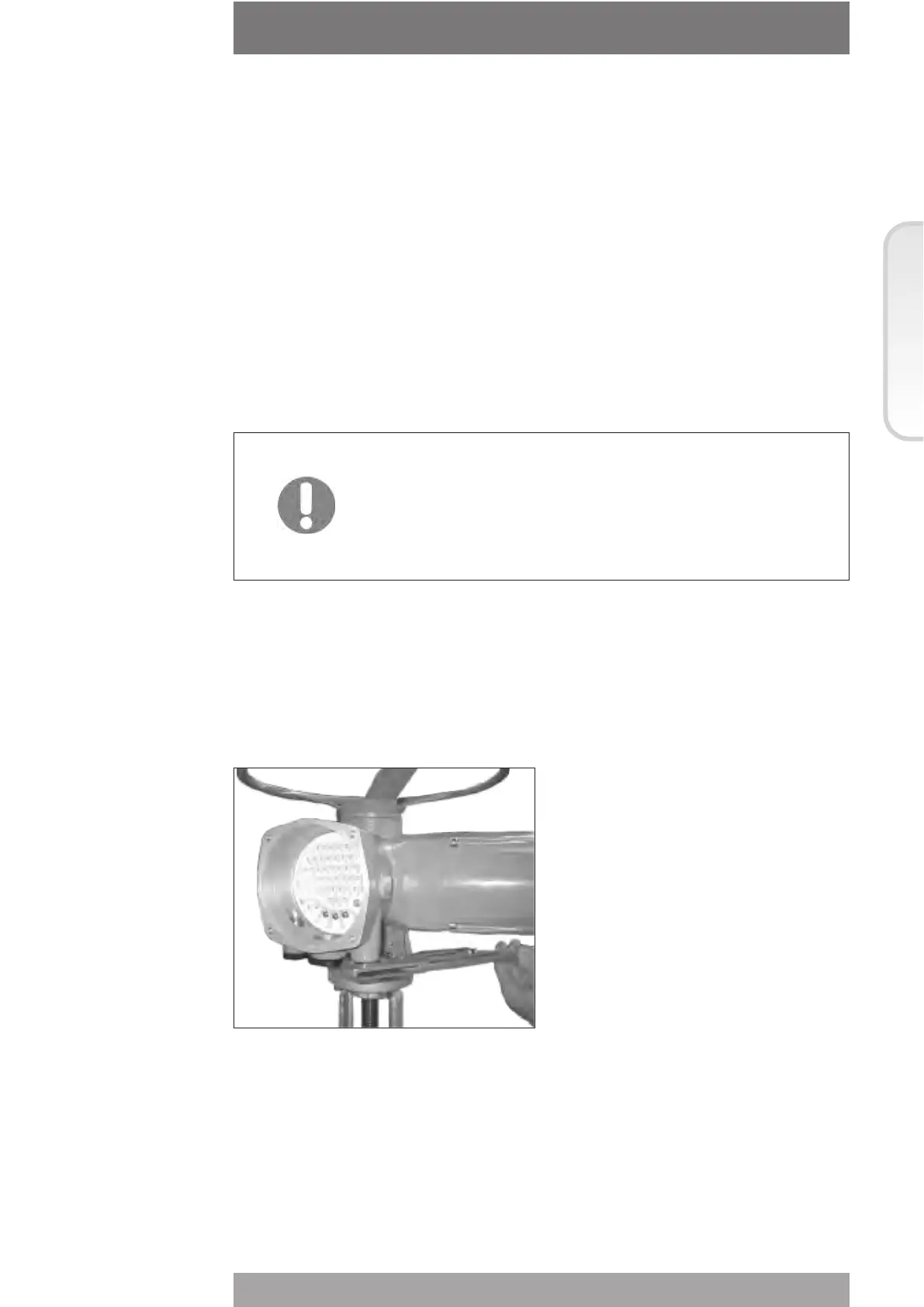
Remove the cable entry plugs.
To guarantee weatherproof and explosionproof fit, screw the cable glands tightly (at least 5
turns) and block them with a thread sealant. The use of a thread sealant is necessary in
case of explosionproof and weatherproof applications.
If some parts of the cable glands have been removed while working on the cable entries put
them back into place now to avoid losing the dismantled parts.
Unused entries:
• for explosionproof construction: unused entries must be plugged with metal
explosionproof plugs and blocked with a thread sealant;
• for weatherproof construction: replace the plastic standard protection plugs supplied with
the actuator with metal plugs.
Section 618/1 chapt. C
Section 618/1



 To Next Page