Drive and distortion
The classic tonewheel organs were mostly
played via tube amplifiers. Characteristic,
especially in rock music, was the typical
overdriving of these amplifier stages by
particularly high input levels. Musicians such
as Jon Lord of Deep Purple use this effect as a
stylistic device for a particularly aggressive
organ sound.
In the tonewheel organ types in the
RealOrgan you will find a replica of this style-
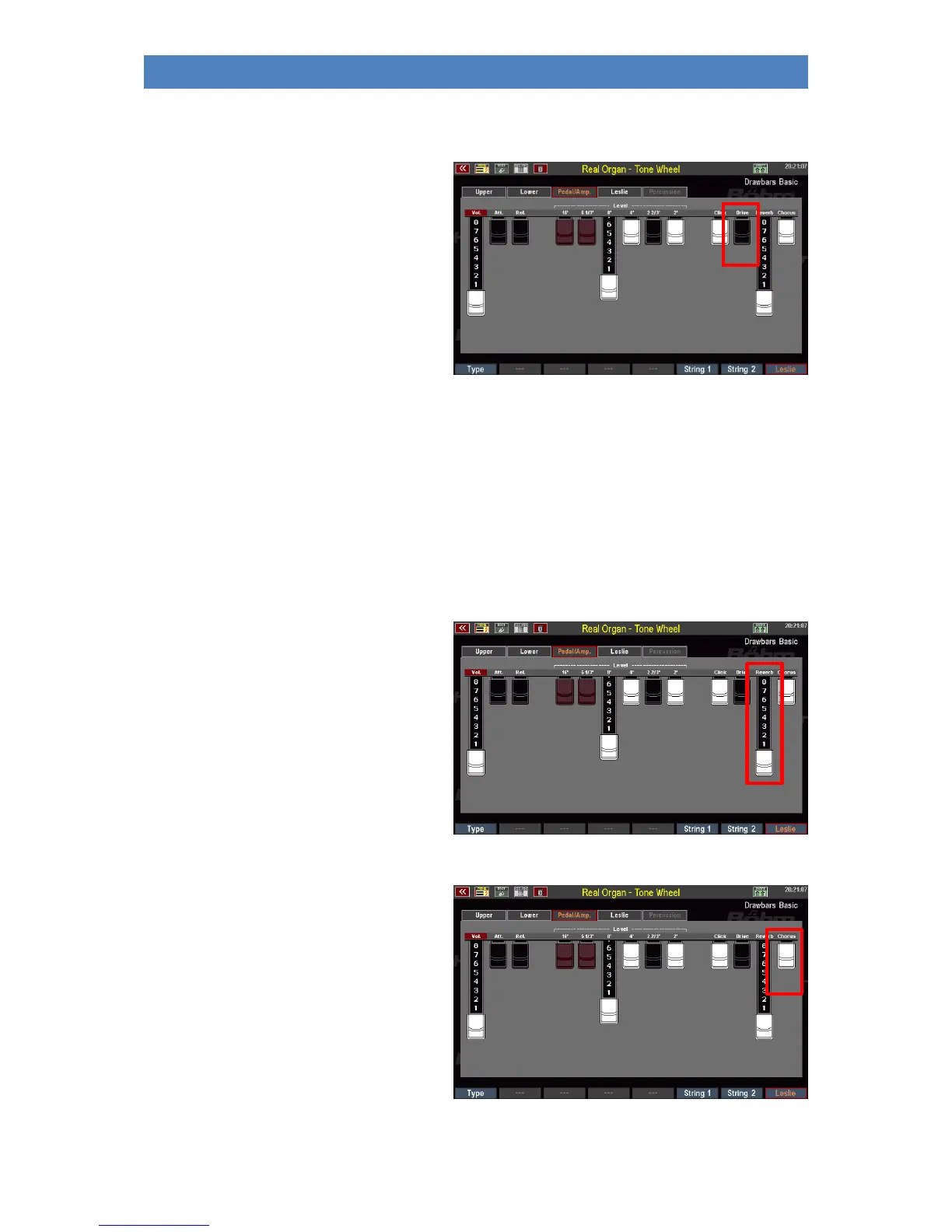
forming effect: It can be adjusted using the Drawbar Drive on the Ped/Amp page. The drive effect
produces the typical distortion of an overdriven tube amplifier. This effect is also faithfully reproduced
by the RealOrgan:
While other tonewheel clones often simply add a distortion when this effect is activated, the
RealOrgan simulates exactly the way this effect occurs with a real amplifier: Even when the drive
control is fully pulled out, the distortion only occurs with increasing volume (swell pedal position!) of
the signal and the corresponding overdrive. The maximum distortion is therefore only reached when
the swell pedal is fully depressed and the Drive control is pulled out.
Reverb
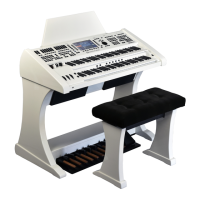
On the page Ped./Amp. you will find the
Drawbar Reverb. Here you can determine the
intensity of the reverberation for the
RealOrgan.
Chorus
The Chorus drawbar on the Ped/Amp. page
mixes the RealOrgan sound signal
proportionally to the chorus effect of the
Crystal Mixer (menu DSP/Mixer).
This can be used to mix an additional beat
onto the RealOrgan signal, which, in
combination with the RealOrgan's own rotor
or chorus effects, can complement or
enhance the RealOrgan's own beat effects.
This makes the sound even more roaring.


 To Next Page