DIAPER FEEDER Device
MATRIX CUBE - 79 -
Advanced Programming of DIAPER FEEDER Devices
With the ADVANCED programming environment, each DIAPER FEEDER can be
programmed with specific control parameters which depend on the type of yarn under
processing, and on the type of application.
• MAIN TENSION Control Tension
• ERROR TENSION Tolerance beyond which an Error is generated
• TIME ALARM Time for which the tension may stay out of tolerance
• EXIT TENSION Device Tension with machine stationary
• RAMP UP Raising ramp in case of tension increase
• RAMP DOWN Lowering ramp in case of tension decrease
• K-PID Reactivity constant of the device
In addition, you can program particular functions and/or service parameters that affect the
device operating mode:
• APPLICATION Device operating mode, pre-defined according to the
application (
DIAPERS).
• YARN TYPE Possibility of presetting the device for management of elastic
yarns
• OFFSET Possibility of reading/setting the
OFFSET value as well as
enabling the device Auto Offset function.
• ACCESS CODE Possibility of setting a protection password to prevent
undesired access to the device programmable functions.
• FEEDER CODE Possibility of visualizing and/or directly setting the device
identification code.
• LANGUAGE Possibility of choosing the language used to show the
message on the device display.
• SIGNAL POLARITY Possibility of choosing the
INPUT and STOP signal polarity
(NO or NC contact).
The setting of these parameters is already done by BTSR during the device manufacturing
(default values), however it can be easily changed by the machine operator, to meet
specific requirements, using the advanced programming features.
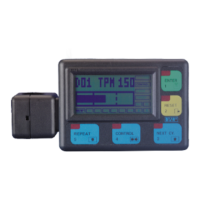
DIAPER FEEDER devices offer 4 advanced programming levels: P1, P2, P3 and P4,
clearly indicated in the messages area of LCD during the programming sequences.
Within the P1 level the following parameters can be programmed:
MAIN TENSION
ERROR TENSION
TIME ALARM
Within the P2 level the following parameters can be programmed:
EXIT TENSION
RAMP UP
RAMP DOWN
K-PID





 To Next Page