ECG100+ - ECG200+ - ECG100S - ECG200S
7. EXECUTION OF AN EXAM
Dry the skin vigorously with an abrasive pad, such as a 2x2 or 4x4 gauze, to remove dead skin cells
and fat.
NOTE: Pay attention not to cause abrasions, discomfort or bruises on the skin.
Always observe the utmost clinical discretion when preparing the patient.
7.2.2. Connecting the patient
It is important to position the electrodes properly in order to acquire a good electrocardiographic signal.
Indeed a low impedance ensures a better waveform, reducing noise. Quality electrodes should be used.
Connect the electrodes as follows:
1. Expose the arms and legs of the patient to connect the relevant leads.
2. Position the electrodes on the flat and fleshy parts of the arms and legs.
3. If a limb is not available, position the electrodes on a blood-supplied stump.
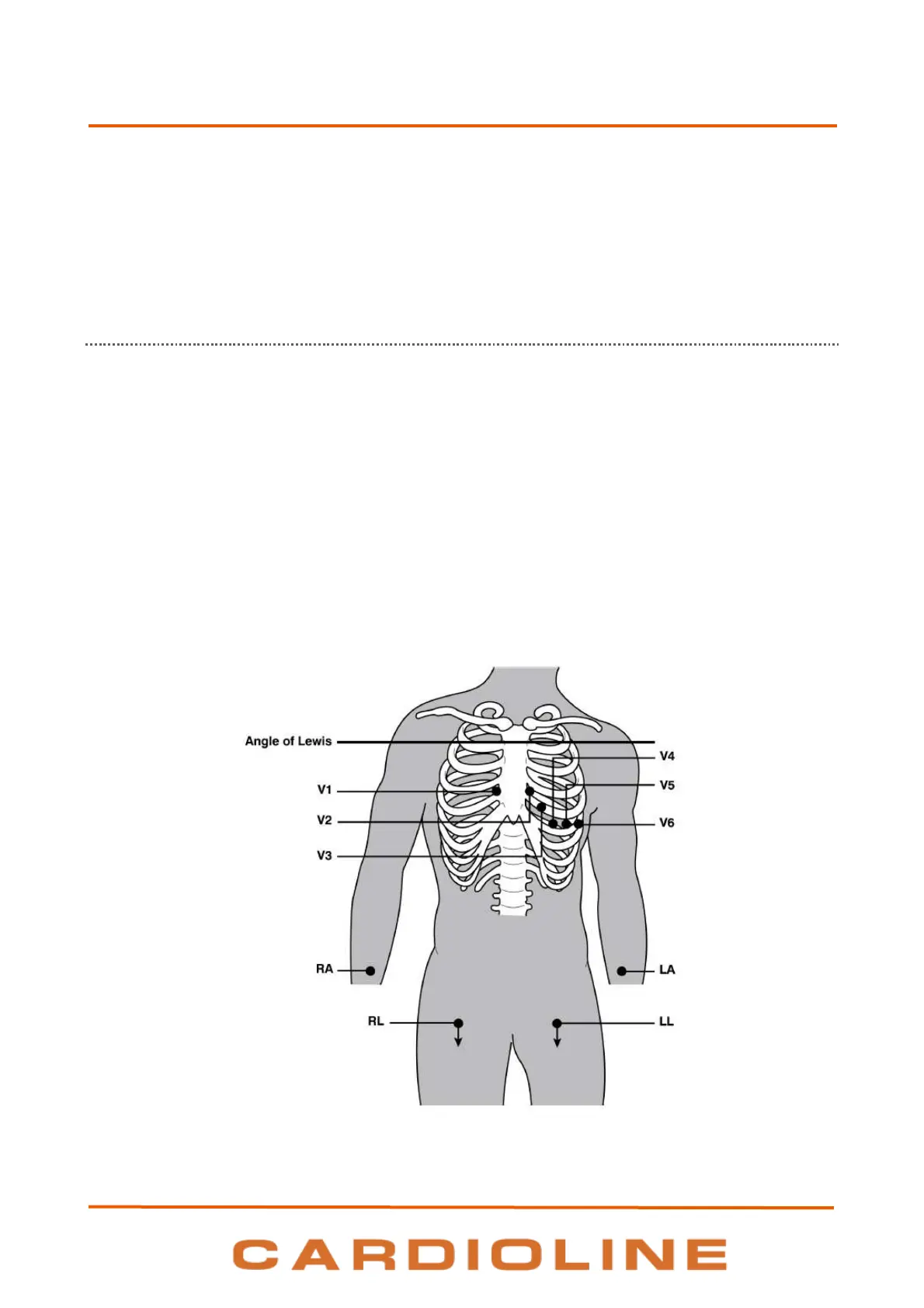
4. Attach the electrodes to the skin as indicated in the figure below. Test the correct adherence, and
therefore the good contact, by pulling the electrode. If the electrode moves freely, replace it. If the
electrode does not move easily, a good electrical contact is ensured.
Correct positioning of the electrodes



 To Next Page