EasyManua.ls Logo

Datasat AP20 - User Manual

Datasat AP20
162 pages
Print Icon
To Next Page IconTo Next Page
Loading...
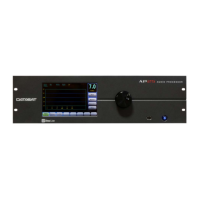
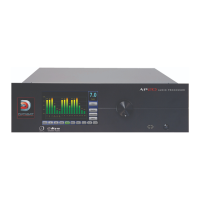
AP20 Audio Processor
Installation and
Operating Guide
Version 1.25
Effective Date: January 2013
Document # 9301H39200
Datasat Digital Entertainment
9631 Topanga Canyon Place
Chatsworth, CA 91311
USA

Questions and Answers

  • D
    David BarnettAug 19, 2025
    Why is there no sound in the auditorium with the Datasat Sound Card AP20?
    • L
      Lauren OlsonAug 19, 2025
      First, check the front panel display to ensure the Mute button isn't active. If it is, touch it to unmute. Next, make sure the fader level isn't at zero or in the red. If it's at zero, increase the volume by turning the knob. If it's red, unmute the AP20 by touching the Muted button. Lastly, confirm that the AP20 is set to the correct audio format.
  • K
    Kristin HaynesAug 21, 2025
    What to do if the Datasat Sound Card AP20 will not power ON?
    • I
      ingramcynthiaAug 21, 2025
      Ensure the rear panel power switch is ON and the unit is plugged into a working AC outlet with surge protection. If rack-mounted, check the breaker. Verify the surge protector is powered. Try a different power cord. If it still won't power on, the fuse above the AC In connector on the rear panel might be blown. In this case, call a theater technician to check it.
  • J
    jamie75Aug 23, 2025
    What to do if there is no sound in the booth with Datasat Sound Card AP20?
    • U
      usmithAug 23, 2025
      Check that the Monitor isn't muted (red). If it is, touch the Monitor button, then the red Muted button to unmute. Ensure a powered speaker is connected to the AP20 rear panel and that the speaker is powered ON. Adjust the monitor volume as needed.
  • J
    Janet PetersAug 26, 2025
    How to adjust the volume in the booth on the Datasat Sound Card AP20?
    • D
      David Oliver DVMAug 27, 2025
      Touch the Monitor button to open the Monitor window, and then touch the + or – to adjust the monitor volume.
  • N
    Natasha HardinAug 28, 2025
    Why does my Datasat Computer Hardware AP20 show an 'Over Temperature Alert'?
    • K
      Kenneth GonzalezAug 28, 2025
      The 'Over Temperature Alert' on your Datasat Computer Hardware indicates an issue with airflow. First, check the vent holes on both sides of the AP20 chassis to ensure they are not blocked. Make sure the fan is working properly by feeling for air blowing out of the AP20. If the vents are clear, the fan is spinning, and the alert persists, contact Datasat Technical Service or your technician.
  • H
    henrycopelandAug 30, 2025
    How to troubleshoot no sound in auditorium with Datasat Computer Hardware?
    • T
      tiffany42Aug 30, 2025
      If there's no sound in the auditorium when using your Datasat Computer Hardware, first make sure the Mute button on the front panel display is not activated. If it is, touch it to unmute. Also, check that the fader level isn't set to zero or displayed in red. If it's at zero, increase the volume using the knob. If it's red, unmute the AP20 by touching the Muted button. Finally, confirm that the AP20 is set to the correct format.
  • W
    willispamelaSep 1, 2025
    What to do if my Datasat Computer Hardware AP20 will not power ON?
    • J
      John WellsSep 2, 2025
      If your Datasat Computer Hardware AP20 won't power on, start by pressing and releasing the power button on the front panel. If it still doesn't turn on, check the rear panel power switch to ensure it's ON and that the unit is plugged into a working AC outlet with surge protection. If it's in a rack, verify the breaker is ON and the surge protector is powered and working. Try a different power cord. If it still won't power on, the fuse above the AC In connector on the rear panel might be blown; consult a theater technician.
  • T
    Teresa FloresSep 4, 2025
    How to adjust volume in auditorium with Datasat Computer Hardware?
    • F
      Frederick HendersonSep 4, 2025
      If the sound volume is too low or too high in the auditorium when using your Datasat Computer Hardware, adjust the volume by turning the fader knob until you reach the desired level.
  • E
    eric30Sep 6, 2025
    Why is the sound wrong in the auditorium with my Datasat Computer Hardware?
    • J
      Jason SmithSep 6, 2025
      If you're getting the wrong sound in the auditorium with your Datasat Computer Hardware, verify that the AP20 is set to the correct format, which is highlighted on the bottom row of the display. To change the format, touch a different one on the screen. If the format you need isn't listed, it hasn't been set up, and you should contact your theater technician.
  • Z
    Zachary StoneSep 8, 2025
    How to fix no sound in booth with Datasat Computer Hardware?
    • P
      patriciastewartSep 8, 2025
      If there is no sound in the booth with your Datasat Computer Hardware, first ensure that the Monitor is not muted (red). If it is, touch the Monitor button, then touch the red Muted button to unmute. Next, confirm that a powered speaker is connected to the AP20 rear panel and that the speaker is turned on. Adjust the monitor volume as needed.

Summary

Notices

Warranty and Limitation of Liability

Details product warranty terms and limitations of Datasat Digital Entertainment's liability.

Copyright Information

States copyright ownership and usage restrictions for the publication.

Introduction to the AP20 Manual

How to Use This Guide

Explains the manual's structure and how to navigate its content effectively.

Part 1: Operation Overview

Covers day-to-day usage instructions for the AP20 Audio Processor.

Part 2: Installation and Setup Overview

Provides technical guidance for installing and configuring the AP20.

Part 3: Appendices Overview

Contains supplementary technical details and diagrams for the AP20.

About the AP20 Audio Processor

AP20 Audio Processor Features

Details the capabilities and specifications of the AP20 audio processor.

Limited Warranty Information

Outlines the warranty terms for the AP20 hardware and software.

Important Safety Instructions

General Safety Precautions

Lists essential safety guidelines for operating the AP20 apparatus.

Caution Notices and Warnings

Highlights specific warnings regarding power cords, rain, moisture, and grounding.

Part 1: Operation

Operating the AP20

Covers fundamental day-to-day operations of the AP20 Audio Processor.

Front Panel Controls and Indicators

Describes the function of each control and indicator on the AP20's front panel.

Powering ON the AP20 Processor

Guides the user through the procedure for starting up the AP20 unit.

The Home Screen

Details the main operational screen, its features, and access to functions.

Troubleshooting (Operation)

Provides solutions for common operational problems encountered with the AP20.

Part 2: Installation and Setup

Installation Checklist Summary

Summarizes the key steps required for the AP20's installation and setup.

AP20 Rear Panel Connections

Details all the connectors and their functions on the AP20's rear panel.

Chassis Rack Mounting and Connection

Provides instructions for physically mounting the AP20 chassis in a rack.

Understanding Audio Formats

Describes the concept of audio formats and how they are configured in the AP20.

AP20 Configuration and Setup Procedures

Covers audio level adjustments and sound performance verification procedures.

Assign Channels on AP20

Guides on how to define and name input channels for the AP20.

B Chain Alignment using 1;3 Octave EQ

Details the process of aligning the audio chain using equalization techniques.

Final Adjustments and Format Copying

Covers final tuning steps, format copying, and multi-screen setup.

How-To Procedures for Setup

Setup Procedures Cross-Reference

Provides a cross-reference table for various setup activities and their corresponding manual sections.

Setup Menus and Configuration

System Setup Screen Details

Details the options available on the main system setup screen.

Updating AP20 Software

Guides on how to update the AP20's operating system via network or USB.

Saving and Restoring Configuration Files

Explains how to save and load AP20 configurations and diagnostic info via USB.

Access Control and Passwords

Details how to set up passwords to restrict access to AP20 functions.

Managing Audio Formats

Covers the management and creation of audio formats for the AP20.

Audio EQ Setup and Management

Covers the setup and management of audio equalization (EQ) settings.

Channel Profile Configuration

Explains how to configure channel names, routing, and delays for profiles.

Routing and Crossover Setup

Details how to set up audio routing and active crossovers for speaker systems.

Audio Levels Adjustment

Guides on setting and adjusting audio levels, including pink noise generation.

Network Configuration and Settings

Covers network configuration, IP addressing, and connection settings.

Automation System Setup

Covers the setup and management of automation events and macros.

Maintenance and Troubleshooting

Routine Maintenance Procedures

Provides recommendations for regular cleaning and upkeep of the AP20 unit.

Troubleshooting Common Issues

Offers solutions for common problems and error messages encountered with the AP20.

Appendix A: Connector Pin-outs

AUTOMATION GPIO - DB25 F Pin-out

Details the pin assignments for the DB25F automation GPIO connector.

HDMI IN 1-4, OUT - HDMI Pin-out

Details the pin assignments for the HDMI connectors.

DIGITAL AUDIO IN (CH 1 - 8) - DB25 F Pin-out

Shows pin assignments and standard channel mapping for digital audio inputs.

ANALOG AUDIO OUT (CH 1 - 8) DB25 M Pin-out

Lists pin assignments and channel mapping for analog audio outputs 1-8.

Appendix B: Interface Wiring Diagrams

Digital Audio Input;Output Wiring

Illustrates wiring diagrams for digital audio connections to the AP20.

AP20 Automation Wiring Diagrams

Shows wiring diagrams related to AP20 automation and control interfaces.

Appendix C: AP20 Wiring and Block Diagrams

AP20 Audio Processor Block Diagram

Presents a block diagram illustrating the internal signal flow of the AP20.

Appendix D: AP20 Product Specifications

Signal Inputs Specifications

Details specifications for digital, analog, and microphone input signals.

Signal Outputs Specifications

Lists specifications for digital and analog audio outputs.

Audio EQ Specifications

Details specifications for Dirac Live, 3rd Octave EQ, and Parametric EQ features.

Hardware Dimensions and Compliance

Specifies physical dimensions, weight, and regulatory certifications.

Appendix E: 8-Channel AP20 Version and H332 Upgrade

8-Channel AP20 Screen Differences

Highlights differences in screens for the 8-channel AP20 version.

16-Channel Upgrade with H332 Card

Guides on installing the H332 card to upgrade the AP20 to 16 channels.

Appendix F: Optical Film Card Option

F1. Introduction to Optical Film Card

Introduces the optional optical film card and its capabilities.

F2. H338 Card Installation and Software Update

Provides instructions for installing the H338 card and checking software versions.

F3. AP20 Optical Format and Input Setup

Details how to set up optical formats and input sources.

F4. Alignment Procedures

Covers the process of aligning projectors and AP20 settings for optical film playback.

F4.4.1. Optical Gain Adjustment

Explains how to adjust optical gain levels for optimal signal.

F4.4.5. Slit Loss EQ Adjustment

Guides on using EQ to correct slit loss in the optical film path.

F4.4.6. Digital Soundtrack Input Setup

Details how to set up digital soundtrack input for cross-fading.

Appendix G: Connecting Two AP20 Units

Connecting Two AP20 Units Serially

Provides instructions for linking two AP20 units together for synchronized operation.

Datasat AP20 Specifications

General IconGeneral
Audio Channels16
Frequency Response20 Hz - 20 kHz
Dimensions19" rack mount, 2U
TypeAudio Processor
Channels16
Input TypesAnalog, Digital
Output TypesAnalog
Control InterfaceRS-232, Ethernet
Audio FormatsPCM
ConnectivityEthernet
PortsHDMI
Operating SystemLinux-based

Related product manuals