Enertech Global
EAV - EME/EMD Rev. A Models
Installaon and Operaons Manual
Almost all air-to-water and water-to-water heat pumps
require a buer tank. With the introducon of variable speed
compressors, the requirements have changed and are addressed
in this secon. The purpose of a buer tank is primarily to keep
the heat pump running long enough to prevent short cycling
when the hydronic load is much smaller than the heat pump
capacity. Another important use of the buer tank is to decouple
the ow rate required for the heat pump from the ow rate of
the hydronic system, which is typically much less than the heat
pump requires. Heat pumps with single speed and two-stage
compressors almost always need more ow rate than the design
ow rate of the hydronic system, especially if only one zone is
calling for heang or cooling.
Variable speed heat pumps can operate at much lower
ow rates when capacity is reduced using a variable speed
compressor and variable speed pump. With the installaon of a
pressure dierenal bypass valve or hydraulic separator, even a
small radiant oor heang zone (three or four 1/2” PEX circuits,
2 to 3 gpm), can allow a variable speed heat pump to operate
without the use of a buer tank. In order to maintain the
minimum ow rate required for the heat pump (about 4 gpm),
part of the ow is returned to the heat pump through the bypass
valve, and the remainder is delivered to the hydronic zone. This
approach works well for radiant oor zones. Very small loads
will cause the heat pump to cycle, but the minimum ow rate
for the refrigerant circuit is always maintained. If a hydraulic
separator is used, full ow to the heat pump is achieved since
the separator decouples the hydronic system ow rate from the
heat pump ow rate, much like a buer tank.
Systems that require cooling must ulize fan coils that are large
enough to allow sucient run me to provide adequate latent
capacity. Fan coils smaller than two tons could cause the heat
pump to cycle too oen, not allowing the system to maintain a
coil cold enough to provide good dehumidicaon. Therefore,
Enertech recommends that fan coils two tons and larger are
used with variable speed heat pumps. A buer tank is required
when using smaller fan coils.
Based upon Enertech’s experience with variable speed heat
pumps, purging air from the system is one of the biggest
challenges to a successful installaon when a buer tank is not
used. Besides prevenng short cycling and decoupling pumping
systems, a buer tank funcons as an air separator. Single speed
and two-stage heat pumps with buer tanks do not typically
experience problems with air in the system because water ow
to/from the unit is simply owing through a small amount of
piping from the heat pump to the buer tank. Any air in the
system ends up at the top of the buer tank (the buer tank is
an air/dirt separator). Even if air is in the hydronic piping (other
side of the buer tank, opposite the heat pump-- radiant oor
zones, fan coils, etc.), the heat pump does not experience ow
issues because it is isolated from the system by the buer tank.
A buer tank is typically not needed for variable speed
heat pumps (see “Recommendaons” secon, below), but
uctuaons in ow rate or even an air-locked pump can occur if
there is sll air in the system when a variable speed heat pump
is installed without a buer tank.
Based upon experience, some piping arrangements are
nearly impossible to properly purge air, especially when using
undersized PEX tubing. Fan coils are parcularly dicult to
purge. If piping to a fan coil is insuciently sized, it’s dicult to
get enough ow rate to purge the coil. For example, when a 1”
pex pipe feeds a tee with 1” branches, the inability to get the
proper ow for purging will occur. This is especially true if a zone
valve is located at a fan coil and isolaon valves are far away
from the tee. There are many more examples of piping systems
that either lack air separators or that are dicult to purge due to
the piping conguraon/sizing.
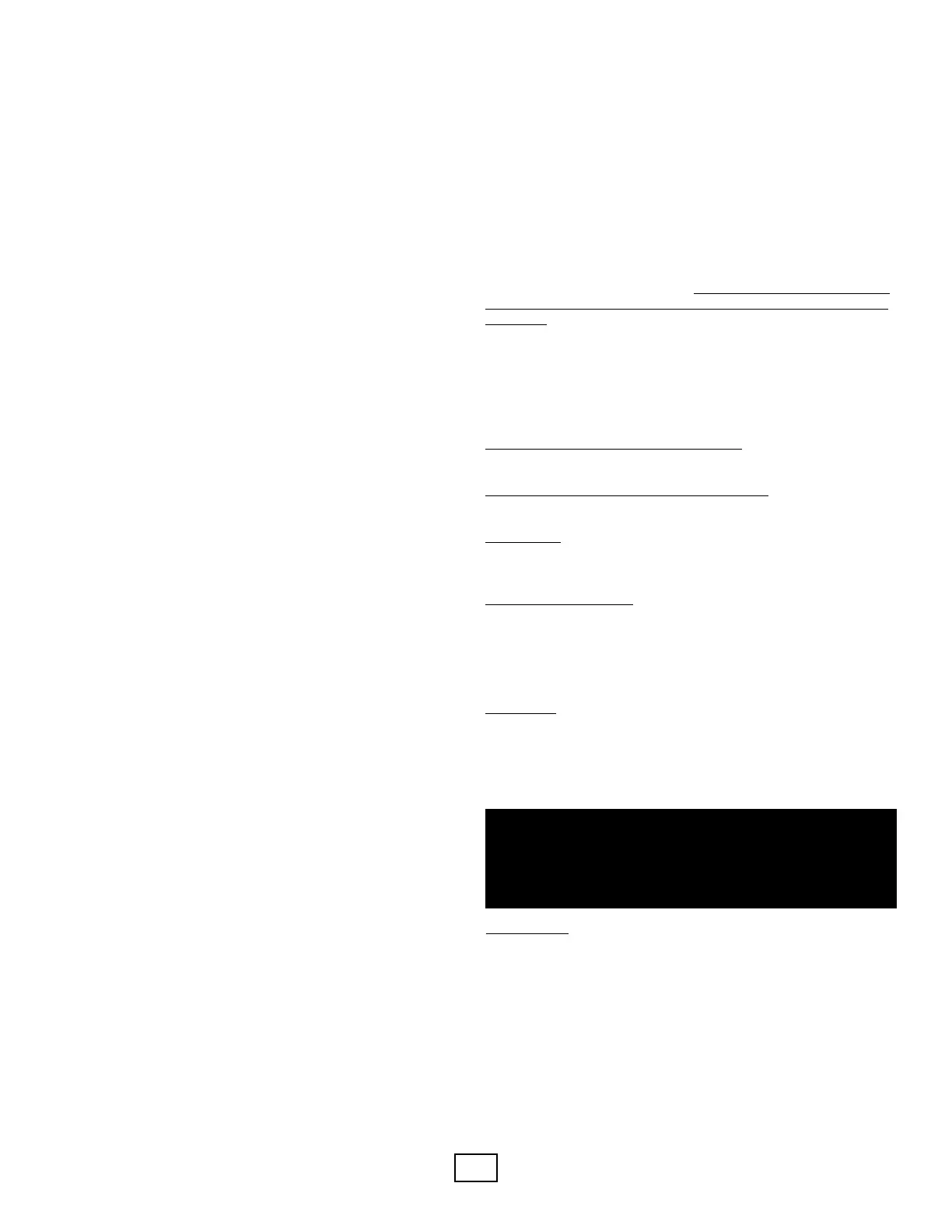
Based upon exisng installaons, Enertech recommends that all
EAV variable speed air-to-water installaons include a hydraulic
separator to help lessen issues with air in the system and
isolate the heat pump from the hydronic system (radiant oor
manifolds, fan coils, etc.). shows typical piping when
a hydraulic separator is incorporated into the design.
Following is a detailed list of recommendaons for variable
speed heat pumps:
System should include
a hydraulic separator (Figure 12b).
System should
include a buer tank (Figure 12c).
: All zone piping should be “Home Run” style (Figure
12e) to assist with purging air and to maintain lower pressure
drop.
System should include a boiler trim
kit that includes an expansion tank, air separator/automac
air vent, pressure reducing valve, and backow preventer.
In addion, an automac air vent should be located at the
highest point in the piping system. Note that a factory-installed
expansion tank is included with the Indoor Module.
All systems must include anfreeze in the hydronic
piping and Fernox F1 inhibitor or approved alternate (this is a
warranty requirement). Heang only systems do not require
anfreeze in the hydronic piping (except those that have exposed
piping) but must include Fernox F1 inhibitor or approved
alternate (this is a warranty requirement).
⚠⚠
System should include ush valves as shown in
Figures 12b and 12c to facilitate purging of air.



 To Next Page