© The Fulton Companies 2016
2-30
INSTALLATION VTG-IOM-2016-1214 SECTION 2
Avoid extensive direction changes (ue gases being required to turn
around).
Never direct ue stacks in a downward direction.
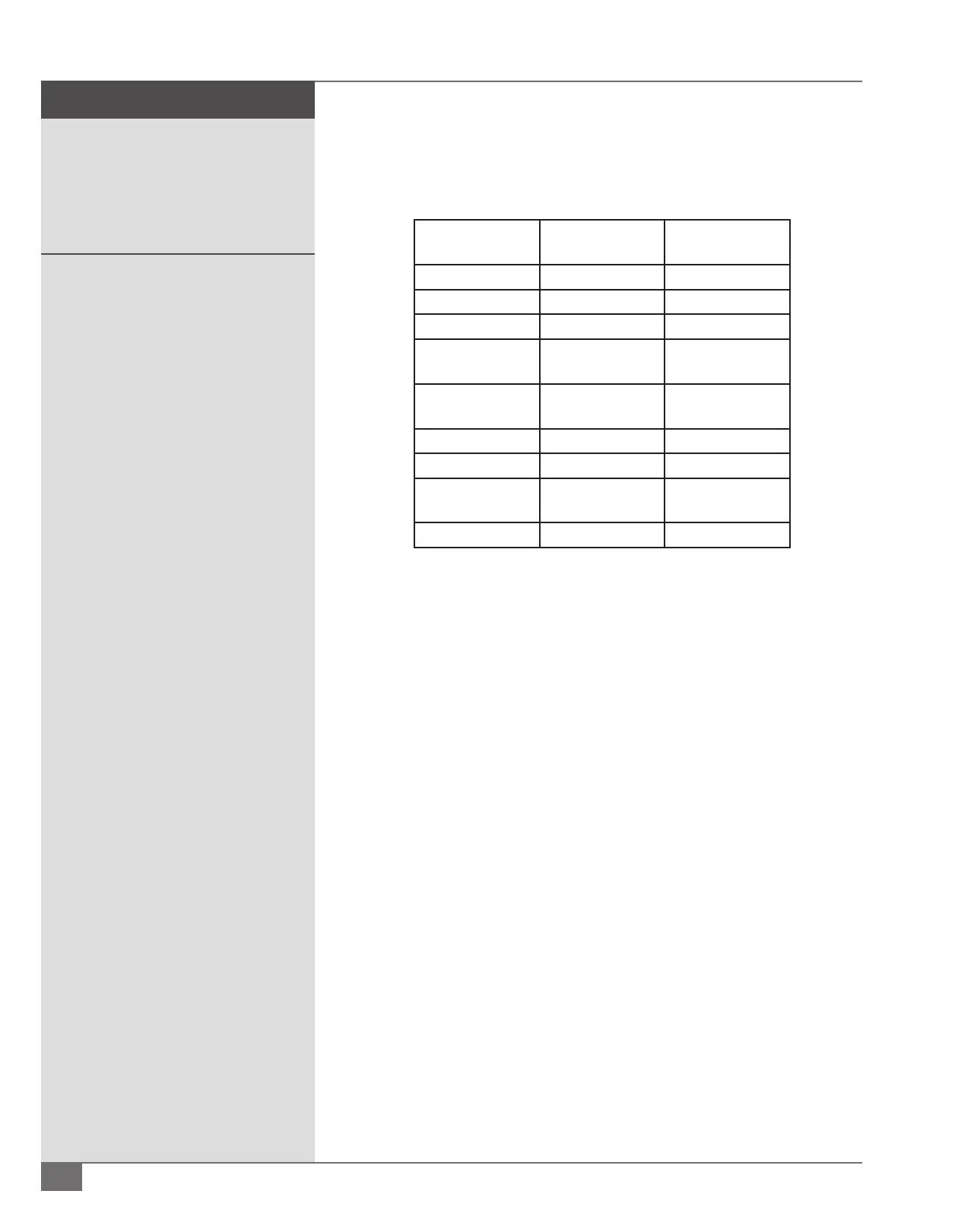
TABLE 5 GENERAL VENTING REQUIREMENTS
Vantage Model
Number
Maximum
Negative Draft
Maximum
Positive Draft
VTG-2000 -0.04 “ W.C. +0.35 “ W.C.
VTG-3000 -0.04 “ W.C. +0.35 “ W.C.
VTG-4000 -0.04 “ W.C. +0.35 “ W.C.
VTG-5000,
5000DF
-0.04 “ W.C. +0.35 “ W.C.
VTG-6000,
6000DF
-0.04 “ W.C. +0.35 “ W.C.
VTG-2000DF -0.1 “ W.C. +0.40 “ W.C.
VTG-3000DF -0.1 “ W.C. +0.50 “ W.C.
VTG-4000DF,
4000LE
-0.1 “ W.C. +0.50 “ W.C.
VTG-3000LE -0.04” W.C. +0.50 “ W.C.
13. It is the responsibility of the designer and installer of the venting system to
guarantee the prevention of ue gas recirculation (ue gases being drawn
into a boiler’s combustion air supply, or ue gases moving backward
through an idle boiler).
14. The installation of exhaust fans in a boiler room is not recommended.
15. An exhaust fan or similar equipment can create down draft in the stack or
restrict the burner’s air supply which will result in poor combustion. It is
essential that only fresh air is allowed to enter the combustion air system.
Foreign substances, such as combustible volatiles in the combustion
system can create hazardous conditions. If foreign substances can enter
the air stream, the boiler combustion air inlet must be piped to an outside
location.
16. Particulate matter or chemicals (example: chlorine, uorine,
perchlorethylene, halogenated compounds) in the combustion air
supply to the boiler will cause damage or failure to the burner. High-risk
situations for particulate matter to be in the air include construction and
maintenance activities. See Table 6.
NOTE: Pool and laundry area air may be contaminated with chlorine and uorine
compounds. If allowed to enter the conbustion air supply, these contaminants will
signicantly increase the acidity of ue gas condensate, potemtially damaging
heat transfer surfaces. Damage to the heat exchanger due to poor combustion air
quality is not covered under warranty.
17. In Canada, for recommended practice, refer to CSAB1
! WARNING
All information in this manual is for
reference and guidance purposes,
and does not substitute for required
professional training, conduct, and strict
adherence to applicable jurisdictional/
professional codes and regulations.



 To Next Page