27
7
7
What to do in an emergency Towing
䳜 Use only a cable or chain specifi
-
cally intended for use in towing
vehicles. Securely fasten the cable
or chain to the towing hook pro
-
vided.
䳜 Accelerate or decelerate the vehi
-
cle in a slow and gradual manner
whilst maintaining tension on the
tow rope or chain to start or drive
the vehicle, otherwise tow hooks
and the vehicle may be damaged.
䳜 Before emergency towing, check
if the hook is not broken or dam
-
aged.
䳜 Fasten the towing cable or chain
securely to the hook.
䳜 Do not jerk the hook. Apply it
steadily and with even force.
䳜 To avoid damaging the hook, do
not pull from the side or at a ver
-
tical angle. Always pull straight
ahead.
Use extreme caution when towing
the vehicle.
䳜 Avoid sudden starts or erratic
driving manoeuvres which would
place excessive stress on the
emergency towing hook and tow
-
ing cable or chain. The hook and
towing cable or chain may break
and cause serious injury or dam
-
age.
䳜 If the disabled vehicle is unable to
be moved, do not forcibly con
-
tinue the towing. We recommend
that you contact an authorised
Kia dealer or a commercial tow
truck service for assistance.
䳜 Tow the vehicle as straight ahead
as possible.
䳜 Keep away from the vehicle dur
-
ing towing.
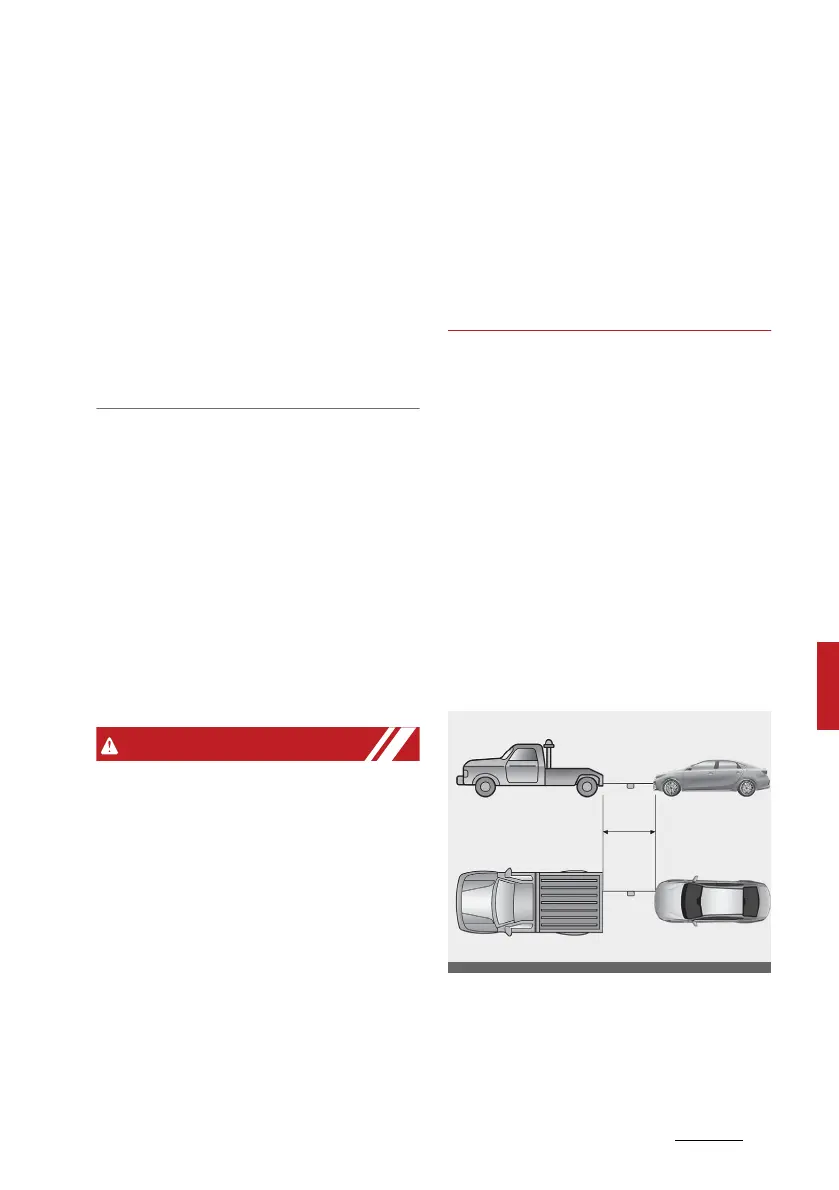
䳜 Use a towing strap less than 5 m
(16 feet) long. Attach a white or
red cloth (about 30 cm (12 inches)
wide) in the middle of the strap
for easy visibility.
䳜 Drive carefully so that the towing
strap is not loosened during tow
-
ing.
䳜 The driver must be in the vehicle
for steering and braking opera
-
tions when the vehicle is towed
and passengers other than the
driver must not be allowed to be
on board.



 To Next Page