101
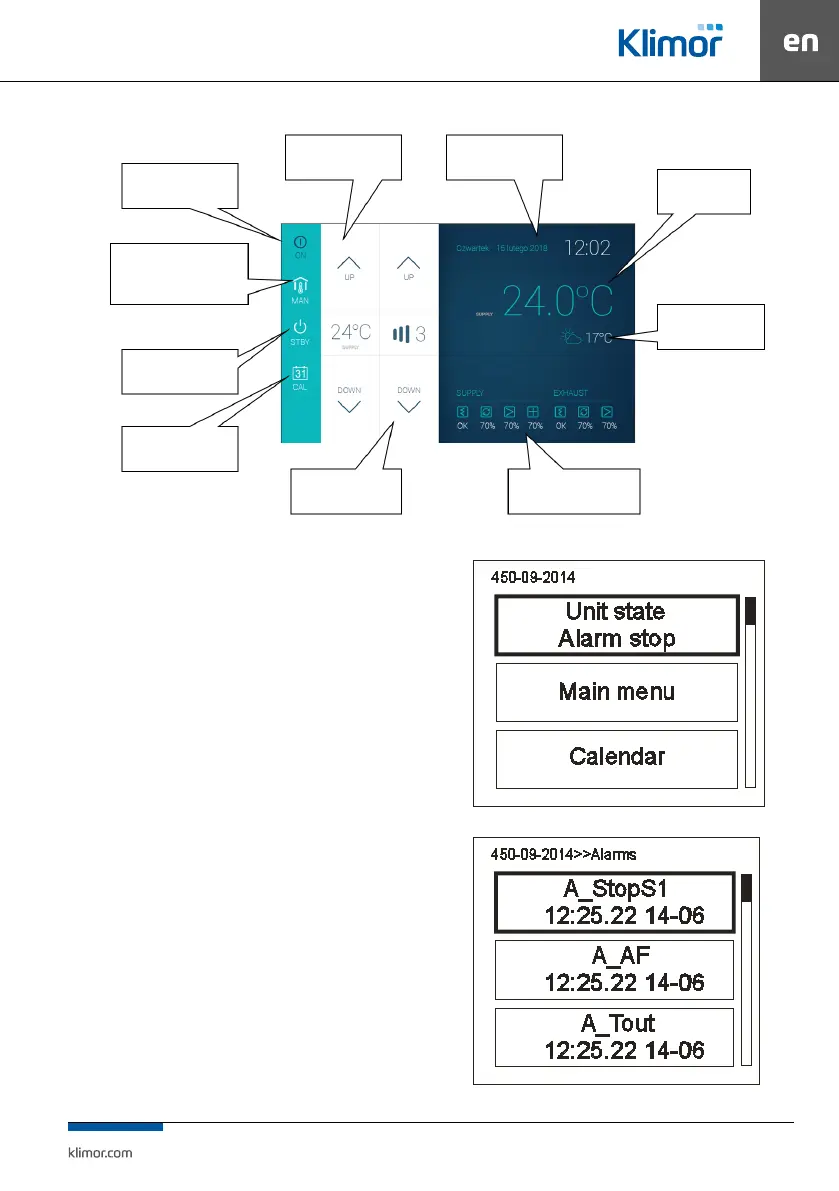
Fig. 48 HMI panel
15.2.6 HMI Control
Switching from the main page screen to the HMI menu is
done by scrolling the main screen from top to bottom. If the
controller to which the HMI is connected does not contain
the main pages, the HMI menu is displayed by default after
switching on the device.
The HMI menu contains all parameters made available by
the controller for viewing and editing by the user. The menu
contains two types of elements: node and parameter. Nodes
are entry points into the menu. Parameters contain values
that can be read and some of them can also be modied. To
enter the menu or to edit a parameter, press OK. Pressing the
C key will exit the menu or cancel the edition of the parame
-
ter. Alarm status is indicated by red background colour of
HMI menu. To check the alarm status, go to the Alarm menu.
15.2.7 Alarm menu
You can access the alarm menu by pressing the ALARMS
icon from the SLIDEBAR menu screen. If there is an alarm at
the moment, its name and the date and time of its occurren
-
ce is in the list. A conrmed alarm is additionally symbolized
by an asterisk "*" next to the date and time of occurrence.
At the end of the list there is a node called "Alarms history".
Alarms history presents a chronological list of the last occu
-
rrences of each alarm.
Fig. 49
Fig. 50
On/o button
Temperature setpoint Current date and
time
Leading tem-
perature
Outdoor tem-
perature
Status of system
elements
Selecting the
"Manual" mode
Operating mode
“Timer”
Operating mode
“Stand-by”
Operating mode “manual”
(operation in selected
level)



 To Next Page