Maintenance
LB Performance CB95 Broom5-14
Batteries contain sulfuric acid and
normally produce explosive gases that can cause
serious injury. DO NOT allow ames or sparks to
come near the battery.
When charging or working near
a battery, always shield your face and wear eye
protection. In case of acid contact with skin or eyes,
ush immediately with water for a minimum of 15
minutes and get prompt medical attention. If acid is
swallowed, call a physician immediately.
When servicing the electrical system
or welding on the machine, always turn the Master
Disconnect switch to the OFF position to disconnect
the ground strap from the battery to prevent damage
to the machine electrical system.
If the battery repeatedly discharges or the engine is
difcult to start, check the electrical charging system.
Using a battery tester, you can check the voltage fol-
lowing these procedures:
1. Shut down the engine and remove ignition key.
2. Place the positive (red) multimeter lead on the
positive (+) battery terminal; and the negative (black)
multimeter lead on the grounded negative (-) battery
terminal.
3. With the engine off and the multimeter set at 12 VDC,
the battery must show a charge of 12 - 12.5 volts.
4. Start the engine.
5. Check the battery charge level. The multimeter
should read at least 13.5 volts.
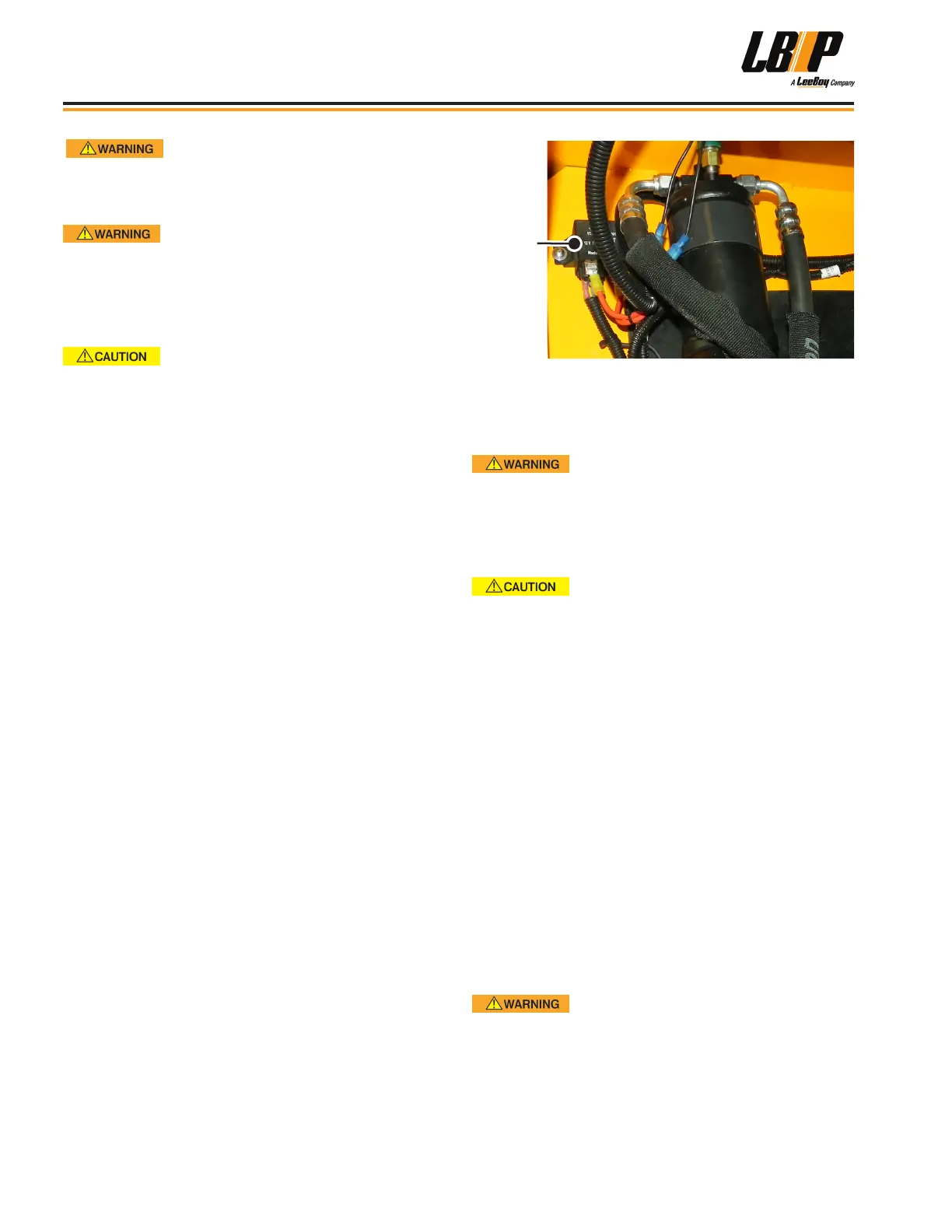
Also check that the circuit breaker has not tripped. The
circuit breaker is located inside the engine compart-
ment on the auxiliary panel. (Figure 5-10)
If the battery does not charge properly, you may need
a new battery or the alternator may need repair or
replacement.
If storing the machine for more than 30 days, be sure
to remove the battery and store it separately in a cool,
dry place. Continue to keep the battery fully charged
and check the level of electrolyte regularly to prevent
damage or corrosion.
Circuit
Breaker
Figure 5-10. Circuit Breaker
Check Battery Electrolyte Level Check Battery Electrolyte Level
Batteries create explosive gases
when charging. DO NOT expose these gases to
sparks or open ame during maintenance. Always
perform battery service in a well-ventilated area or
outside. Serious injury can occur from exploding
batteries.
Do not attempt to charge a frozen
battery. Allow a frozen battery to thaw completely
before charging.If using serviceable batteries, ll each
cell to specied range with distilled water. DO NOT
overll.
6. Check battery charge and charging rate.
7. Shut down machine by turning ignition switch key
counterclockwise to the OFF position.
8. Using a multimeter, check the battery charge by
placing the positive (red) multimeter lead on the
positive (+) battery terminal, and the negative (black)
multimeter lead on the grounded (-) battery terminal.
With the multimeter set at the 12 VDC setting, the
battery should show a charge of at least 12 volts. If
not, charge the battery or perform a load test.
9. Start the engine. From the operator’s seat, check
the battery charge level. The multimeter should
read at least 13.5 volts. If the multimeter does
not indicate minimum charge, check the machine
charging system.
DO NOT dry batteries using
compressed air. Allow the batteries and surrounding
area to dry. Battery acid can cause severe injury if
blown into the face or other areas of the body. If injury
occurs, seek medical attention immediately. Flush
eyes and skin for 30 minutes with clean water.


 To Next Page