Maintenance
LB Performance CB95 Broom5-18
DO NOT mix manufacturer or grade
hydraulic oil weights. Substandard performance or
hydraulic component failure can occur.
NEVER attempt to repair hydraulic
hoses with tape, clamps or cements. The hydraulic
system operates under extremely high pressure.
Temporary repairs will fail, creating a hazardous
condition that can result in bodily injury and damage
to the machine.
Hydraulic oil that has oxidized or
contains contamination can shorten the expected
service life of the components in the hydraulic
system.
Check Hydraulic Oil Level Check Hydraulic Oil Level
Wait 10 minutes after engine has been shut down before
checking hydraulic oil. If level is low, remove hydraulic
oil ll cap strainer to add hydraulic oil to the tank.
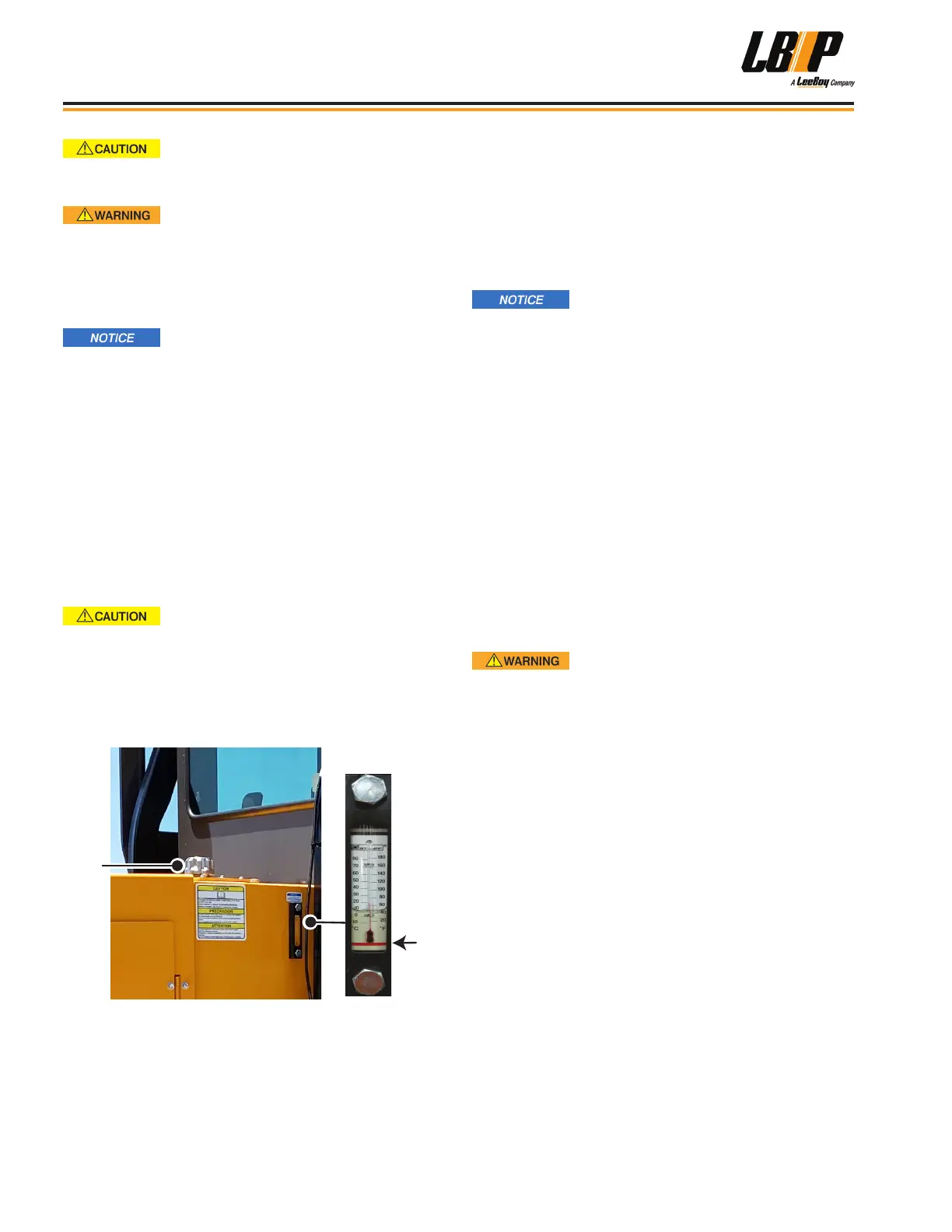
Oil level is determined by sight gauge. (Figure 5-15)
Hydraulic oil should be added if the oil level falls below
the ll line. Never ll above the black ll line.
Use extreme caution when removing
the ller cap to prevent any foreign matter from
entering the hydraulic reservoir. This can cause
damage to hydraulic components.
• Fill tank to the black ll line on sight gauge.
• Clean the ll cap strainer and reinstall it.
Filler
Cap
Site Gauge
Fill
Line
Figure 5-15. Hydraulic Sight Gauge and Filler Cap
Change Hydraulic Oil and FilterChange Hydraulic Oil and Filter
Changing the hydraulic oil removes the accumula-
tion of dirt, water and mechanical wear particles from
the hydraulic oil reservoir and system. The chemical
structure of hydraulic oil changes after continuous use,
therefore, new oil is important to ensure correct opera-
tion of the hydraulic system.
Never let the hydraulic oil reservoir
tank run dry. Pump damage will occur.
Condensation can also build up in the hydraulic system
and clog the lter elements. This could lead to insuf-
cient hydraulic oil at the pump and degrade perfor-
mance, causing damage to components.
Change the hydraulic oil and lter after the rst 100
hours of use, then every 250 hours or seasonally, which-
ever comes rst. Also remove and clean the suction
strainer at the 500-hour intervals.
Use the following procedures to change the hydraulic oil
and lter:
1. Stop the engine. Allow the hydraulic oil to cool
until it is at a warm temperature. Slowly loosen and
remove the hydraulic oil ller cap (Figure 5-15). Put
a clean, lint-free cloth over the reservoir ll tube
opening and secure in place with tape.
DO NOT drain the hydraulic oil from
the reservoir when it is HOT. Hot hydraulic oil can
cause serious injury. Drain at a warm temperature
only.
2. Carefully remove the plug from the hydraulic
tank. Use a drain collection container of sufcient
capacity to collect the hydraulic oil underneath.
Allow all of the hydraulic oil to drain into the
container.
3. Check the hydraulic suction strainer in bottom of the
hydraulic oil tank. Clean if necessary.
4. Install the hydraulic oil reservoir drain plug and
tighten securely.


 To Next Page