4 | 4D-Nucleofector
®
Manual
1 Nucleofector
®
Technology
Since its introduction in 2001, Nucleofector
®
Technology has
transformed transfection. Nucleofection
®
Technology is a
reliable and reproducible, easy-to-use technology, suited to
a wide variety of applications. An ever increasing number of
publications in a wide range of research areas reflect how
Nucleofector
®
Technology is driving research in numer-
ous cell types and applications (Visit the Lonza Knowledge
Center to learn more: https://knowledge.lonza.com). Nu-
cleofector
®
Technology provides an answer to almost every
transfection challenge.
How it works
Nucleofector
®
Technology is based on two proprietary
components, the Nucleofector
®
System that delivers the
specifically optimized electrical parameters and Nucleofec-
tor
®
Kits, which contain specific Nucleofector
®
Solutions. As
pat of Nucleofector
®
Technology, Lonza provides cell-type
specific optimized protocols for many different cell lines
and primary cells.
Transfection of any cell
With over 325 protocols optimized by Lonza’s R&D Team for
cell lines and primary cells and more than 750 entries in the
online Cell Transfection Database, Nucleofector
®
Technol-
ogy is the transfection method of choice for difficult-to-
transfect cell types. Moreover, the electroporation-based
Nucleofection
®
Method allows reliable transfection of
adherent cells and cells in suspension.
Transfection of any substrate
Nucleofector
®
Technology offers high flexibility within
applications since the same transfection parameters ap-
ply for almost all substrates. DNA vectors, RNA duplexes,
and peptides can be transfected using our sophisticated
transfection protocols. Nucleofection
®
Technology can be
an ideal tool for providing answers to scientific questions in
over-expression studies, gene silencing approaches, protein
expression, generation of stable clones and many more ap-
plications besides.
Optimized protocols
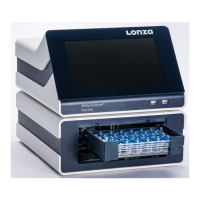
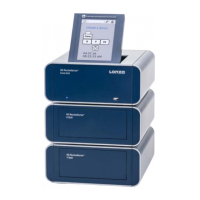
This manual describes how to operate the
4D-Nucleofector
®
System with its different functional units,
e.g. how to program an experiment for execution of the
Nucleofection
®
Process. For details on setting up a
Nucleofection
®
Sample, including how to prepare cells for
Nucleofection
®
experiments and how to handle them after
the process, please refer to our cell type-specific Optimized
Protocols in our cell database.
www.lonza.com/celldatabase
Return to TOC


 To Next Page