Need help?
Do you have a question about the Mercusys MW305R and is the answer not in the manual?
Statement of compliance with essential EU requirements and relevant directives.
Information on device compliance with EU requirements for public exposure to electromagnetic fields.
General safety precautions for device operation, including avoiding water, fire, and unauthorized repairs.
Settings for wireless network configuration, covering Host Network, Guest Network, and WDS Bridging.
Features for controlling network access, including Parental Controls and Access Control.
Advanced user settings for Virtual Server, DMZ Server, UPnP, Advanced Routing, and Dynamic DNS.
Tools for system management, including Web Management, Time Settings, Firmware Upgrade, and more.
Step-by-step instructions for physically connecting the router to the modem and power source.
Guides the user through the initial configuration process using the Quick Setup Wizard.
Allows viewing and managing connected or blocked devices on the network.
Configuration options for network settings, including WAN, LAN, IPTV, MAC address, DHCP, and IP & MAC binding.
Configuration of DHCP server for automatic IP assignment to LAN devices.
Steps to add and manage IP and MAC address binding entries for controlled access.
Controls internet access for children, limiting websites and restricting surfing time.
Setting up virtual servers for public services on the LAN, mapping external to internal ports.
Configuring DMZ host to expose a local host to the internet for special-purpose services.
Information and management of UPnP devices for automatic network resource access.
Configuring static routing for network information packets to reach specific hosts or networks.
Configuring Dynamic DNS service for domain name resolution of changing IP addresses.
Configuring local and remote management rules for accessing the router's interface.
Updating the router's firmware to the latest version for improved performance and security.
Restoring router configurations to factory default settings, erasing all custom settings.
Saving router settings to a file and restoring them from a backup file.
Changing the router's login password for enhanced security.
 General
| DSL WAN | - |
|---|---|
| Ethernet WAN | Yes |
| Wi-Fi band | Single-band (2.4 GHz) |
| Wi-Fi standards | 802.11b, 802.11g, Wi-Fi 4 (802.11n) |
| Top Wi-Fi standard | Wi-Fi 4 (802.11n) |
| WLAN data transfer rate (max) | 300 Mbit/s |
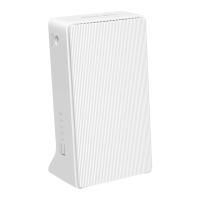
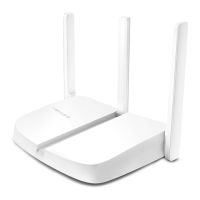
| Product type | Tabletop router |
| Product color | White |
| Networking standards | IEEE 802.11b, IEEE 802.11g, IEEE 802.11n |
| Ethernet LAN data rates | 10, 100 Mbit/s |
| Ethernet LAN interface type | Fast Ethernet |
| USB port | No |
| Ethernet LAN (RJ-45) ports | 3 |
| Output current | 0.6 A |
| Output voltage | 5 V |
| Power source type | AC |
| Storage temperature (T-T) | -40 - 70 °C |
| Operating temperature (T-T) | 0 - 40 °C |
| Storage relative humidity (H-H) | 5 - 90 % |
| Operating relative humidity (H-H) | 10 - 90 % |
| Transmit power | 0 dBmW |
| Antenna gain level (max) | 5 dBi |
| Certification | CE RoHS |
| Cables included | LAN (RJ-45) |
| Supported network protocols | IPv4 |
| Security algorithms | WPA-PSK, WPA2-PSK |
| Package type | Box |
| Package depth | 198 mm |
| Package width | 267 mm |
| Package height | 68 mm |
| Package weight | 450 g |
| Harmonized System (HS) code | 85176990 |
 Weight and Dimensions
| Depth | 115.44 mm |
|---|---|
| Width | 168.94 mm |
| Height | 34.66 mm |

 To Next Page