6.4-1
Section 6
ApplicAtions
Pinnacle Operators Manual
Pickering Laboratories Inc.
Background
Glyphosate and AMPA are separated on a strong cation-exchange column (fully sulfonated, cross-linked
polystyrene, mixed K
+
/H
+
form). After isocratic separation, the column is regenerated with dilute KOH, then
re-equilibrated with eluant.
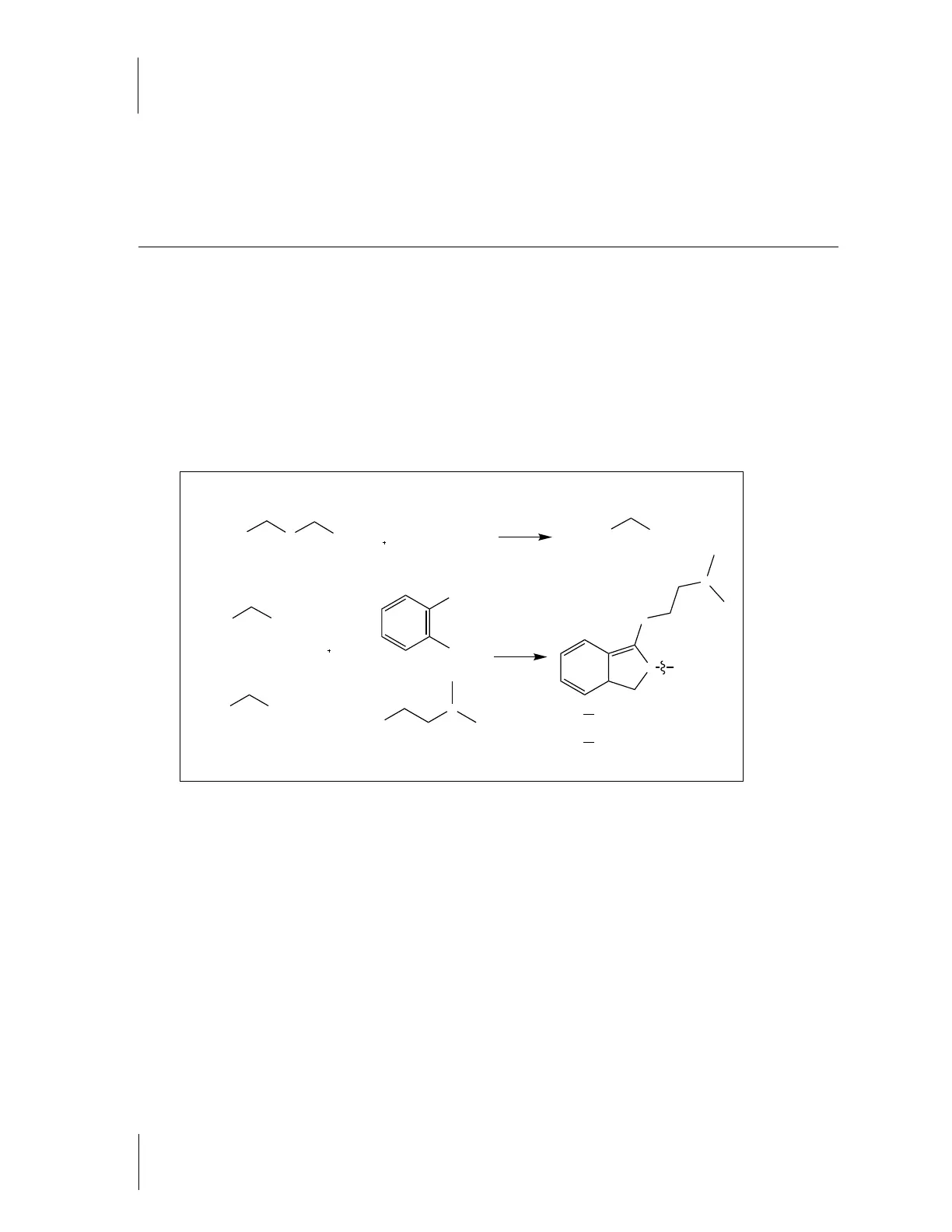
Fluorometric detection follows a two-stage post-column reaction. In the first stage, glyphosate is oxidized
by hypochlorite to glycine. In the second stage, glycine reacts with o-phthalaldehyde and Thiofluor
™
(a mercaptan) at pH 9–10 to produce a highly fluorescent isoindole. AMPA does not need the initial oxidation
to react with OPA (Figure 6.4-A); indeed oxidation reduces its fluorescent yield.
Basic Sample Preparation
The following is a suggested basic sample preparation for Vegetable and Water samples containing glyphosate.
The method for Vegetables is different from the procedure called out by the AOAC. We have developed
ion-exchange cartridges, which we have fully qualified in our lab, and which greatly improve the ease and
reproducibility of the extraction while at the same time reducing many of the trouble aspects of the original
published method (e.g. iron contamination).
FOR VEGETABLE SAMPLES
Extraction
To 25g of a homogenous sample add enough water (after estimation of moisture content) to make the total
volume of water 125 ml. Blend at high speed for 3-5 min. and centrifuge for 10 min. Transfer 20 mL of the
aqueous extract into a centrifuge tube and add 15 mL of methylene chloride (to remove nonpolar
-
O
2
C
N
H
PO
3
2-
1.
Glyphosate
OCl
-
-
O
2
C
NH
2
Glycine
2.
CHO
CH3
CH3
CH3
CH3
CHO
OPA
Thiofluor
HS
N
CO
2
-
H
2
N
Glycine
H
2
N PO
3
2-
AMPA
pH
_
>9
N R
R =
R =
CH
2
CO
2
-
for Glycine
CH
2
PO
3
2-
for AMPA
S
N
Figure 6.4-A



 To Next Page